Preveli Beach: What It Actually Is
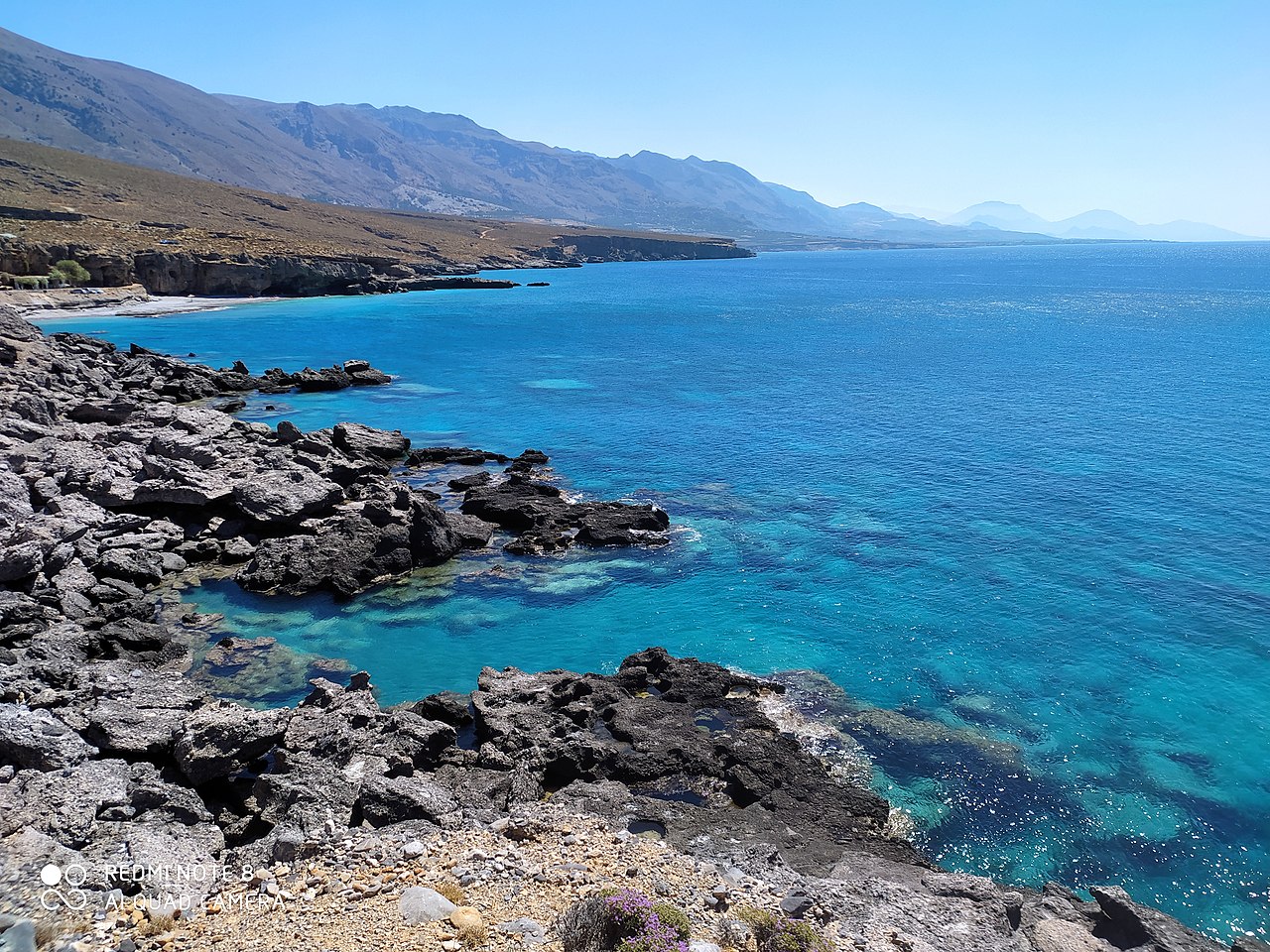
Preveli Beach sits on the south coast of Crete, in the Rethymno regional unit, 38 km south of Rethymno city. It earns its reputation for a specific, concrete reason: the Megalopotamos river flows out through a narrow gorge and meets the Libyan Sea, creating a small freshwater lagoon lined with native palms. This makes it one of the very few genuine river beaches in Crete — a combination of moving freshwater and open sea in the same swimming area. The palm trees are not planted. They are Phoenix theophrasti, the Cretan date palm, native to the eastern Mediterranean. The colony at Preveli is one of the densest naturally occurring stands of this species anywhere in Europe.
There are two distinct areas visitors refer to when they say Preveli:
- Upper Preveli beach (also called Limni): accessible via a steep concrete path with over 300 steps from the main parking area, a 15-minute descent. Open sea, coarse sand and gravel. No palm forest. This is what most first-time visitors find and some go no further.
- Preveli Palm Beach (the western section at river level): reached by walking 600 m along the shoreline from the upper beach, or by arriving via the Kourtaliotis Gorge on foot, or by boat. This is where the river meets the sea and the palm forest begins. This is what the photographs show.
Confusing the two sections is the single most common source of disappointment at Preveli. If you arrive by road, descend the steps, see a pebble beach, and leave — you have missed the entire point.
How to Get to Preveli Beach in 2026
There are three practical routes to Preveli beach Crete: by road from above, by boat from the coast, or on foot through the gorge from the north.
By car: From Rethymno, take the main road south toward Koxare, then follow signs for Preveli. The drive takes approximately 45 minutes. From Heraklion, allow 1 hour 40 minutes (78 km). From Chania, 1 hour 30 minutes (80 km). From Plakias village on the south coast, Preveli is 17 km and about 20 minutes. The road through the Kourtaliotis Gorge south of Koxare is paved throughout but narrows to single-lane in sections — drive slowly and use passing places. A parking lot sits at the top of the beach steps. Fee: approximately €4 per vehicle in 2026. It fills completely by 9:30 AM in July and August. Arrive before 8:30 AM or after 5:00 PM to find a space. Roadside overflow parking adds 15–20 minutes of walking each way.
By bus: KTEL Rethymno operates a summer service to Preveli, typically two departures per day from Rethymno bus station. The schedule changes each season — check the current timetable at the start of your trip. The bus drops passengers at the top, near the parking area. No direct service from Heraklion or Chania.
By boat: Sea taxis and small excursion boats run from Plakias (17 km west) and Agia Galini (25 km east by road). Typical fare from Plakias: €12–18 per person round trip. From Agia Galini: €20–28. Journey time is 20–40 minutes depending on sea state. Boats land directly at the palm beach, bypassing the steps and the crowds at the upper section entirely. Service runs May through October, weather dependent. The Libyan Sea is generally calm but unexpected south swells can cancel trips without advance notice. Book the day before and reconfirm the morning of travel.
Preveli Gorge Hike: Kourtaliotis Gorge Details
The Preveli gorge hike follows the Megalopotamos river through the Kourtaliotis Gorge from the village of Asomatos south to the sea. It is the most rewarding way to reach the palm beach, arriving at river level through oleander, plane trees, and running water rather than descending concrete steps. It is also the least crowded approach — the majority of visitors arrive by road.
Trailhead: Asomatos village, approximately 20 km north of Preveli beach by road. Park at the gorge entrance on the south edge of the village. GPS approximately 35.24°N, 24.52°E. There is a small informal parking area with space for 10–15 cars.
Distance: 5.5 km one way, with an elevation drop of roughly 250 m over the full descent.
Duration: 1 hour 45 minutes to 2 hours 30 minutes one way for a fit adult walking at moderate pace. The return ascent is harder, particularly in afternoon heat. Allow 5–6 hours total for the round trip, including 1–2 hours at the beach.
Terrain: The upper 2 km are wide and straightforward. The lower section requires scrambling over rocks and crossing the river multiple times on stepping stones — expect to remove footwear at some crossings. Water shoes or sport sandals perform better than trail runners here. The path is unmarked in several sections; follow the riverbed downstream. Do not attempt this route without prior experience of unmarked trail navigation.
River levels: The Megalopotamos flows year-round within the gorge. In April and May, crossings can be thigh-deep. By August, most crossings are ankle-deep. After significant winter rainfall, the gorge is impassable and dangerous. Do not enter if the water is turbulent or brown.
Difficulty: Moderate. Not suitable for young children under 8, anyone with knee or mobility issues, or those without at least basic hiking fitness. Trekking poles are useful on the return ascent. Carry a minimum of 2 liters of water per person — there is no reliable clean water source on route despite the river flowing alongside.
Logistics note: If you hike down but do not want to retrace the ascent, arrange a vehicle pickup at the beach parking lot in advance. There is no bus stop at Asomatos gorge entrance, and taxis from Rethymno to this point must be booked ahead. Some visitors hike down and take the boat back to Plakias.
If you are visiting in peak summer, check the Visiting Crete in August 2026 guide for realistic heat and crowd expectations before committing to a midday gorge hike — temperatures at the bottom of the gorge can exceed 38°C with no breeze.
Preveli Palm Beach: The River, the Lagoon, and the Forest
The Preveli palm beach is where the Megalopotamos exits the gorge and meets the Libyan Sea. The river creates a lagoon 50–80 m wide before dispersing into open water. On the left (east) bank, the palm forest extends roughly 300 m upstream. The palms grow to 10–15 m height in places, creating genuine shade — rare on any Cretan beach.
Swimming conditions here are unusual. The lagoon water moves — it flows, especially after rainfall or early in the season. Temperature sits at 20–22°C even in August, noticeably cooler than the 26–27°C sea. The zone where river and sea mix creates visible thermoclines that make snorkeling here more interesting than most Cretan beach sites. The rocky walls of the gorge exit have sea urchins, small fish, and moray eels in crevices. Bring a mask.
The beach surface is coarse sand and pebble. The strip is narrow — typically 6–10 m between water and cliff — which means capacity is limited. At peak season, 400–600 visitors occupy the beach simultaneously during the 10 AM–3 PM window. Early morning (before 9 AM) and late afternoon (after 5 PM) are the only practical slots for a genuine experience in July or August.
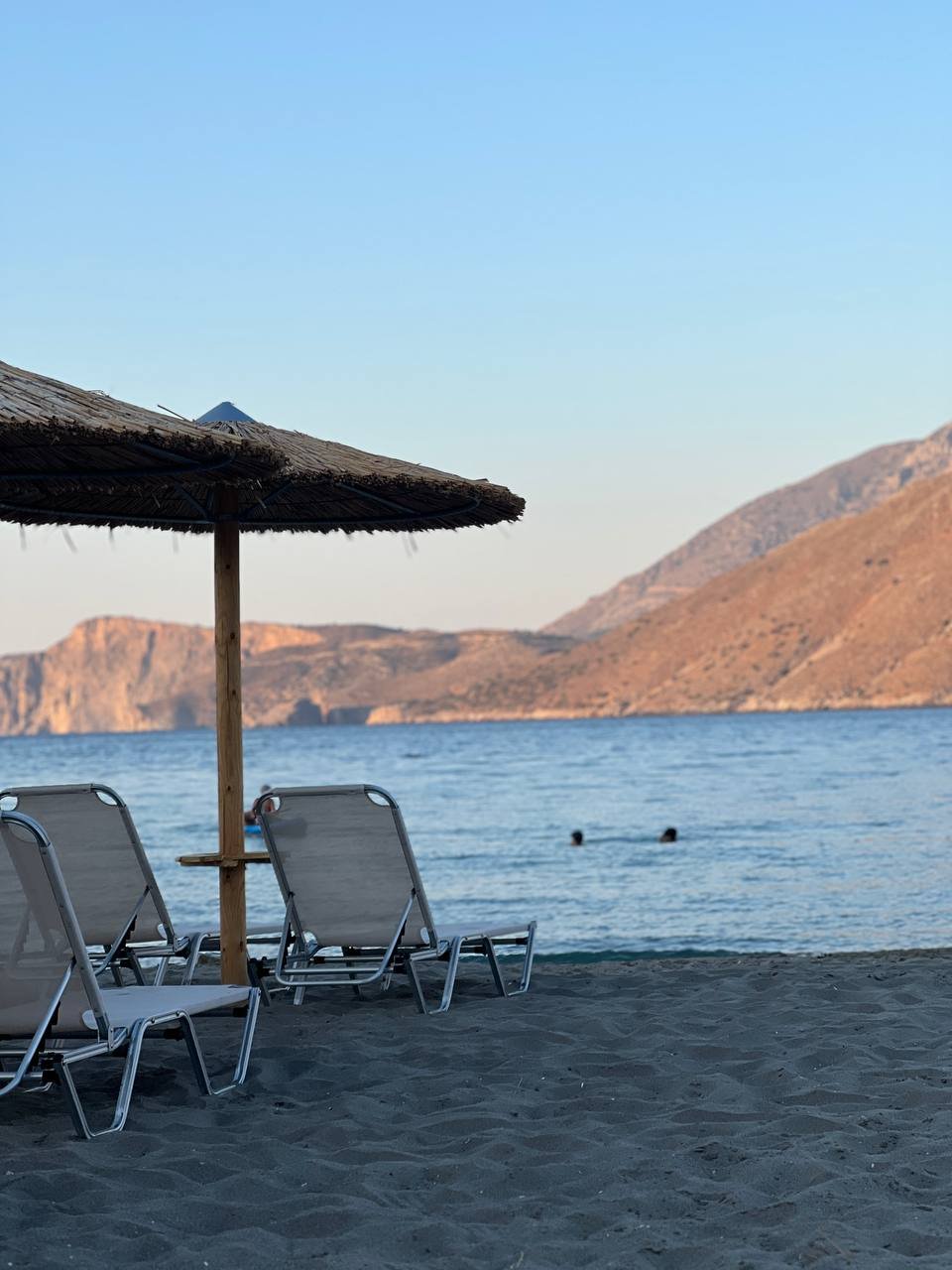
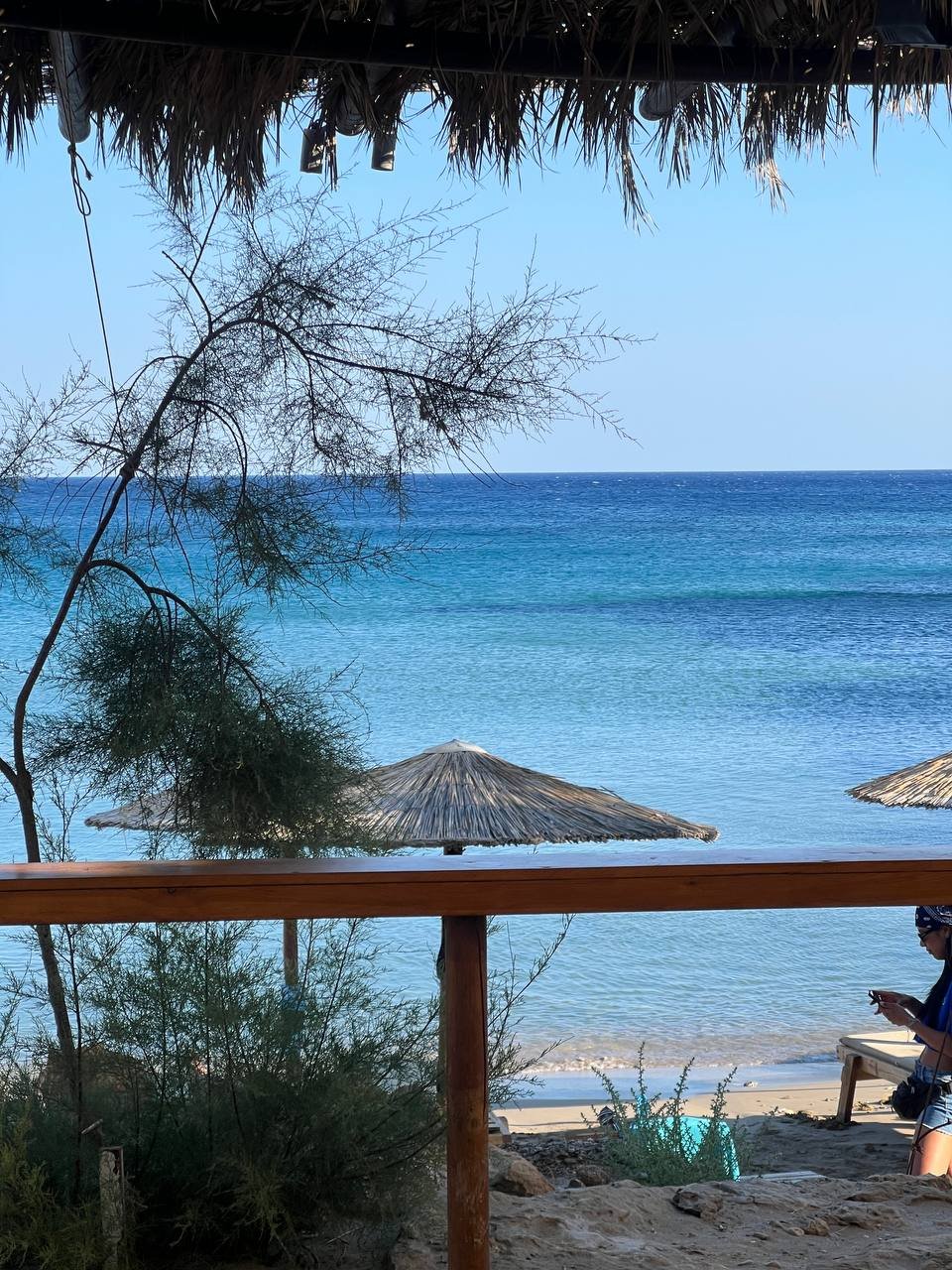
Facilities at the palm beach level: None. No toilets, no showers, no sunbeds. A small beach bar operates on the upper beach (near the steps), typically June through September, selling water, cold drinks, and light snacks. Sunbeds with umbrellas are available on the upper beach section at the usual Cretan daily rate (around €10–14 per set in 2026). The palm beach itself is free and unfacilitated.
The Monastery of Preveli (Moni Preveli) is 2.5 km west along the coastal road. Founded in the 17th century and rebuilt in its current form in the 19th, it holds a significant World War II history: the monastery sheltered and assisted in the evacuation of hundreds of Allied soldiers after the Battle of Crete in 1941. The small museum documents this. Entry: €3. Dress code is enforced (no bare shoulders or shorts). Open daily May–October, 9 AM–1:30 PM and 3:30 PM–7:30 PM.
For context on south-coast beach alternatives, the Falassarna Beach guide covers the northwest coast option — a completely different beach character with wide flat sand, shallow water, and sunset orientation — useful if you are planning a multi-beach itinerary across Crete.
When to Go and Practical Details
Best months: May, June, and late September through early October. In May and June, the river runs higher, the gorge vegetation is green, and temperatures are 26–30°C — comfortable for both hiking and swimming. September delivers sea temperatures around 24°C with significantly reduced crowds on weekdays. The combination of warm sea, cooler air, and thin crowds makes late September the technically optimal window.
July and August are feasible with an early start. The beach is at maximum capacity by mid-morning. The gorge hike in 35°C heat carries genuine dehydration risk. Parking is a problem from 9 AM onward. If peak season is your only option: arrive by 8 AM, take the boat from Plakias, or accept the conditions.
November through April: The beach area is effectively closed. The gorge may be impassable after rainfall. The monastery operates reduced or suspended hours. The road through the lower gorge occasionally floods after heavy rain.
Entry costs summary for 2026:
- Beach parking lot: approximately €4 per car
- Beach access: free
- Monastery of Preveli: €3 per person
- Boat from Plakias: €12–18 per person round trip
- Boat from Agia Galini: €20–28 per person round trip
What to bring: 2–3 liters of water per person minimum (especially for the gorge route), water shoes or sport sandals if hiking, cash (parking and some vendors are cash only), sunscreen (the beach gets direct sun from 9 AM to 6 PM with limited shade on the sand), and a snorkeling mask. There are no lockers or storage facilities at beach level.
What not to expect: Preveli is not a comfort beach. There are no changing rooms at the palm beach, no restaurants within walking distance of the river, and no shade structures on the sand. The upper beach section is a standard pebble beach with sunbeds — there are better versions of that elsewhere in Crete. Come specifically for the river, the palm forest, and the gorge. Spend 2–4 hours and move on; the experience degrades quickly past noon in peak season.