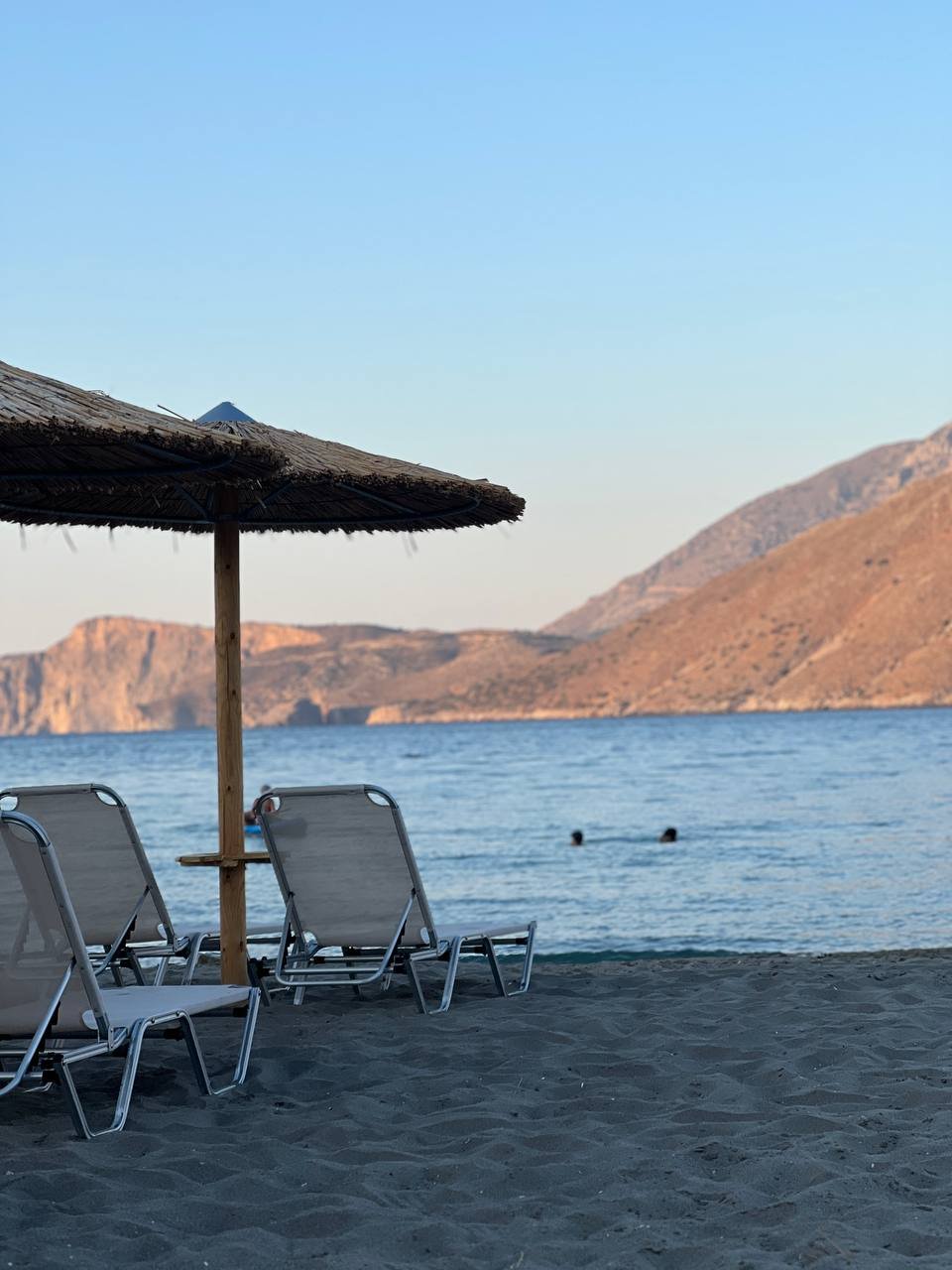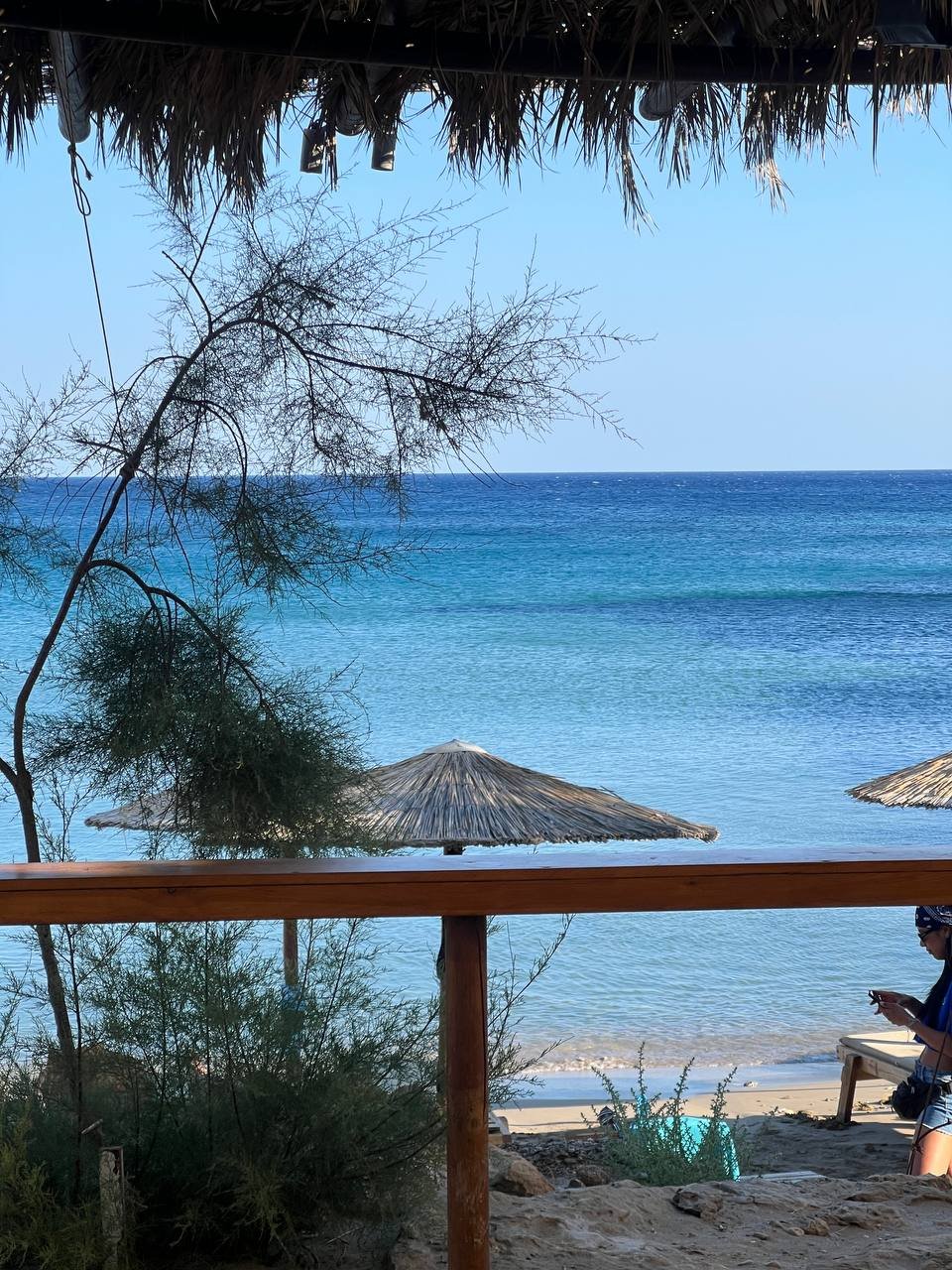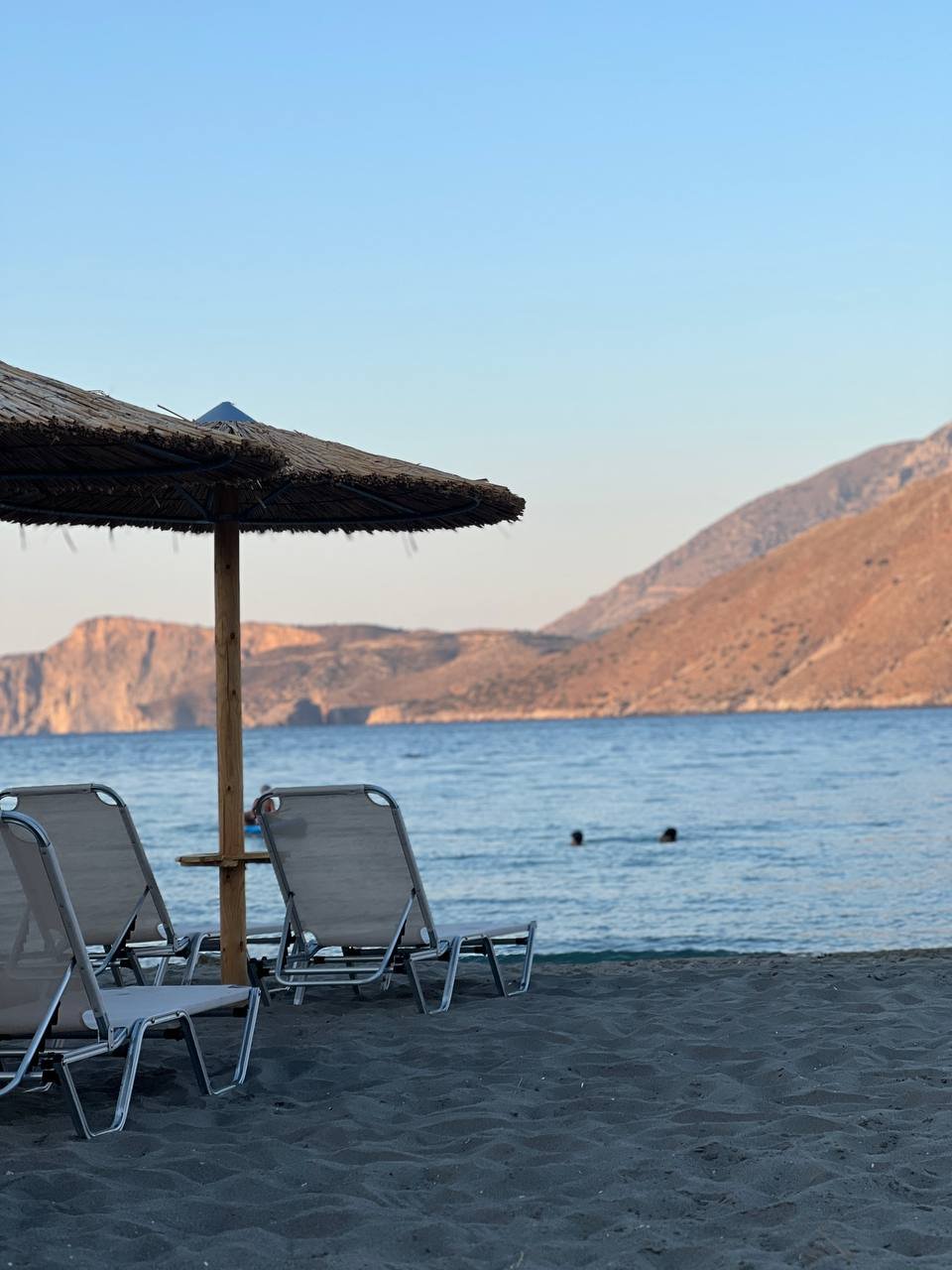
Elafonissi sits at the southwestern tip of Crete, 76 km from Chania. It is one of the few beaches in Europe where the sand genuinely turns pink — a real effect caused by crushed shells and coral particles mixed into white sand, not a marketing claim. The beach connects to a small island via a shallow pink sand lagoon you can wade across, with water rarely deeper than knee height.
The Pink Sand Lagoon: What You'll Actually See
The pink color is most visible on wet sand early in the morning, before foot traffic churns it up. On dry, trampled sand mid-afternoon in peak season, the effect is subtle at best. Arrive early or visit in September to see it properly.
The lagoon between shore and island is the main draw for families — calm, warm, crystal-clear water safe for children. The island itself has protected dunes (Natura 2000 site — stay on marked paths). The seaward side faces open water with stronger waves, popular with snorkelers and windsurfers. Sea temperature in late summer holds around 25–26°C. For current conditions across Crete's southwest coast, see our guide to Crete beaches in September.
How to Get to Elafonissi from Chania and Beyond
- By car (recommended): From Chania city center, take the E75 west toward Kissamos, then head south through Topolia Gorge via Elos and Kefali. Total distance: 76 km, driving time 1h45–2h. The last 20 km is a winding mountain road — standard rental cars handle it, but it is slow. Parking on-site costs €3–5/day (cash or card).
- By bus (KTEL): One direct summer bus runs from Chania bus station, departing around 08:30 and returning around 17:00. Fare: approximately €8 one way. Verify current timetables at the Chania KTEL station, as schedules vary by month.
- Organized day trips: Departures from Chania, Rethymno, and Heraklion run daily June–September. Prices range from €25–50 per person including transport. Practical if you have no rental car.
- From Heraklion: 195 km via E75, approximately 2h45–3h by car. Budget a full day for the round trip.
Best Time to Visit Elafonissi
Peak season (July–August): Expect 3,000–5,000 visitors per day at the height of summer. Parking fills before 09:00. Sun loungers (€8–12/set) are often fully claimed by 08:30. The lagoon is warm but the beach is congested.
Shoulder season (May–June, September–October): Crowds drop sharply. September is particularly good — sea temperature stays above 25°C, visitor numbers fall after the first week, and the light is better for photography. Our Crete shoulder season guide covers the full case for visiting in September and October.
Off-season (November–April): The beach is accessible but all facilities are closed. Empty and atmospheric in winter light.
Check the latest Crete weather forecast before making the drive, especially outside peak season when conditions on the southwest coast can shift quickly.
Practical Tips for Your Visit
- Arrive before 09:00 in July–August to secure parking and a spot on the sand.
- Supplies: A snack bar and small taverna operate on-site (meals €12–18), but there is no pharmacy or supermarket. Stock up in Kissamos, 35 km away.
- Sun protection: The lagoon reflects UV strongly. SPF 50+ and a hat are not optional.
- Footwear: Water shoes make the lagoon crossing more comfortable — the bottom mixes sand with small rocks.
- Drones: Not permitted over the Natura 2000 protected zone.
- Facilities: Toilets and showers are available on-site (€0.50–1.00 charge).
- Road conditions: The final stretch from Elos is narrow. Expect to give way to coaches on switchbacks. Drive slowly and leave extra time.