Why Visit Crete in September
September is arguably the best month to visit Crete, and the numbers back that up. August sees Heraklion airport process over 1.2 million passengers in a single month. By the first week of September, that figure drops sharply. Prices fall. Queues shorten. The island is still fully operational — restaurants open, boat trips running, museum hours unchanged — but the suffocating heat of July and August is gone.
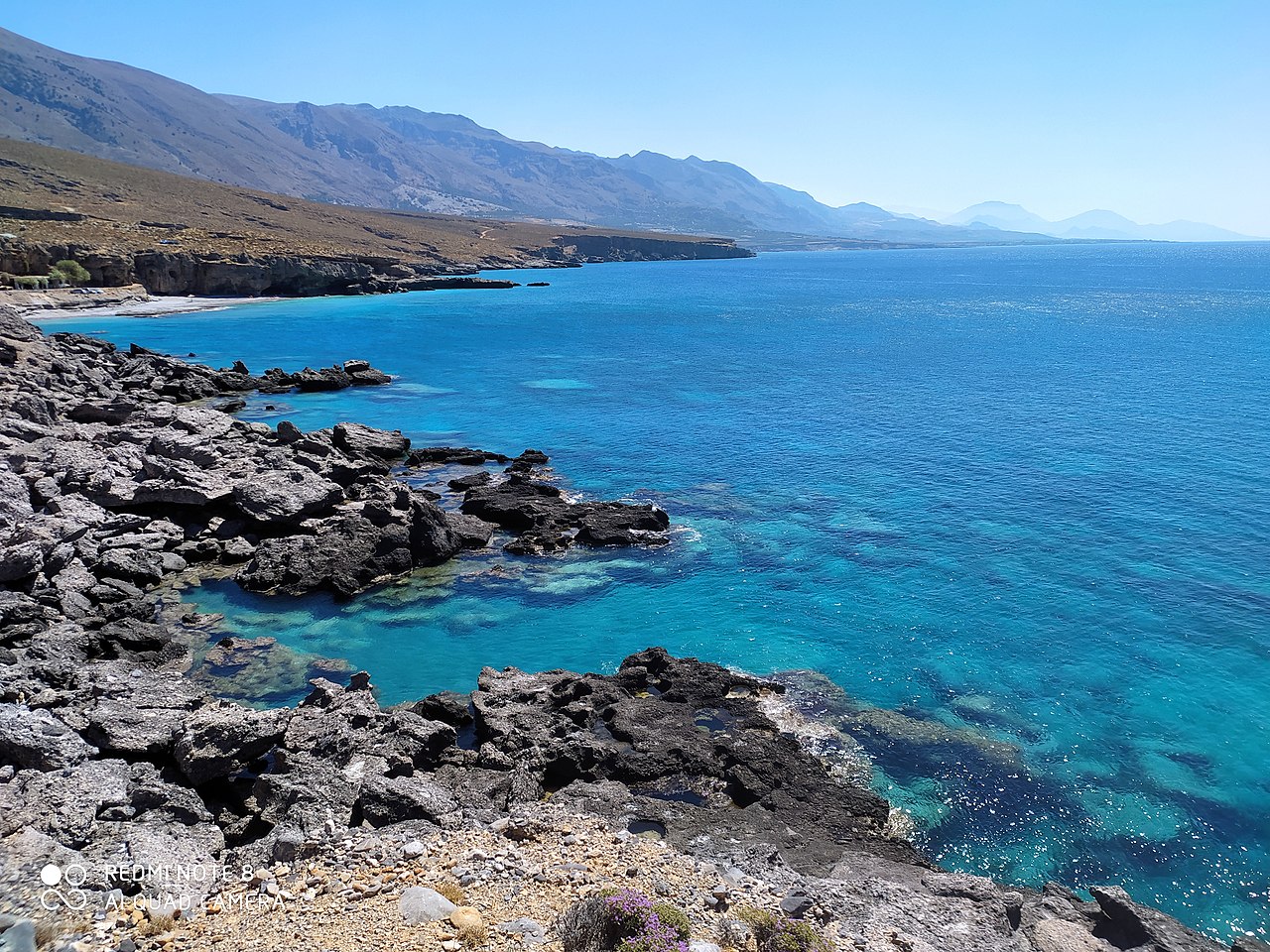
The sea temperature in September averages 26–27°C along the north coast and 25–26°C on the south. This is the warmest the sea gets all year. The water has absorbed three months of summer heat and holds it well into the month. Visibility runs 15–20 metres across most of the island, making it prime snorkelling and diving season.
Visiting Crete in September also means catching the grape harvest. Vineyards across the Heraklion wine road — particularly around Archanes and Dafnes, roughly 15 km south of Heraklion — are active. Local village festivals (panigiri) continue through the first two weeks of the month. The island feels local again after the peak-season crush.
Crete September Weather: Temperature, Sea and Wind
Average daytime highs in September: 28–30°C in Heraklion, 27–29°C in Chania, 29–31°C in Sitia (eastern Crete consistently runs hotter). Overnight lows fall to 19–22°C — comfortable sleeping without air conditioning from mid-month onward. The Crete September weather pattern is reliably sunny with short windows of afternoon cloud.
Rainfall is rare. September averages 3–5 rainy days in western Crete and just 1–3 in the east. When rain arrives, it comes as short, heavy afternoon showers rather than sustained grey days. The south coast, protected by the White Mountains and Dikti range, sees even less precipitation than the north.
The meltemi — the northerly summer wind that batters the north coast from June through August — weakens substantially in September. August meltemi can reach 7–8 Beaufort, making swimming uncomfortable and ferry crossings rough. By September it settles at 3–5 Beaufort on most days. Boat trips to Balos, Elafonisi, and Spinalonga become far more reliable and significantly more pleasant as a result.
For current conditions, the Crete weather forecast for 3 September 2026 shows what a typical early-September day looks like: clear skies, sea at 26°C, light to moderate northerly in the afternoon — representative of the month as a whole.
UV index in early September runs 7–8 (high). By the final week it eases to 5–6 (moderate). Sunscreen is non-negotiable throughout the month — factor 30 minimum, applied before 10 am and reapplied at midday.
Best Beaches for Visiting Crete in September
September delivers the best beach conditions of the year: warmest water, reduced crowds, and sunbed prices 20–30% lower than August peaks. Here are the top options by region:
- Elafonisi (southwest, 76 km from Chania): The famous pink-sand lagoon. In August the car park fills by 8:30 am. In September you can arrive at 10 am and still find space. The lagoon averages 0.5–1 m depth throughout, safe for small children. Sea temperature: 25–26°C. Organised day trips from Chania: €25–35 by bus.
- Balos Lagoon (northwest, 56 km from Chania): Boat from Kissamos port — €15–18 return, 45-minute crossing. Alternatively, 8 km of unsealed track passable by 4WD. September visitor numbers are 40–50% lower than August. The turquoise-white lagoon matches its photographs most closely when it is not overrun.
- Vai (far east, 24 km from Sitia): Europe's largest natural palm forest sits directly behind this beach. Crowds thin dramatically from September. Water visibility exceeds 20 metres. Afternoon shade from the palm grove is a genuine advantage over treeless alternatives.
- Falasarna (northwest, 60 km from Chania): Wide sandy beach, shallow entry, consistent Blue Flag status. The west-facing orientation means the prevailing north-easterly in September keeps it sheltered. Sunset views are among the best on the island.
- Seitan Limania (Akrotiri peninsula, 20 km east of Chania): A narrow fjord-like cove with no facilities. Park at the agricultural road junction and walk 15 minutes down a steep dirt path — unsuitable if mobility is limited. The water is extraordinary: dense, still, vivid blue. Bring water; there is nothing on site.
- Matala (south coast, 68 km southwest of Heraklion): Rocky coves, calm sea, a village that functions year-round. The Roman-era caves cut into sandstone cliffs above the main beach are open until 19:00. September is its most relaxed month.
Costs and Crowds in September: The Real Numbers
Flights: Return fares from London to Heraklion (HER) or Chania (CHQ) typically run €160–260 in September versus €280–400 in August — a saving of 30–40%. Northern European routes from Amsterdam, Frankfurt, and Zurich follow similar patterns. Book 6–8 weeks out for the best fares; last-minute September flights often remain available at reasonable prices unlike in August.
Accommodation: A 3-star hotel in Chania old town that charges €120–150 per night in August drops to €80–100 in September. A 4-star north coast resort falls from €200 to €130–160. Self-catering apartments and villas see similar declines. The final week of September, shoulder-season pricing kicks in hard — sometimes 50% below August rates for the same room.
Car rental: This is where September savings are most significant. August: €70–90 per day for a small car with many companies fully booked. September: €30–50 per day with same-week availability in most categories. Full coverage insurance is essential — mountain roads in the south and east are narrow with limited guardrails.
Food and drink: Taverna prices do not change seasonally. A full meal — meze, grilled fish or meat, local wine, water — costs €18–28 per person in a genuine local taverna. What changes in September is that you can get a table without a reservation at most restaurants, even on the seafront in Chania.
Crowds at major sites: Knossos (5 km south of Heraklion) and Samaria Gorge (44 km south of Chania) both see visitor numbers drop 40–60% from August. Arriving at gate opening (08:00 at Knossos) in September means walking the palace with a fraction of the summer crowds. The Minoan palace at Phaistos (60 km southwest of Heraklion) and Gortyna (50 km south) are manageable even in August; September makes them genuinely peaceful.
Hiking and Gorges: Why September is the Peak Season for Trails
Interior temperatures in July and August regularly reach 38–42°C, making gorge hiking genuinely hazardous. September changes that entirely. Average temperatures at altitude — the Omalos plateau sits at 1,200 m — run 5–8°C cooler than the coast. Trails are dry, well-defined, and at their most accessible.
Samaria Gorge (16 km, Omalos to Agia Roumeli on the Libyan Sea): The definitive Cretan hike. Open from May through October, conditions in September are optimal — cool enough to be safe, dry enough to be easy, quiet enough to be enjoyable. Allow 5–7 hours depending on fitness. Wear proper trail shoes, not sandals. The ferry from Agia Roumeli back to Sfakia (€12–15) runs several times daily and connects to the road network above the south coast cliffs.
Imbros Gorge (8 km, 40 km southeast of Chania near the village of Imbros): A shorter and significantly less crowded alternative that can be walked in both directions without needing arranged transport back to your start point. September conditions are ideal. The full breakdown of distance, difficulty rating, access points, and how to organise logistics is in the Imbros Gorge hike guide 2026.
Crete has more than 50 named gorges, ranging from the easy 2 km Richtis Gorge in the east (ends at a waterfall and beach) to technical routes requiring experienced local guides. For a structured comparison of 10 of the best — including difficulty ratings, distances, and access notes — see the complete guide to gorges in Crete.
Wine harvest tours: The Heraklion wine road covers 25+ producers within 30 km of the city. September is active pressing season — must-tasting is offered at several wineries without advance booking. Domaine Lyrarakis (Alagni, 20 km south of Heraklion), Douloufakis (Dafnes), and Minos-Miliarakis (Peza) are reliable options.
Diving: Aegean visibility peaks in September at 25–30 metres. Certified divers can access wreck dives — the B-24 bomber wreck near Kissamos sits at 38 m depth — and sea caves along the south coast. Discover dives for uncertified beginners start at €60–80 at most coastal dive centres.
Practical Tips for Crete in September
When to book: 4–6 weeks in advance is sufficient for most of Crete in September. Chania old town has limited room stock; aim for 6–8 weeks for that area. Car rental is best booked 2–3 weeks ahead to secure September's lower rates before availability tightens again around Northern European school holiday periods in late October.
Getting there: Heraklion (HER) and Chania (CHQ) both operate full international schedules throughout September. Sitia (JSH) in eastern Crete handles smaller regional aircraft and may require an Athens connection for non-Greek routes. The overnight ferry from Piraeus to Heraklion (10 hours, from €40 in a seat, €70 in a cabin) runs year-round and is a practical option for travellers already in Athens.
Getting around: A rental car is essential outside Heraklion city. The KTEL bus links Heraklion to Chania (2h30, €15) and Rethymno (1h30, €8), but does not reach most beaches or gorge trailheads. Taxis are available but expensive for distances over 20 km.
What to pack: Light summer clothes for the first half of September. One light layer — a fleece or thin jacket — for evenings from mid-month onward. Proper trail shoes if hiking is planned. Snorkelling mask and fins if possible, since rental quality varies. Factor 30–50 sunscreen, a brimmed hat, and a 1.5-litre reusable water bottle. Tap water is drinkable in Heraklion, Chania, and most towns; carry a filled bottle in remote villages where supply can be intermittent.