Why Renting a Car in Crete Is Almost Non-Negotiable
Crete stretches 260 kilometres east to west — roughly the distance from Paris to Lyon. Public buses (KTEL) connect the main northern towns but run infrequently, skip most villages and beaches, and stop operating in the evening. A taxi from Heraklion to Elafonisi Beach costs upwards of €120 one way. For anything off the north-coast strip — gorges, mountain villages, south-coast beaches — car rental in Crete is the only realistic option short of an organised tour.
The island has two international airports: Heraklion (HER, Nikos Kazantzakis) in the centre-north and Chania (CHQ, Ioannis Daskalogiannis) in the west. Both have on-site rental desks from all major providers. Picking up at the airport eliminates a transfer and is usually priced the same as town offices. A third airport, Kastelli, is under construction east of Heraklion and expected to begin limited operations before the end of this decade.
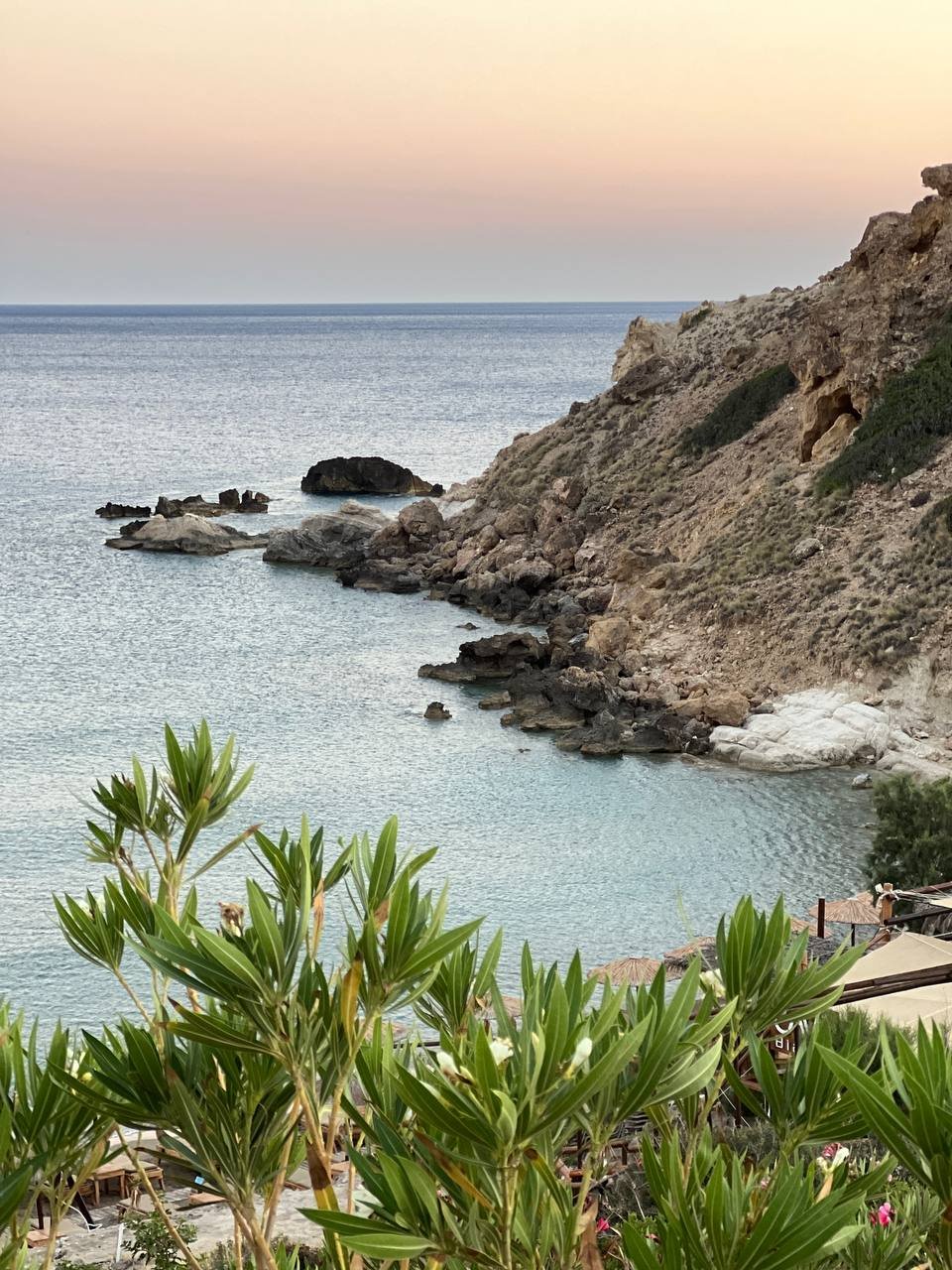
If you plan to explore Crete's hidden beaches — many of which sit at the end of unpaved tracks or require a 40-minute mountain drive — a rental car is non-negotiable. The same applies to reaching trailheads along the E4 long-distance trail, which crosses the island east to west and accesses points no scheduled bus serves.
How Much Does Car Rental in Crete Cost in 2026?
Prices vary sharply by season, vehicle class and booking lead time. Based on current market rates across providers operating on the island, here is a realistic price range for renting a car in Crete:
- Economy (Fiat 500, Hyundai i10): €28–42/day in low season (November–April), €58–88/day in peak July–August
- Compact (VW Polo, Toyota Yaris): €38–58/day low season, €72–105/day peak
- SUV / 4WD (Dacia Duster, Toyota C-HR): €68–105/day low season, €115–165/day peak
- Minivan (7 seats): €85–135/day low season, €145–210/day peak
A week in a compact car booked 6–8 weeks ahead in May or September typically comes to €290–400 all-in including basic insurance. The same vehicle in August regularly exceeds €650. Fuel runs approximately €1.85–2.10 per litre for unleaded (95 RON), and most economy cars return 5.5–6.5 litres per 100 km on mixed Cretan roads.
Local Cretan operators — companies such as Creta Car, Motor Plan, and various AutoEurope affiliates — typically undercut international brands by 20–30%. The trade-off is older fleets and less standardised roadside assistance. On a one-week rental, the saving can reach €80–120.
Crete Car Hire Tips: How to Book the Cheapest Deal
These practices consistently produce lower total costs when searching for the cheapest car rental in Crete:
- Book 6–10 weeks in advance for summer travel. Last-minute availability in July–August is thin and priced at a heavy premium. October travel can be booked 2–3 weeks ahead without penalty.
- Use aggregator platforms (Rentalcars.com, Discover Cars, Kayak) rather than booking directly with brands. The same car from the same depot regularly appears €15–25/day cheaper through a comparison site.
- Avoid airport concession surcharges. Some companies add a 10–15% fee for airport pick-up. A short taxi to a town-centre office 2–3 km away can save €30–60 on a week-long rental — worth calculating before you book.
- Choose manual transmission. Automatics carry a €5–15/day surcharge with most Cretan operators.
- Pay in euros at the counter. Declining the rental company's dynamic currency conversion saves 3–5% on the total charge.
- Return with a full tank. Pre-purchase fuel packages from rental companies price petrol at 25–40% above the pump rate.
- Check your credit card benefits. Several Visa Signature and Mastercard World Elite cards include secondary Collision Damage Waiver cover, which can eliminate the need to purchase the company's own CDW and save €10–18/day. Verify the exact coverage terms before relying on this.
Young driver surcharges apply to drivers under 25 — typically €7–12/day extra. Most companies set the minimum hire age at 21; some budget operators require 23. Drivers over 70 may face additional checks or restrictions depending on the provider. A credit card in your own name is required for the security deposit — debit cards are not accepted by the majority of operators.
Crete Driving Guide: Roads, Rules and Conditions
The BOAK north coast highway is Crete's main artery — a modern dual carriageway running from Heraklion westward toward Chania, with ongoing expansion. This is fast, well-maintained road. Key driving distances from Heraklion:
- Heraklion → Chania: 150 km, approximately 1 hr 30 min via highway
- Heraklion → Rethymno: 78 km, approximately 55 min
- Heraklion → Agios Nikolaos: 65 km, approximately 1 hr on the national road
- Heraklion → Elafonisi Beach: 135 km, approximately 2 hrs 45 min (final section is steep mountain road)
- Chania → Samaria Gorge entrance (Xyloskalo): 42 km, approximately 1 hr on a winding mountain road
- Heraklion → Vai Palm Beach (far east): 175 km, approximately 2 hrs 30 min
Greek traffic law applies throughout the island. Key rules for driving in Crete:
- Drive on the right
- Speed limits: 50 km/h in urban areas, 90 km/h on rural roads, 110–120 km/h on highways
- Blood alcohol limit: 0.05% (0.5 g/litre), stricter for new drivers (0.02%)
- Seat belts mandatory front and rear at all times
- Mobile phone without hands-free: €100 on-the-spot fine
- Headlights required in tunnels regardless of time of day
EU and EEA licences are fully valid. Drivers from the UK, US, Canada and Australia are technically required to carry an International Driving Permit (IDP) alongside their national licence. Enforcement varies but obtaining one before departure is sensible — it costs under €20 and takes minutes to arrange through national motoring associations.
The south coast and mountain interior are a different category entirely. Roads between villages are frequently single-track with passing places, have steep gradients and loose gravel edges, and some mapped routes become unpaved tracks for several kilometres. For anything shown as a minor road or track south of the Lefka Ori or the Asterousia ranges, a high-clearance vehicle is the right choice. Standard economy cars regularly suffer underbody damage on these routes, and rental contracts explicitly exclude undercarriage damage from CDW coverage — this is one of the most common hidden costs tourists encounter.
Parking near popular gorge entrances and major beaches fills completely by 09:00 in peak season. Plan to arrive before 08:00 or use lower roadside spots and walk the extra distance. Heraklion city-centre parking is metered at €1–1.50/hr with active enforcement.
Car Hire Insurance in Crete: The Fine Print That Matters
Insurance generates more complaints about car hire in Crete than any other issue. Understanding the structure before you sign eliminates most surprises:
- CDW (Collision Damage Waiver): Included in nearly all advertised rates. Reduces your liability for damage to the rental car but leaves an excess of €800–1,500 that you pay if the vehicle is damaged.
- Super CDW / Full Protection: Reduces your excess to €0–200. Costs €9–18/day depending on provider and vehicle class. Worth considering if you plan to drive south-coast tracks or mountain roads.
- Theft Protection (TP): Sometimes bundled with CDW, sometimes a separate add-on. Confirm before signing.
- Third-party liability: Legally required in Greece. Included in all legitimate rental agreements.
Standard exclusions that no CDW covers: tyre sidewall damage, windscreen chips and cracks, underbody, and roof. These are spelled out in every contract and routinely cost €150–450 to repair. A single sharp stone on a gravel track can split a tyre sidewall — entirely your liability under a standard agreement. Some premium credit cards extend coverage to these items; verify your card terms before departure, not at the rental counter.
Before driving off the lot, photograph and video the entire vehicle — tyres, wheel rims, underbody where visible, mirrors, roof. Upload the images with a timestamp to cloud storage while still on the premises. This single step resolves the vast majority of disputed damage charges.
Best Time to Rent a Car in Crete: Season by Season
Season affects price, road congestion, accessibility and which destinations are realistically reachable.
- May and October: The optimal window for renting a car in Crete. Prices are 35–45% below August peak, roads are clear, and both coast and mountain routes are accessible. October combines near-empty interior roads with stable temperatures. Before driving into the mountains in mid-to-late October, check the current weather forecast — conditions above 1,000 m can change quickly after the first autumn rains arrive.
- June and September: High-season pricing begins, but roads outside peak hours remain manageable. Good months for south-coast access and gorge routes before and after the summer crowds.
- July–August: Highest prices, maximum congestion on the north coast highway and around popular destinations. Gorge car parks are full by 08:30. Book as far in advance as possible — 8–10 weeks minimum for July.
- November–April: Cheapest rates, typically 50–60% below August levels. Fleet availability shrinks as many operators reduce operations for the winter. Mountain roads above 1,000 m can close due to snow in January and February. Best suited to travellers focused on Heraklion, Rethymno, Chania and the north coast.
For winter mountain driving, check the Greek road authority (OASEN) for current closures before attempting the Sfakia, Agia Roumeli or Ierapetra mountain routes. Carry a snow chain set if crossing the Lefka Ori range between December and March.