Preveli Beach: A Palm Forest on the South Cretan Coast
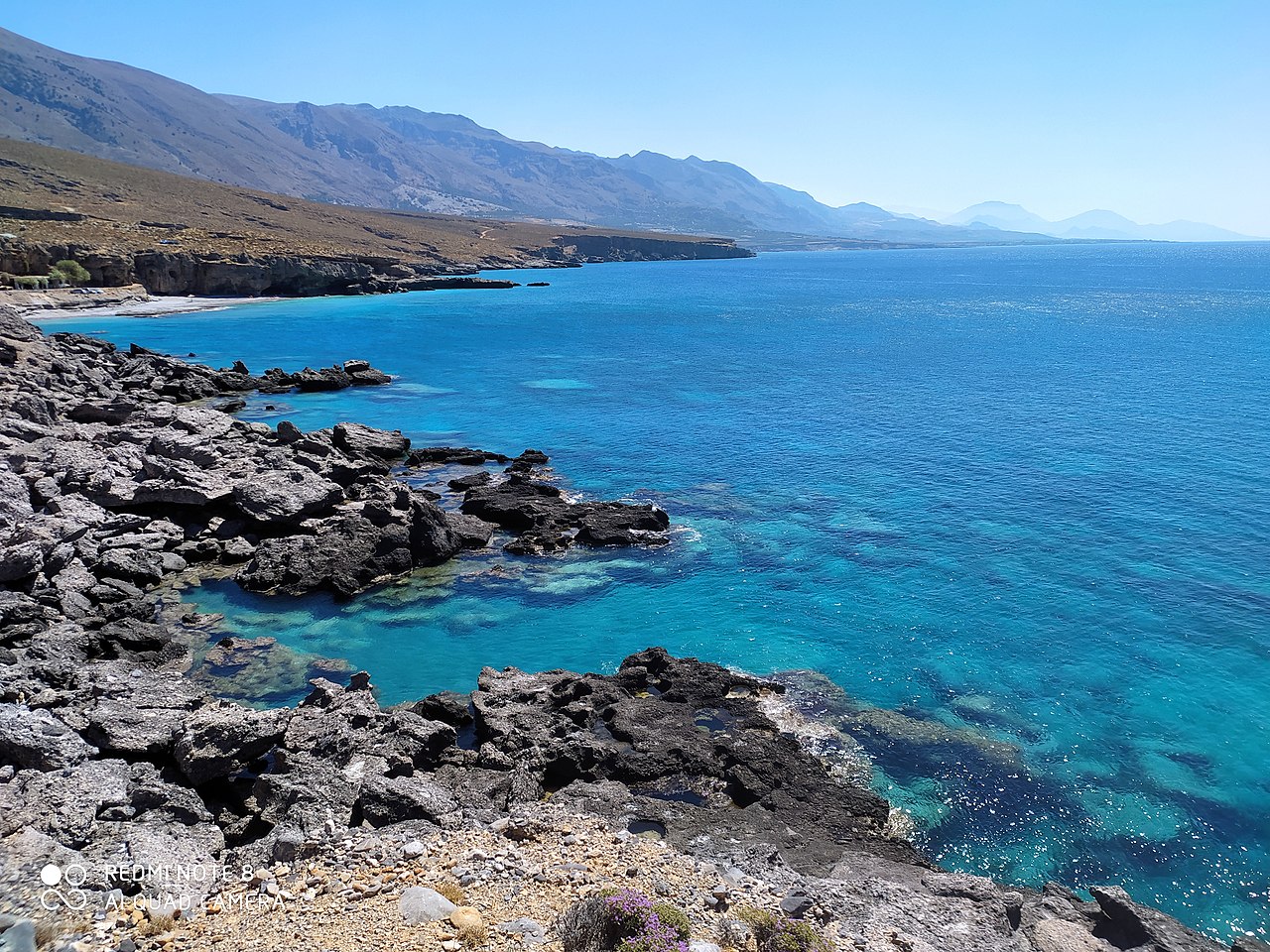
Preveli beach Crete sits on the southern coastline of the Rethymno regional unit, roughly 35 km south of Rethymno town and about 80 km from Heraklion. What separates it from every other beach on the island is a dense grove of Cretan date palms (Phoenix theophrasti) growing directly at the waterline, fed by the Megalopotamos river that cuts through the landscape before emptying into the Libyan Sea. The result is a lagoon where cold freshwater meets warm seawater — a configuration found almost nowhere else in Europe.
The site divides into two distinct zones: the palm beach lagoon at sea level, and the river gorge that runs inland behind it. Both are worth your time, but they require different preparation and energy levels.
The area sits within a protected Natura 2000 zone. The Phoenix theophrasti palm species here is endemic to Crete and the Eastern Mediterranean — it is not imported or planted. Picking fronds or disturbing vegetation carries fines under Greek environmental law. Visitor numbers have increased steadily over the past decade, making early arrival or off-peak timing more important than ever.
How to Get to Preveli Beach: Roads, Boats, and Hiking Options
Understanding how to get to Preveli matters because there are three distinct access points, each with different distances and difficulty levels. Getting this wrong costs you time and frustration on mountain roads.
By car from Rethymno (35 km, approximately 45 minutes): Take the E75 south toward Spili, then follow signs toward Lefkogia and Preveli. The road is paved but narrows significantly in the final 5 km, with passing places required. Two parking areas exist:
- Upper parking (Kato Preveli): Located approximately 200 metres above the beach. From here, a steep stone path with roughly 200 steps descends directly to the preveli palm beach. This is the most used access point and the shortest walk. Parking costs around 3–4 EUR in peak season, cash preferred.
- Monastery parking (Piso Preveli): Located near the 16th-century Preveli Monastery, about 2 km further east. From here, a gorge trail leads approximately 3 km down to the beach — plan 45 to 60 minutes each way on uneven terrain with some scrambling.
By boat from Plakias (7 km by sea): Seasonal boat taxis run from Plakias harbour to Preveli from approximately late May through early October. The crossing takes about 20–25 minutes and costs around 10–15 EUR per person each way. This is the easiest option if you are staying in Plakias or Agia Galini. Schedules adjust with demand and weather — check locally the day before.
By bus from Rethymno: KTEL runs a seasonal service to Preveli, typically one or two departures per day in summer. Journey time is approximately 1 hour 15 minutes. The service does not run year-round — confirm current timetables at Rethymno bus station before planning your trip around it.
From Heraklion (80 km, approximately 1 hour 30 minutes): Head west on the E75 toward Rethymno, then south via Spili. The drive is straightforward until the final approach. Note: in autumn 2026, weather patterns on the north coast have included storm warnings and flooding, while south Crete beaches including Preveli have remained consistently dry and accessible. If traveling from northern Crete, check conditions before setting out — the Crete weather forecast for 2 October 2026 confirms the north-south weather divide that typifies autumn on the island.
Preveli Palm Beach: The Lagoon, the Forest, and the Sea
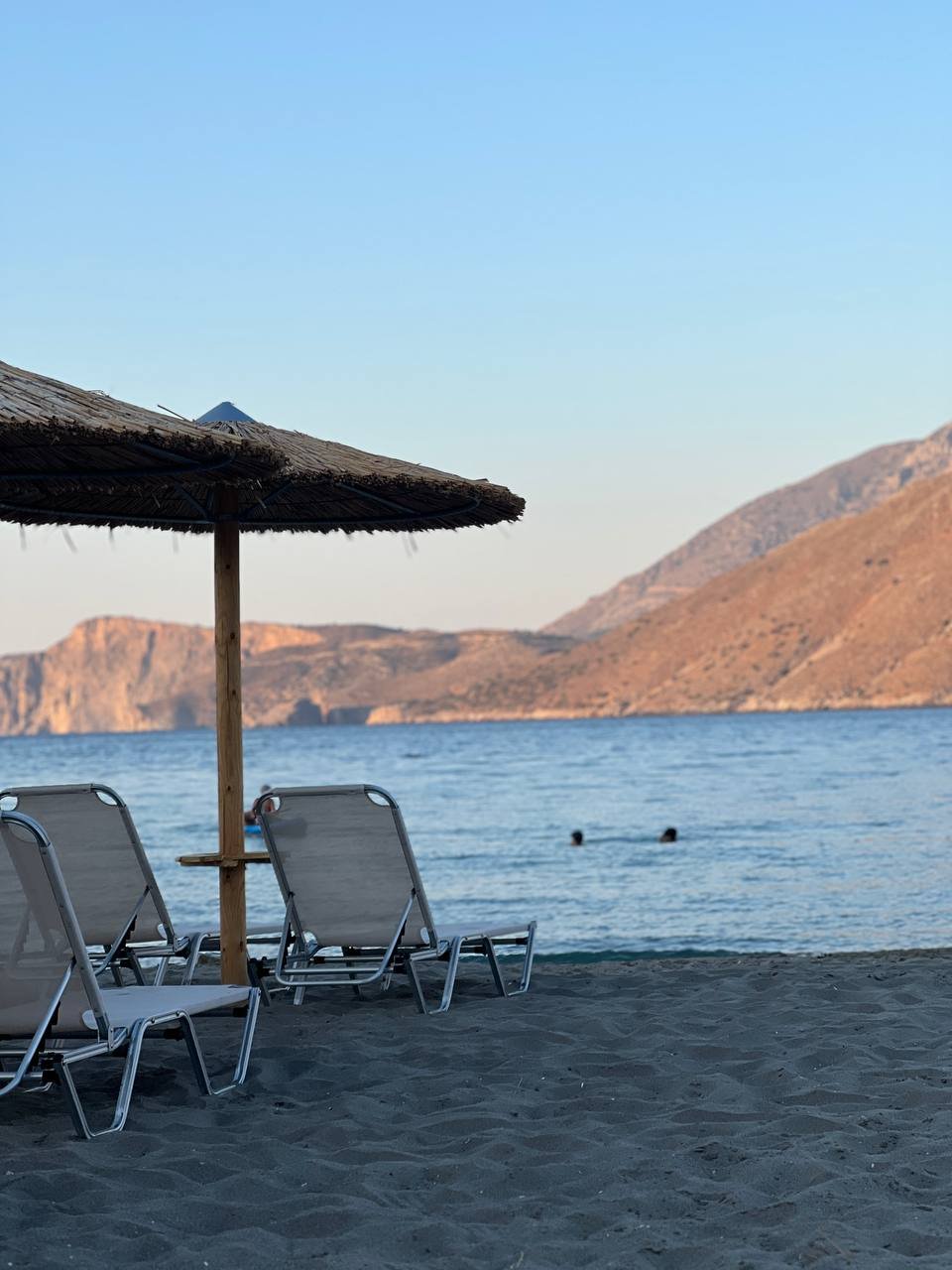
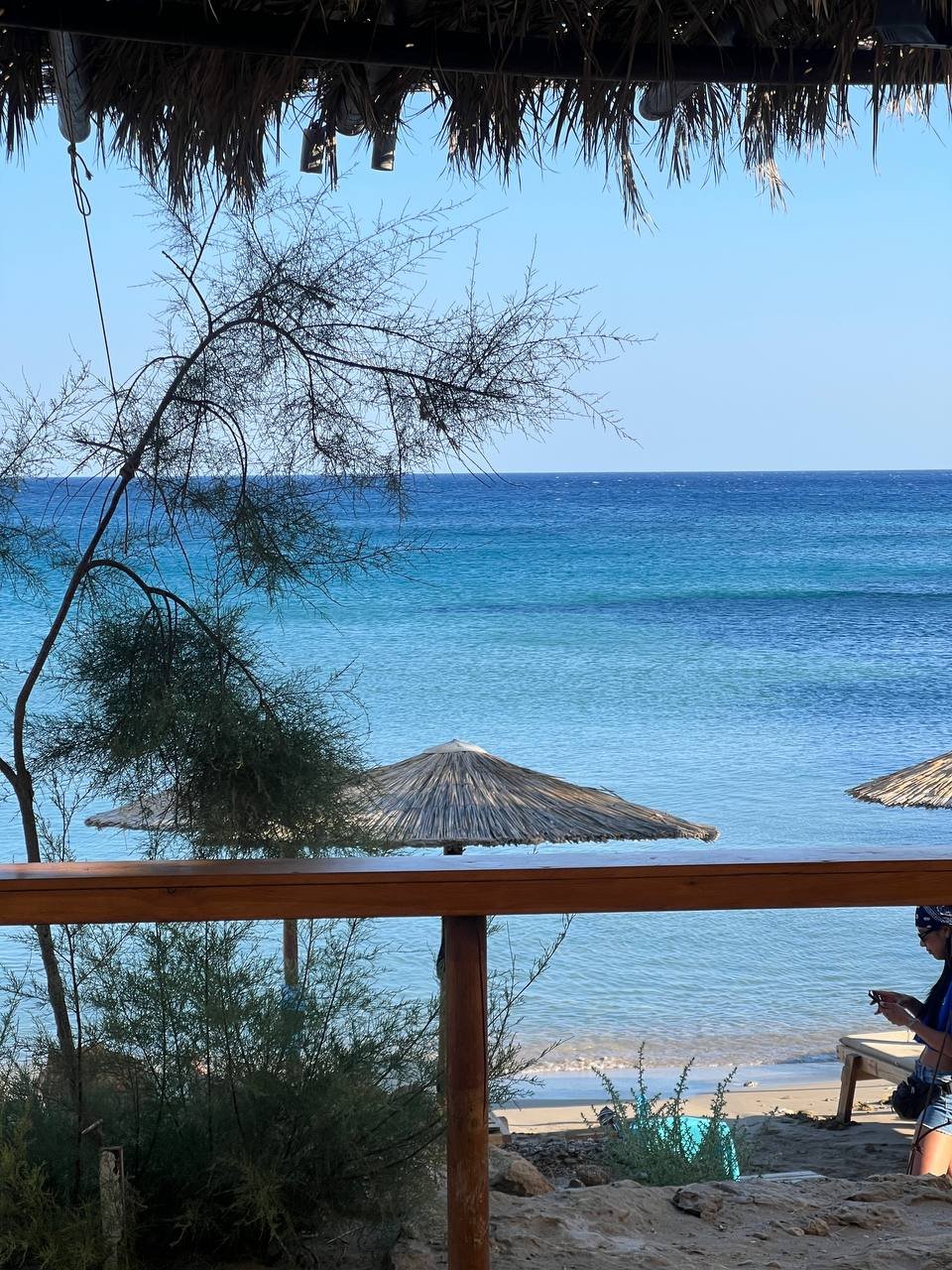
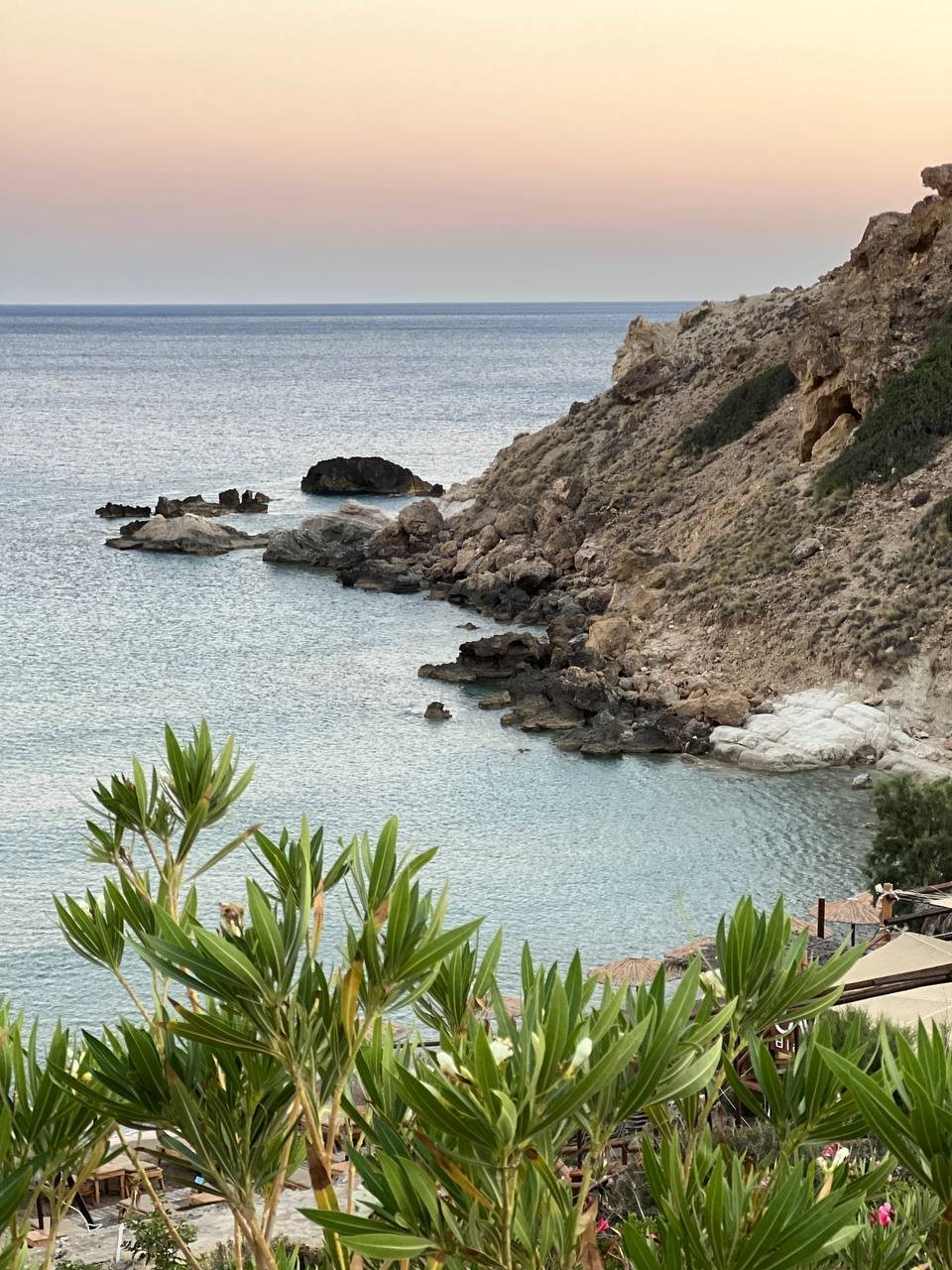
At sea level, preveli palm beach splits into two sections divided by the river mouth. The western side is wider, with coarse sand and pebbles and the bulk of the palm grove providing shade. The eastern side is smaller, rockier, and typically less crowded. The Libyan Sea here is clear and sheltered from northern winds — conditions are calm on most summer and autumn days.
Water temperatures in the sea: approximately 24–26°C in July and August, dropping to 21–22°C by late September and 19–21°C in October. The lagoon itself — where the Megalopotamos river meets the sea — is shallow (rarely more than 1 metre deep) and noticeably cooler than the sea, typically 4–6°C lower even in peak summer. The contrast between the cold freshwater pool and the warm sea five metres away is immediate and striking.
Facilities at Preveli beach:
- A seasonal snack bar operates from approximately May to late September. Coffee 3–4 EUR, cold drinks 2–3 EUR, sandwiches and snacks available. It does not operate in October.
- Sun loungers and umbrella rental: 8–12 EUR for a set of two loungers and one umbrella in peak season. Numbers are limited — first come, first served.
- No showers or changing rooms at beach level. Basic toilet facilities exist near the upper parking area, not at the waterline.
- Mobile signal is weak to nonexistent on the beach itself. Inform someone of your plans before hiking into the gorge.
- No lifeguard service. Swimming is at your own risk.
Crowds: July and August see the highest visitor volumes, with the beach filling up before 11:00. Arriving before 09:30 or after 16:00 significantly improves your experience. September and early October offer a much better ratio of visitors to space, with full swimming conditions still available and the palms at their best visual state.
Swimming in Preveli Gorge: Distance, Conditions, and What to Bring
The preveli gorge swim is what separates this site from any other beach on the south Crete coastline. Once you reach the lagoon, you can continue upstream into the Kotsifos gorge along the Megalopotamos river. The water is consistently cool — typically 18–20°C even in August — clear, and ranges from knee-deep shallows to over-head-depth pools depending on rainfall and season.
Most visitors swim and scramble approximately 400–600 metres upstream before turning back. The effort takes 30–45 minutes each way depending on water levels and how many pools you explore. The scenery changes sharply: sheer rock walls close in, vegetation thickens, and the noise of the beach disappears within a few hundred metres. The deeper pools allow full submersion and are popular with younger visitors.
Practical guidance for the gorge:
- Footwear is essential: Water shoes or strapped sandals are mandatory. The riverbed is rocky, uneven, and slippery in places. Bare feet become painful after the first hundred metres.
- Waterproof your valuables: Put your phone, documents, and cash in a dry bag or waterproof case before entering the gorge. You will get fully wet in the deeper sections.
- Water depth varies by season: In spring (April–May), the river runs deep and fast following winter rains — gorge swimming may not be safe or possible. By July, levels drop significantly and the route opens up. In autumn, levels can rise again after rainfall events.
- Direction: Enter upstream (away from the sea). The gorge becomes impassable after roughly 1 km for casual swimmers without technical equipment. Do not attempt to complete the full gorge traverse without a local guide and appropriate gear.
- No guide required for the standard 400–600 metre upstream section. For full gorge traverses linking to the monastery trail, contact outfitters in Plakias or Rethymno — guided half-day trips run approximately 35–50 EUR per person.
Gorge water levels in autumn 2026 may run higher than summer norms following heavy regional rainfall. The same storm systems that triggered red alerts and flooding in northern Crete on 1 October 2026 increase freshwater flow into the gorge even when the south coast itself stays dry. Check conditions locally before entering the gorge in October or November.
Best Time to Visit Preveli: Month by Month
Preveli is accessible year-round in theory, but the practical window for swimming and full facilities is May through October.
May – June: Sea temperature 20–22°C. River running higher than summer norm. Fewer crowds, green vegetation, boat taxis beginning operations. Best months for photography and gorge hiking without the July–August volume. Some facilities may not be fully operational in early May. Parking is easy to find.
July – August: Peak season. Sea temperature 25–27°C, lagoon warm and swimmable. All facilities operational. Boat taxis running multiple times daily. Arrive before 09:30 or after 16:00 to avoid the worst congestion. Parking at the upper lot fills by 10:00 on clear days. Beach temperatures at midday can reach 35–38°C in August — the palm shade and river become essential, not optional.
September – October: The optimal window for most visitors. Sea temperature 22–24°C in September, 19–21°C in October. Crowds thin considerably after mid-September. Facilities begin closing from late September, boat taxis suspend in early October. The south Cretan microclimate keeps Preveli sunny and dry well into autumn even when northern Crete has storm activity — a consistent pattern through autumn 2026. Verify conditions with the south Crete weather updates before making the drive.
November – April: Beach deserted, all facilities closed, boat taxis suspended. The gorge runs with significant water. Accessible on foot only for experienced hikers with proper gear. Road conditions on the final approach can be difficult after heavy rain. Not recommended for a standard beach visit.
Practical Tips: Costs, Rules, and What to Pack
Concrete points that save time and frustration on the day:
- No beach entrance fee, but parking is charged at the upper lot (3–4 EUR, cash). The monastery charges a separate entry fee of around 3 EUR if you want to visit the religious site — it is entirely optional for beach access.
- Shade is limited outside the palm grove on the western section. The eastern beach section has almost no shade. Bring a beach umbrella if you plan a full day on the open sand.
- No dogs allowed on the beach — enforced during peak season with fines applicable.
- Bring food and water if arriving early or planning to stay past 17:00. The snack bar does not operate before approximately 09:30 and closes by 18:00. Outside peak months, assume nothing is available.
- Drone flying is prohibited in the Natura 2000 zone without a permit from the Greek Ministry of Environment. Fines apply and enforcement has increased.
- Snorkelling: Rocky areas at the eastern end of the beach hold small fish, sea urchins, and occasional octopus. Basic mask and fins significantly improve the experience. Bring your own — nothing is available for rent at the beach.
- Nearest fuel and ATM: Plakias (7 km) has a petrol station and an ATM. There is nothing at Preveli itself. Do not assume you can pay by card at the parking area or snack bar.
- Combine with Plakias or Agia Galini: Both towns are within 15–20 km and offer full accommodation, restaurants, and supermarkets for a one- or two-night south coast base.