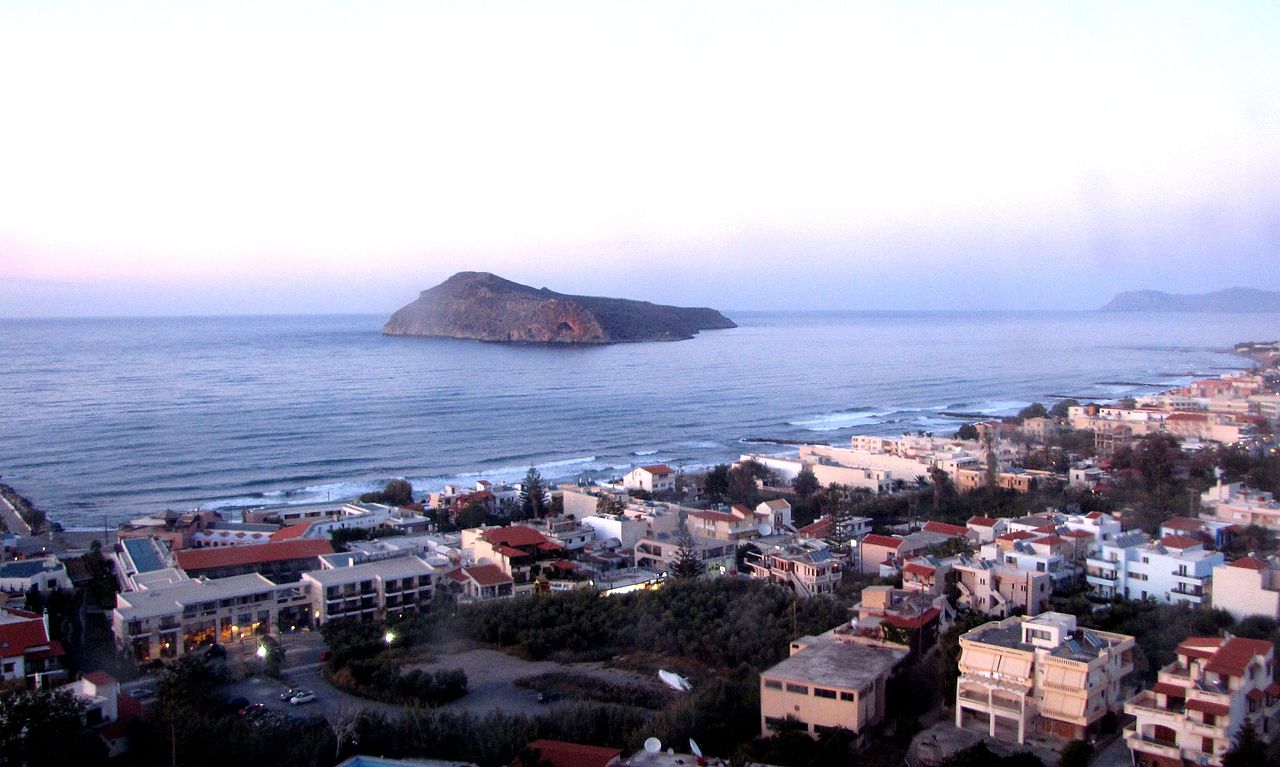
Crete's combination of 300+ clear nights per year, low humidity and a remote interior makes it one of the best destinations in Europe for stargazing in Crete. The island sits at 35°N latitude — south enough to see the full galactic core of the Milky Way arching overhead in summer. Away from coastal resorts, dark skies in Crete reach Bortle Class 3–4, comparable to the best rural skies in Central Europe. Getting there requires driving inland; see our Crete Road Trip 2026 self-drive itinerary for route details and road conditions.
Best Dark Sky Locations in Crete
Light pollution concentrates in Heraklion, Chania and the north coast strip. Move 20–30 km inland and conditions change dramatically. These five sites are the most accessible and reliable:
- Lasithi Plateau (east Crete) — 840 m altitude, 50 km from Heraklion via Neapoli. This enclosed plateau blocks coastal glow from all directions. One of the darkest accessible sites on the island with a fully paved access road.
- Omalos Plateau (Chania region) — 1,050 m altitude, 43 km south of Chania. Sits above most coastal haze. Minimal infrastructure means minimal artificial lighting. Trailhead for the Samaria Gorge.
- Anopoli village, Sfakia (south coast) — 600 m altitude, 8 km inland from Hora Sfakion. Faces an entirely unlit Libyan Sea to the south — excellent for watching the Milky Way in Crete summer arc from SSE to SW across the water horizon.
- Thrypti Mountain (Lasithi) — Remote highland at 1,200 m, accessed via Ierapetra. Bortle Class 3 conditions on moonless nights. Upper sections require a 4x4 or confident off-road driving on unpaved tracks.
- Kapetaniana village, Asterousia Mountains — 700 m altitude, 50 km south of Heraklion. Ridge between the Heraklion plain and the Libyan Sea gives clean southern horizons with no coastal development below.
When to Stargaze in Crete: Season, Weather and Moon
For astronomy in Crete, three factors determine night quality: cloud cover, atmospheric transparency and moon phase.
Season: May to October delivers the highest percentage of clear nights. July and August average fewer than 2 cloudy nights per month across the interior. The Milky Way galactic core is visible from late April through mid-September, reaching its highest point — roughly 40° above the southern horizon — between 22:00 and 01:00 local time in July and August. After September the core sets earlier and drops below 15° before midnight.
Weather: The meltemi — the strong north wind dominant in August — helps visibility. It flushes humidity south and strips aerosols from the atmosphere. On meltemi nights, atmospheric transparency is excellent. For current conditions, our Crete weather guide for 9 August 2026 covers what to expect this week, including meltemi strength and cloud forecasts.
Moon phase: Non-negotiable. A full moon washes out the Milky Way entirely. Plan around the new moon window — roughly 5 days either side of new moon gives usable dark conditions. Book accommodation near your chosen dark sky site for those specific dates.
Altitude: Every 300 m of elevation reduces atmospheric thickness and humidity. Sites above 800 m consistently outperform coastal viewpoints even on identical-looking clear nights.
Practical Tips for Astronomy in Crete
Equipment: Binoculars (10×50 minimum) reveal star clusters in Perseus, the Andromeda Galaxy at 2.5 million light-years and the dust lanes of the Milky Way. A DSLR or mirrorless camera with a 14–24 mm lens at f/2.8 or faster captures the full Milky Way arch in 20–25 second exposures at ISO 3200. No tracking mount required at these exposure lengths.
Red light: Bring a red-light headlamp. White light destroys dark adaptation for 20–30 minutes. Red wavelengths above 650 nm preserve night vision.
Temperature: Mountain plateaus drop 8–12°C below coastal temperatures after midnight even in August. At Omalos or Lasithi, expect 16–20°C at 02:00 when the north coast is still 28°C. A fleece layer is essential.
Guided tours: Several operators run guided stargazing tours in Crete departing from Heraklion and Chania — typically 50–80 EUR per person, including transport to a dark site, a guide with telescope and 2–3 hours of observation. Worth booking if you lack your own transport to reach remote plateaus.
The same remote areas with dark skies are also the quietest corners of the island. Pair your trip with advice from our guide on avoiding crowds in Crete in August 2026 to make the most of the highlands during peak season.