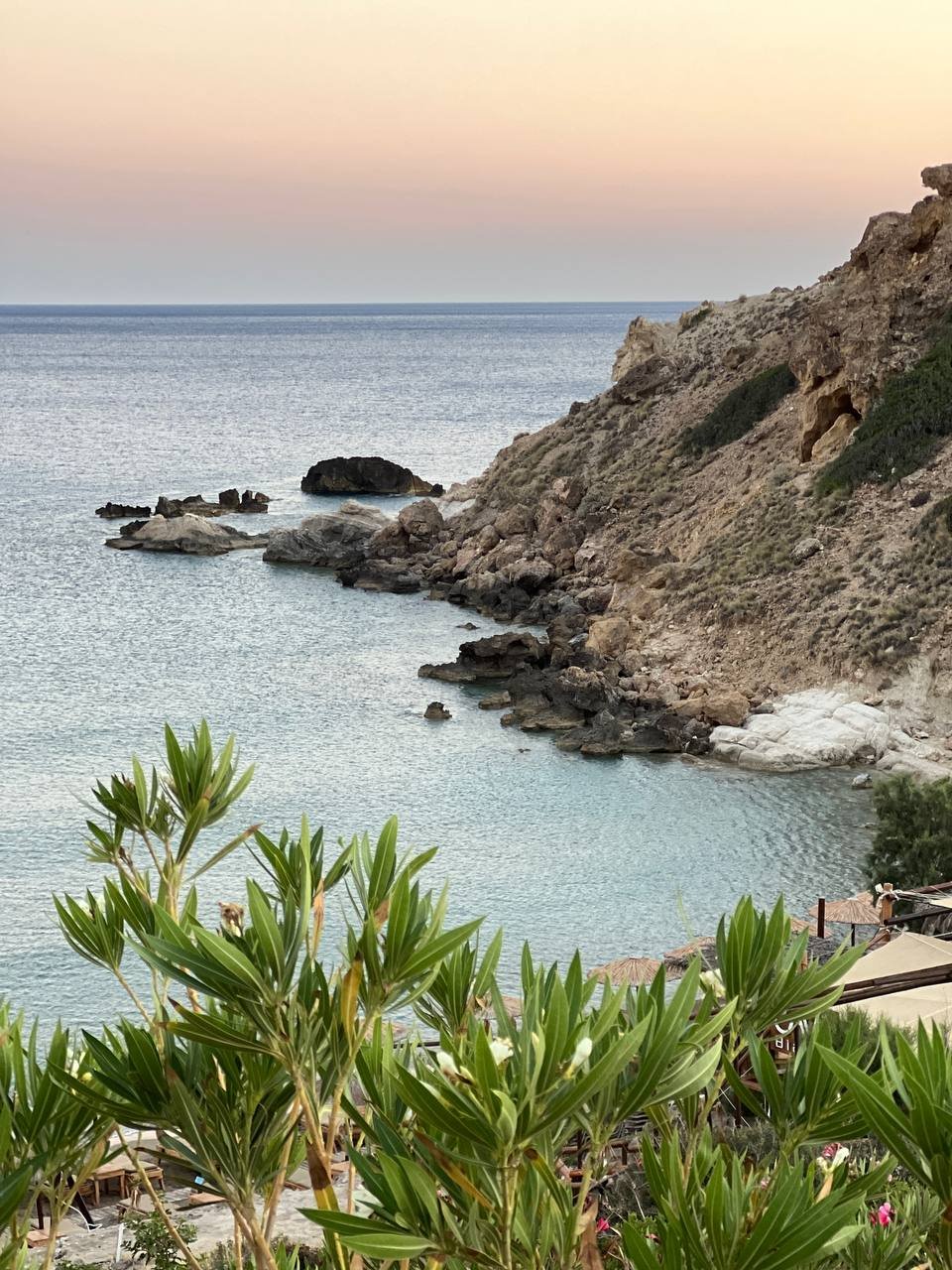
When and Where Crete Gets Overwhelmed in Summer
August is Crete's peak month by every metric. Heraklion airport processes over 1.5 million passengers in July–August combined. The worst pinch points are consistent year after year: Elafonisi beach sees 5,000+ visitors daily at peak, Balos lagoon fills by 10:00 AM with tour buses from Chania (the access road is a 9 km dirt track, yet coaches still run it), and Knossos Palace queues stretch 45 minutes from opening. Vai palm beach, Matala, and the Samaria Gorge trail (capped at 2,000 hikers per day) complete the congestion map. With temperatures regularly hitting 33–35°C — check the latest Crete weather conditions before you head out — standing in queues at midday is genuinely unpleasant.
The structural advantage most tourists ignore: Crete is 260 km long and 60 km wide. The vast majority of package tourists never leave a 30 km radius of Heraklion, Chania, or Rethymno. Everything east of Agios Nikolaos and west of Kissamos sees a fraction of the footfall.
Less Touristy Areas Worth Going to in August
These zones consistently stay off the beaten path in August despite being fully accessible:
- Far eastern Crete — Sitia and Palekastro: Sitia sits 75 km east of Agios Nikolaos, has a working fishing port, a local market, and rooms for 40–60 EUR/night in August. Itanos beach, 3 km north of Vai, gets a fraction of Vai's crowd and is free to access. Palekastro village has supermarkets, tavernas averaging 10–14 EUR for a full meal, and no souvenir shops.
- Sfakia coast (south-west): Accessible only by ferry from Hora Sfakion or via steep mountain roads. The village of Loutro is car-free — boat taxis connect villages for around 8 EUR per person. This area is physically isolated, which keeps crowds low even in peak season.
- Lassithi Plateau: At 800m altitude, it runs noticeably cooler than the coast. No beach tourism. The village of Tzermiadon serves local food (lamb, dakos, local cheese) without tourist-menu pricing. The drive up from Heraklion takes 55 minutes.
- Anogia: A working mountain village 35 km south-west of Heraklion at 780m altitude, known for its music tradition and weaving. Lunch: 8–12 EUR. Zero tourist traps.
For a full breakdown of which beaches stay manageable even in peak season, see Quiet Beaches Crete August 2026: Secret Spots and How to Avoid Peak-Season Crowds.
Timing and Logistics That Actually Work
The most effective single tactic to avoid crowds in Crete: arrive at any popular site before 8:30 AM. Tour buses typically roll in between 10:00 and 11:30 AM. Being there two hours earlier is a different experience entirely.
- Knossos: Book tickets online (20 EUR adults), arrive at 08:00 opening. Crowds thin again after 16:00 but the heat is brutal by then.
- Samaria Gorge: Start the 16 km hike at 07:00 from Xyloskalo — you finish before peak heat. Entrance: 5 EUR. Entry closes at 15:00.
- Balos and Elafonisi: Tolerable before 09:00, at effective capacity by 11:00. Both are worth the early alarm.
- Day of week: Fridays and Saturdays are package-tour changeover days — expect higher volumes at airports, roads, and beaches. Mondays and Tuesdays are noticeably quieter at most sites.
- Drive east: Rent a car and go past Agios Nikolaos. Budget 30–50 EUR/day for a compact. The E75 north-coast highway puts Sitia 70 km (45 minutes) from Heraklion. For a full route, see the Crete Road Trip 2026: Complete Self-Drive Itinerary Across the Island.
Staying outside resort towns cuts accommodation costs 30–40% and places you closer to quiet spots in Crete that package tourists rarely reach. A studio in Sitia or Palekastro: 35–55 EUR/night versus 90–140 EUR in Chania's old town for equivalent comfort.


