What Is Crete's Shoulder Season?
Crete's shoulder season runs from mid-May through mid-June in spring, and from September through October in autumn. This guide focuses on the autumn window — the period most independent travelers overlook despite being arguably the best time to visit the island. Crete off season travel in these months delivers the same Mediterranean landscape, food culture, and archaeological depth as peak summer, with significantly reduced crowds and costs.
Peak season runs July and August, when Crete receives the majority of its roughly 4 million annual visitors. Heraklion Airport handles over 800 charter flights per week at maximum. By early September, that volume drops by 30–40%, and by October, many mass-market package tour operators have pulled schedules entirely. What remains are independent travelers, hikers, food tourists, and those who want their holiday without queuing for an hour to enter a Minoan palace.
Operationally, the crete shoulder season still functions well. Most restaurants, hotels, car hire firms, and archaeological sites remain fully open through October 31. Some smaller beach bars and remote tavernas close after the first week of October — roughly 15–20% of venues — but the core infrastructure stays intact. Ferries to Gavdos and boat tours to Spinalonga run reduced but viable schedules. Public buses between cities maintain near-full frequency through October.
Crete September October Weather: Temperatures, Sea, and Rain
Crete September October travel rewards visitors with weather that objectively beats northern European summers. In September, daytime temperatures average 26–28°C along the northern coast from Heraklion to Chania — 150km apart by road. The southern coast, facing North Africa — Matala, Plakias, Paleochora — runs 2–3°C warmer. Nights cool to around 19–21°C, comfortable for sleeping without air conditioning.
October shifts the profile: daytime highs settle at 22–24°C in the north and 24–26°C in the south. By the second half of October, evenings drop to 16–18°C and a light jacket becomes useful after 20:00. Rainfall in September averages just 8–12mm for the entire month across most of Crete — effectively negligible. October brings the first real rains: 30–45mm on average, typically arriving as short intense showers rather than sustained grey days. A typical October week in Heraklion features 5–6 clear days and 1–2 shower days.
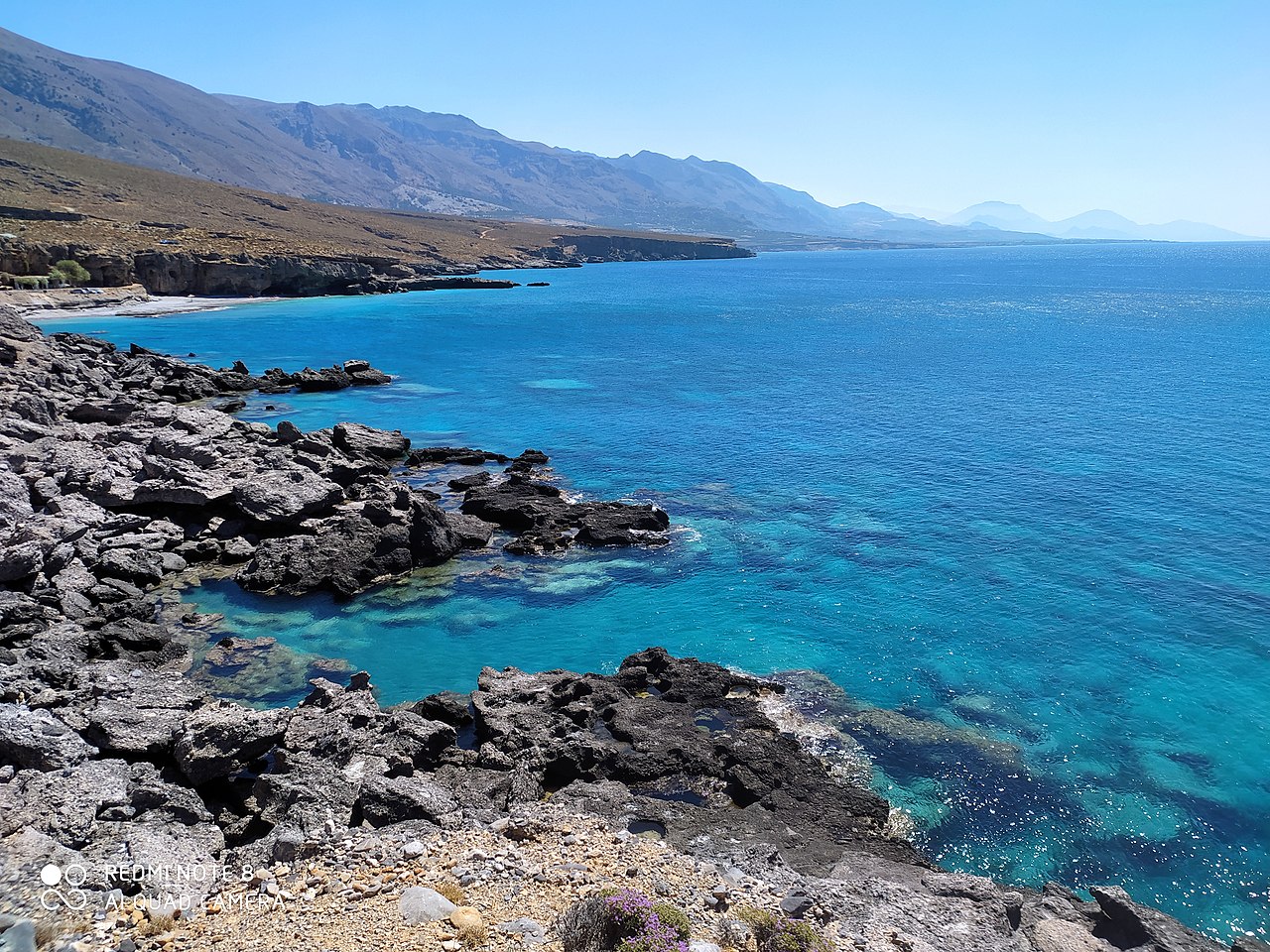
Sea temperatures are the shoulder season's strongest argument. The Aegean and Libyan Sea surrounding Crete retain summer heat well into autumn. In September, sea temperature averages 25–26°C — warmer than the warmest recorded English summer. By October it drops to 23–24°C, still comfortably warm for swimming. The Meltemi wind that dominates August on north-coast and Aegean-facing beaches loses intensity through September and largely disappears by October, improving both beach comfort and sea conditions for boat excursions to Balos and Elafonisi. For detailed current beach and swimming conditions, see our guide on swimming in Crete in September: sea temperature, best beaches and conditions.
Prices and Crowds: The Real Numbers for Crete Off Season
The financial case for crete off season travel is direct. A 4-star hotel room in Heraklion or Chania that costs €180–220 per night in August typically runs €90–130 in September and €65–90 in October. Airbnb and villa rentals follow the same curve: a 2-bedroom villa with pool near Rethymno that peaks at €350/night in summer often lists at €180–220 in September and €120–160 in October. Private car rental from reputable local firms — Top Car, Sunrise, Mike's — runs €35–55 daily for a compact automatic in September and €25–40 in October, compared to €60–90 at August peak.
Flight prices from major European hubs tell the same story. London to Heraklion return in August averages €300–500 per person from major carriers. The same route in late September drops to €120–200 return. October, particularly mid-to-late month, often falls below €100 return from London, Amsterdam, Paris, and Frankfurt when booked 3–6 weeks ahead. Note that by late October some low-cost carriers reduce weekly frequency, so flexibility on departure days matters. Flying in mid-week is consistently cheaper than weekend travel throughout the shoulder period.
Crowd differences are equally concrete. Knossos Archaeological Site (€15 adult entry, open daily 08:00–20:00 in season) sees 5,000–8,000 visitors per day in peak August. September brings roughly 2,500–4,000. By October, weekday visits drop to 800–1,500, making it possible to spend an hour at the palace ruins in near-solitude. The Samaria Gorge (€5 entry, 16km one-way hike), the most famous trek in Greece, sees severe congestion in summer with queuing at the entrance gate. September crowds are manageable; October, especially after mid-month, can feel genuinely quiet on the trail. Restaurant service in areas like Chania Old Town or Rethymno's Venetian harbor improves markedly — full kitchens, experienced staff still in post, and a pace that allows actual cooking rather than production-line output.
Best Activities for a Crete Autumn Holiday
The crete autumn holiday aligns with some of the island's most rewarding seasonal activities. September and October are harvest months: olives, grapes, and carob come off the land from late September through November. This makes it prime wine tourism season. Crete's wine regions — Peza (15km south of Heraklion), Dafnes, Archanes, and Sitia in the east — run harvest events and cellar-door tastings through September and October. Indigenous varieties including Vidiano, Kotsifali, and Mandilaria are at their most prominent in producers' conversations and cellars. For planning wine visits around the island, see Cretan wine regions and best wineries: complete guide to wine tasting in Crete.
Hiking conditions improve dramatically once summer heat breaks. The E4 long-distance trail traverses Crete roughly east to west across 320km. Day sections near the Lasithi Plateau (altitude 820m), the Psiloritis massif (highest peak 2,456m), and the White Mountains above Chania are genuinely dangerous in August heat. In October, trail temperatures run 10–15°C, making full-day hikes not only possible but excellent. The Samaria Gorge closes November 1 — a late October descent is one of the last opportunities of the year and among the least crowded.
Cultural sites perform best in autumn light and autumn crowds. Knossos, the Palace of Phaistos (free entry, 70km southwest of Heraklion), Gortyn (ancient Roman capital of Crete, free entry, 45km from Heraklion), and the Heraklion Archaeological Museum — which holds the world's largest collection of Minoan artifacts including the Phaistos Disc — all become accessible without summer-crowd pressure. For historical context on the civilization behind these sites, see Minoan civilization in Crete: complete history, sites and visitor guide.
Beach use remains viable through mid-October. Elafonisi (southwest coast, 76km from Chania via the coastal road) and Balos Lagoon (northwest tip, accessible by 4WD track or boat from Kissamos, 35km from Chania) are far more rewarding without summer crowds. Parking at Elafonisi in August requires arriving before 08:00; in October, mid-morning is fine. Water temperature at both sites in September averages approximately 25°C. Seitan Limania on the Akrotiri peninsula, 20 minutes from Chania, is a narrow cove dangerous to reach in summer traffic — in October it becomes a calm, uncrowded swim spot. For families evaluating crete september october travel, most family beach hotels keep pools and kids' clubs running through late September, and school-holiday premium pricing has ended. See our full breakdown of Crete September family holiday: complete guide for families with kids.
Practical Tips for Crete Shoulder Season Travel
Car rental is essential for any meaningful exploration beyond Heraklion or Chania centers. A small SUV is recommended for unpaved tracks to beaches like Kedrodasos (near Elafonisi), rural villages on the Lasithi Plateau, or mountain monastery roads. Book in advance — inventory shrinks outside peak season. Petrol averages around €1.85–1.95 per litre at island stations. The north coast highway (BOAK motorway, partially complete) connects Heraklion to Chania in under 2 hours; the old national road along the coast adds 30–40 minutes but passes through villages worth stopping in.
Accommodation booking lead times shift in shoulder season. In August, quality properties require 3–6 months advance booking. In September, 3–4 weeks is generally sufficient except Chania Old Town boutique hotels, which fill fast year-round. In October, last-minute booking of 1–2 weeks is viable across most of the island and sometimes unlocks closing-season discounts. Pack lightweight clothing for September days, with one warm layer for evenings. October requires a fleece or thin jacket for evenings and highland excursions. Swimwear is usable through at least mid-October. Solid walking shoes are necessary for the Samaria Gorge and most archaeological sites — sandals are insufficient on gravel paths.
KTEL buses run Heraklion to Chania 10+ times daily (€14.50, approximately 2.5 hours). Heraklion to Agios Nikolaos costs €7.50, takes 90 minutes, and runs hourly. These schedules thin slightly in October but remain functional. Taxis are metered; Heraklion airport to city center runs €15–18. Ride-sharing has limited coverage outside Heraklion and Chania — keep cash for rural taxis. Check reduced October hours for specific sites: the Samaria Gorge closes to new entrants at 16:00 from October 1 and shuts entirely November 1. The Dikteon Cave on Lasithi (€6 entry) and Spinalonga island boat crossings from Elounda (east Crete) run on reduced schedules through October — verify before building an itinerary around them.