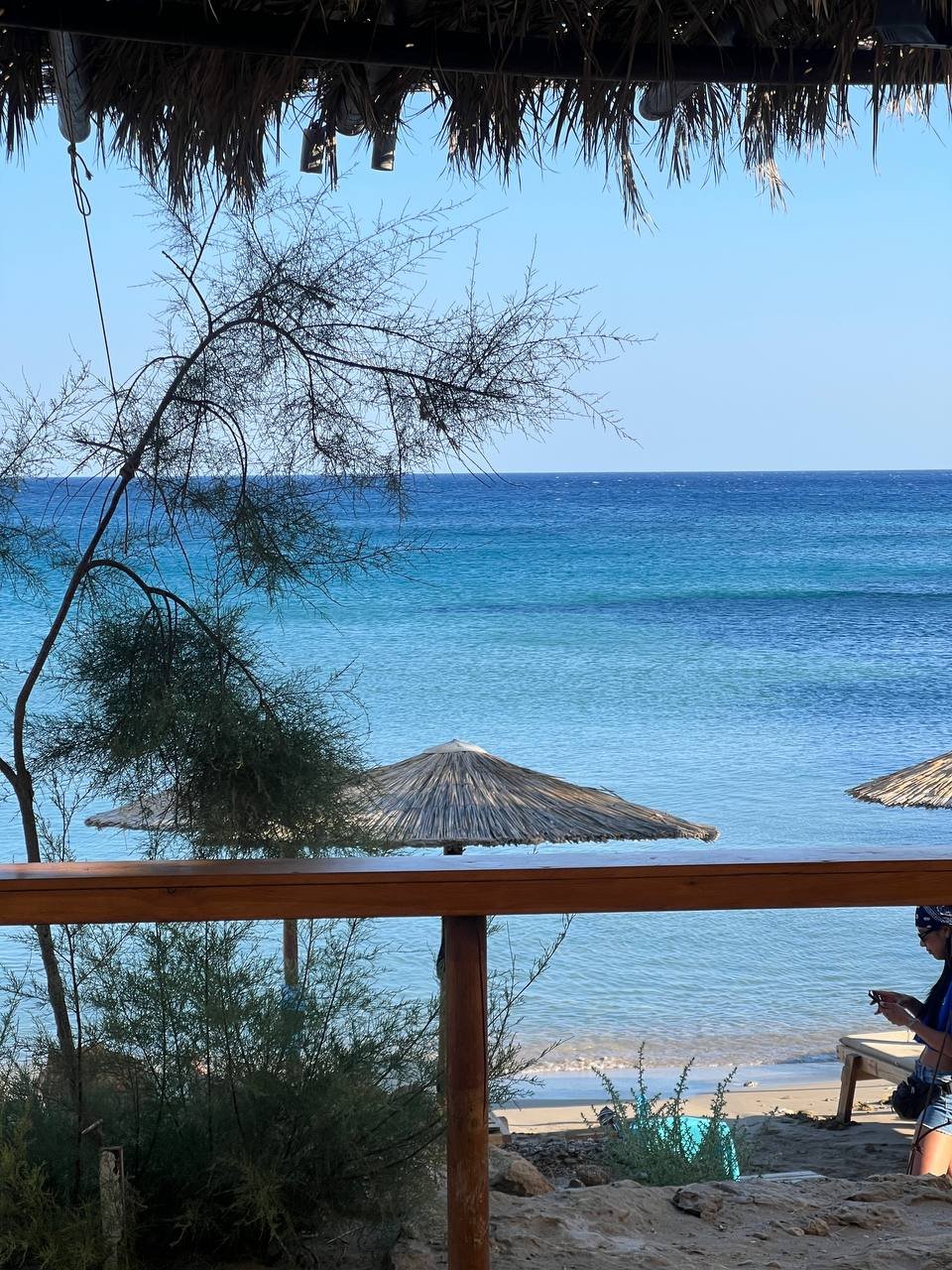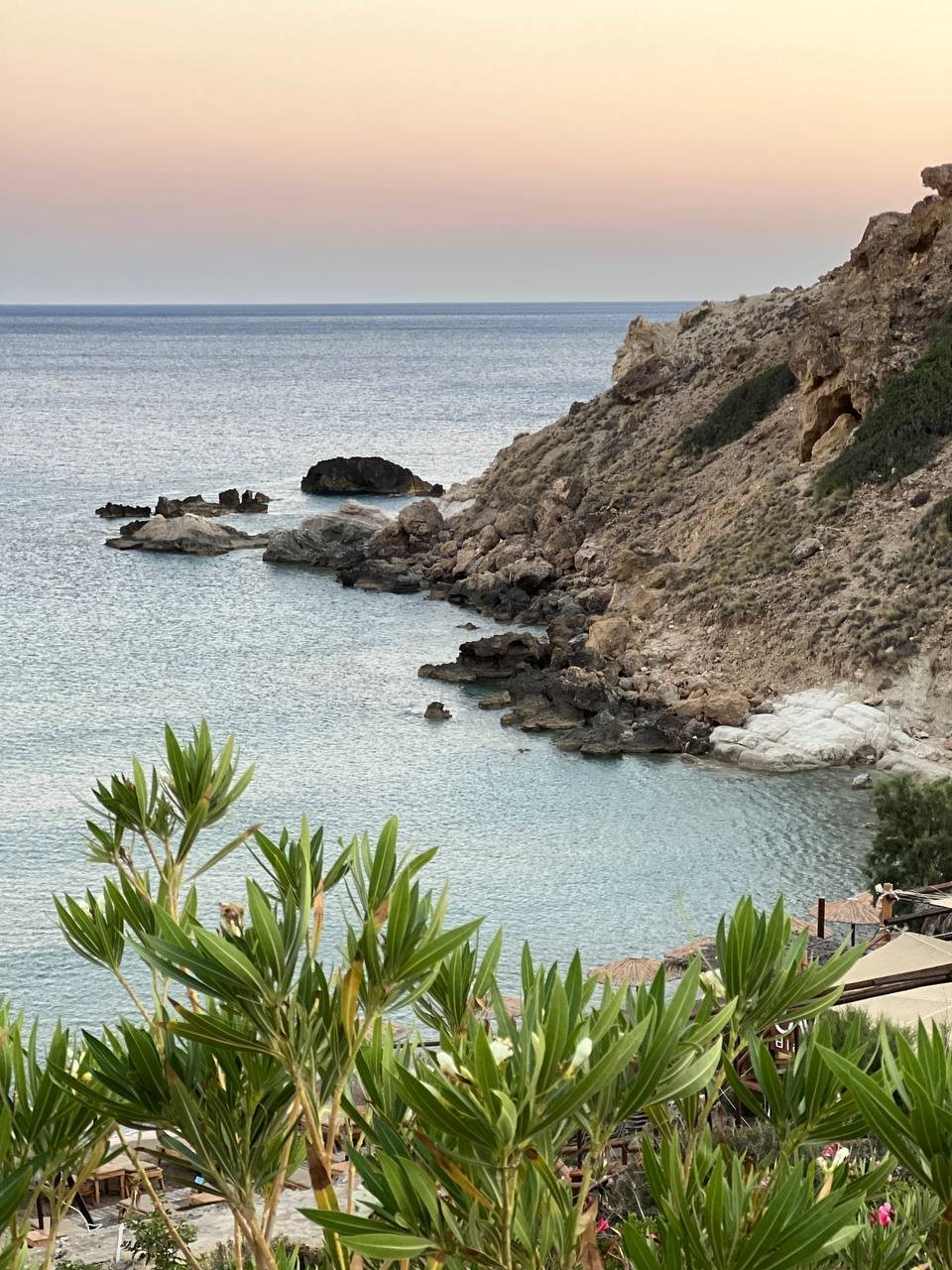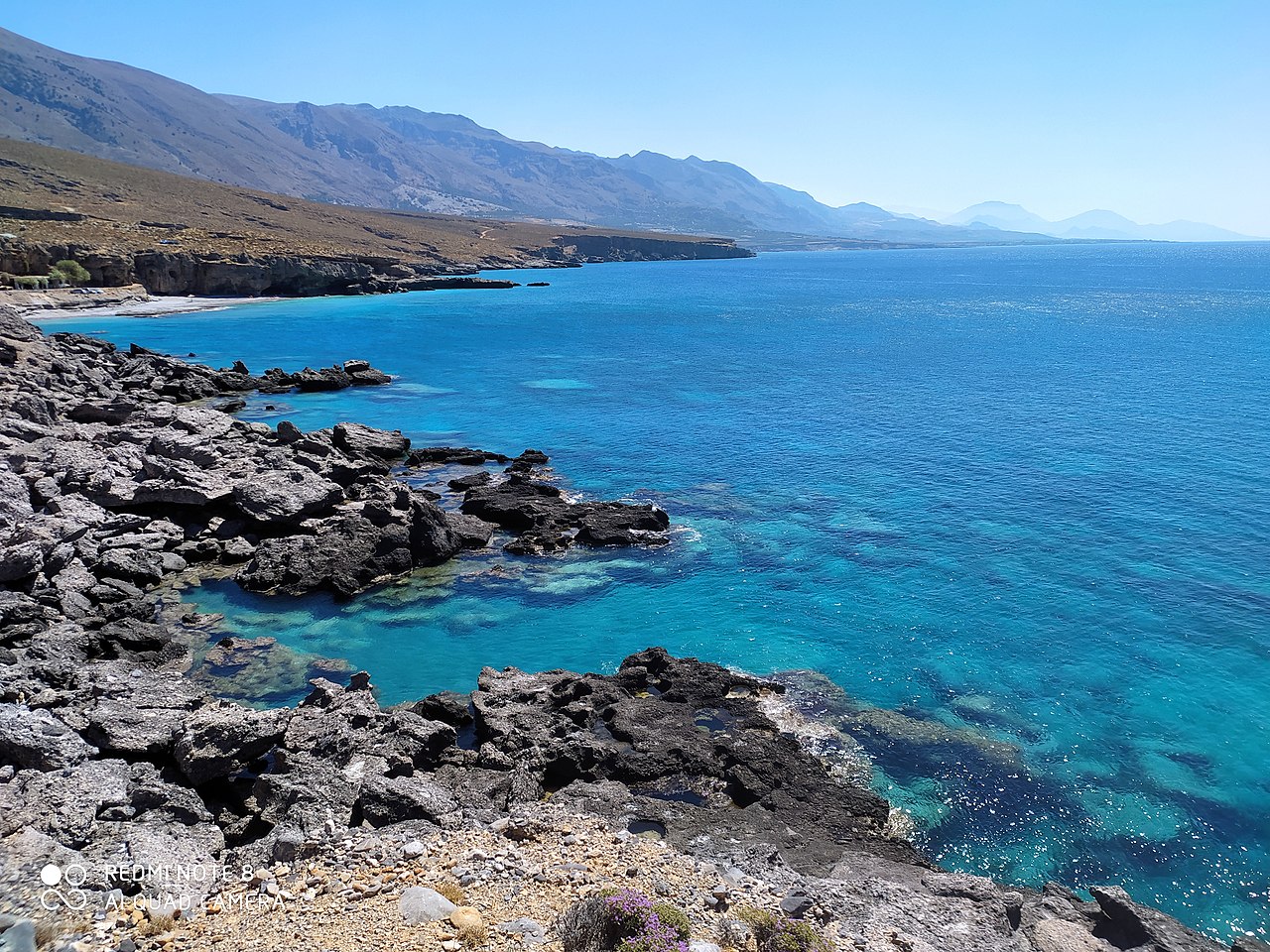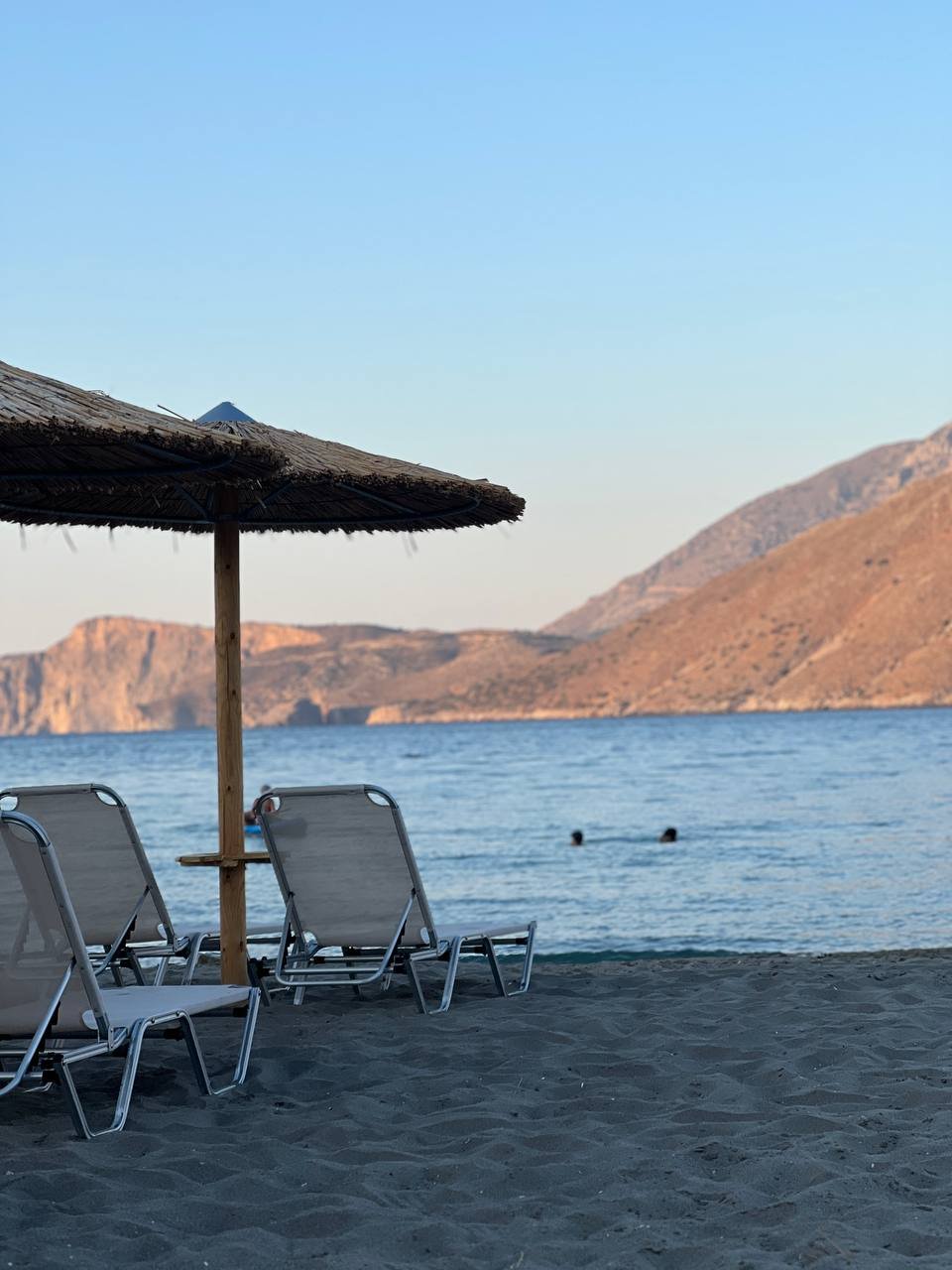
Crete sea temperature stays swimmable for roughly eight months of the year — longer than almost anywhere else in Europe. The island sits at the southern edge of the Aegean, where the Libyan Sea to the south keeps water temperatures above 20°C from May through November. Here is what to expect, month by month, with practical notes on where and when to swim.
Crete Water Temperature by Month
Figures below reflect coastal readings around Heraklion, Chania, and Ierapetra. The south coast (Libyan Sea) runs 1–2°C warmer than the north from June onward due to shallower depths and shelter from northern winds.
- January: 15°C — too cold for most swimmers
- February: 15°C — coldest month of the year
- March: 15–16°C — water remains cold
- April: 17–18°C — brisk; manageable in a wetsuit
- May: 19–20°C — comfortable for confident swimmers, south coast slightly warmer
- June: 22–23°C — warm, suitable for families and casual swimmers
- July: 24–25°C — peak summer, sea excellent all day
- August: 25–26°C — warmest month, comparable to the Red Sea in summer
- September: 25°C — still at peak, often calmer than August
- October: 22–23°C — warm sea, far fewer crowds
- November: 19–20°C — cooling but still swimmable on the south coast
- December: 17°C — cold for most visitors
In August, air temperatures consistently reach 33°C across the island — see the Crete weather forecast for 7 August 2026 for a current snapshot. At 26°C, the sea is genuinely refreshing rather than bathwater-warm.
Swimming in Crete in Autumn: Why October Is Underrated
Swimming in Crete in autumn is one of the best-value decisions you can make as a traveller. The warm sea in Crete in October averages 22–23°C — equivalent to the Spanish Mediterranean coast in July. Air temperatures hold between 20°C and 27°C. Hotel occupancy drops 60–70% compared to August. Accommodation and car hire rates fall 30–50%.
What changes in October is wind, not water. The Meltemi that batters north-facing beaches throughout summer dies down by late September. Beaches like Falasarna, Balos, and Elafonisi — often choppy in July and August — become flat and calm. The south coast, sheltered year-round by the White Mountains, is even more protected.
For route planning around the best autumn beaches, the Crete self-drive road trip itinerary covers both north and south coasts with practical driving distances and time estimates — useful when you want to chase warm water rather than follow peak-season crowds. If cost is a factor, the Crete budget travel guide has current price benchmarks by season, including what ferry crossings, accommodation, and car rental actually cost in October versus August.
North Coast vs South Coast: Where Is the Sea Warmer?
The Libyan Sea (south coast: Matala, Plakias, Agia Galini, Ierapetra, Paleochora) is consistently 1–2°C warmer than the Sea of Crete (north coast: Heraklion, Chania, Rethymno) from June through October. In early June, the south coast may already be at 21°C while the north sits at 19°C. In October, south-coast stations often record 24°C against 22°C in Heraklion Bay.
If you are travelling in the shoulder season specifically to swim, prioritise the south. Many of these beaches also stay quieter during peak summer — the guide to quiet beaches in August 2026 covers several south-coast spots that avoid the August crowds entirely.
One practical note: the south coast is accessible but requires driving over mountain passes or through the Messara Plain. Budget 1.5–2 hours from Heraklion or Chania. The drive is straightforward with a rental car.