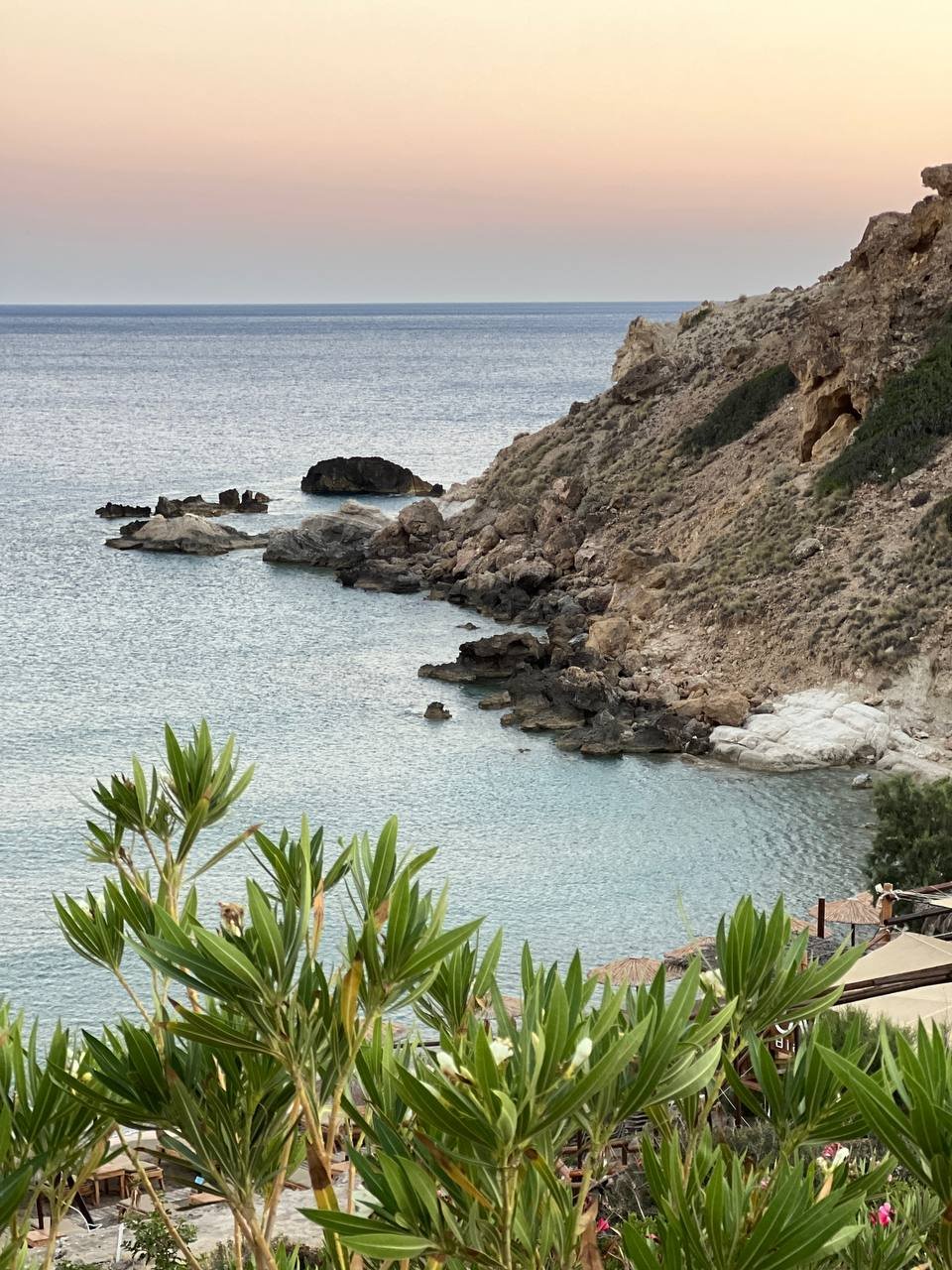
Crete is 260 km long and up to 60 km wide. Getting from one end to the other takes the better part of a day by public transport, or about 3 hours by car on the E75 motorway. Understanding your options before you arrive saves both time and money.
Transport Overview: What Actually Works in Crete
Getting around Crete relies on three realistic options: the KTEL bus network, a rental car, or a combination of both. Mopeds are common in coastal resorts but unsuitable for long distances. Ferries connect the main ports — Heraklion, Chania (Souda), Rethymno, Agios Nikolaos, Sitia — but are not practical for daily movement within the island.
Crete divides into four prefectures: Heraklion (central), Chania (west), Rethymno (central-west), and Lasithi (east). Most visitors base themselves in one area and make day trips. The further east you go — toward Sitia and Vai — the thinner public transport becomes.
The KTEL Bus System in Crete: Routes, Prices and Schedules
The KTEL bus system is Crete's main public transport network, operated independently in each prefecture. KTEL Heraklion covers routes east and west from the capital. KTEL Chania covers western Crete. Tickets are purchased at the station or on board; there is no island-wide app or unified booking system.
Key routes and approximate prices (2026):
- Heraklion → Chania: 150 km, 2h30, around €14
- Heraklion → Rethymno: 80 km, 1h30, around €8
- Heraklion → Agios Nikolaos: 70 km, 1h15, around €7
- Heraklion → Ierapetra: 105 km, 2h, around €10
- Chania → Rethymno: 70 km, 1h, around €7
- Heraklion → Sitia: 160 km, 3h, around €16
Heraklion has two KTEL terminals on Leoforou 62 Martyron near the port: the eastern terminal serves Agios Nikolaos, Sitia, and Ierapetra; the western terminal serves Rethymno and Chania. Both are within walking distance of the ferry port.
Frequency: On the main Heraklion–Chania axis, buses run every 30–60 minutes in peak season (June–September) and every 1–2 hours in winter. Smaller routes — to villages, gorges, or off-highway beaches — may operate only 1–3 times per day. The last bus from Chania to Heraklion is typically around 21:30.
What the crete bus system doesn't cover: Inland villages, mountain routes (Omalos for the Samaria Gorge), remote beaches (Balos, Elafonisi), and most of eastern Lasithi. For these destinations, you either rent a car or book an organised excursion.
Renting a Car in Crete: Costs, Roads and What to Know
Car rental in Crete is the most practical solution for anyone planning to explore beyond the north coast highway. It opens up the mountains, the south coast, and dozens of sites unreachable by bus.
Typical daily rental rates in 2026:
- Low season (November–April): €20–35/day for a small car
- Shoulder season (May, October): €35–55/day
- High season (June–September): €50–90/day, with July–August at the top end
These prices assume basic third-party insurance. Full coverage (CDW) adds €8–15/day. Book at least 4–6 weeks in advance for summer — inventory runs low by late June. Local agencies are often 20–30% cheaper than international chains. All major airports (Heraklion Nikos Kazantzakis, Chania Ioannis Daskalogiannis) and ports have rental desks. One-way rentals (pick up in Heraklion, drop off in Chania or vice versa) typically carry a surcharge of €20–40.
Road conditions: The E75 motorway runs the length of the north coast and is fast and well-maintained. Secondary roads — descending to the south coast, or crossing the mountains toward Lasithi Plateau and the White Mountains — are narrow, winding, and sometimes unpaved. A compact car handles the vast majority of routes. An SUV is only necessary for unpaved tracks to remote beaches or gorges.
Fuel: Petrol stations are common on the north coast and in major towns. The south coast and mountain areas have fewer stations — fill up before heading inland. Average unleaded price in 2026: €1.85–2.00/litre. Greek speed limits: 50 km/h in towns, 90 km/h on regional roads, 110 km/h on motorways.
Crete Bus vs Car Rental: Which Should You Choose?
The crete bus vs car rental decision comes down to your itinerary and group size.
Choose the KTEL bus if:
- You're based in one city and focusing on urban exploration
- Your main sites are on the north coast: Knossos (direct bus from Heraklion central), Chania old town, Rethymno fortress
- You're travelling solo or as a couple with a tight budget
- You prefer not to navigate mountain roads
Choose a rental car if:
- You want to visit Balos lagoon, Elafonisi beach, Omalos (Samaria Gorge trailhead), or any south coast village
- You're travelling with family or a group — the per-person cost drops dramatically
- You're following a multi-day itinerary like the Crete 2 Week Itinerary 2026 that moves across the island
- You need flexibility on departure times
Mixed approach: Many travellers fly into Heraklion, use buses for the first two days in the city, then rent a car for 5–7 days to explore. This avoids paying for a car during purely urban days. If your itinerary runs west-to-east, pick up the car in Heraklion and drop it in Chania before flying home — or the reverse. See the Crete 7 Day Itinerary 2026 for a time-efficient one-week version of this approach.
Taxis, Water Taxis and Ferries in Crete
Taxis: Metered within city limits (starting fare ~€2.50 in 2026, day rate ~€0.90/km). Intercity trips are fixed: Heraklion airport to city centre around €15–18; Heraklion to Rethymno by taxi approximately €90–110. Useful for late-night airport transfers when buses aren't running. FreeNow operates in Heraklion.
Water taxis: Seasonal boats (May–October) connect south coast villages — from Hora Sfakion to Loutro (a car-free village), and from Agia Roumeli after completing the Samaria Gorge hike. Fares: €5–15 per leg. These are the only practical way to reach certain south coast communities without a very long drive.
Domestic ferries: ANEK and others connect Heraklion, Chania (Souda port), and Sitia to Piraeus. Not useful for moving within Crete — road transport is always faster for intra-island travel. The exception is Gavdos island, accessible only by ferry from Hora Sfakion or Paleochora.
Scooters and ATVs: Available at most beach resorts at €15–30/day. Fine for local beach-hopping but not suitable for crossing mountains or covering 100+ km routes. Insurance coverage is often minimal — read the policy carefully.
Seasonal Tips for Getting Around Crete
Transport conditions vary significantly by season and directly affect how you should plan.
Summer (June–September): Bus frequency is at its highest, but car rental prices peak and roads are busy. Parking in Heraklion, Chania old town, and near Elafonisi is very difficult in August — arrive early or use park-and-walk. Book rental cars well in advance.
Shoulder season (April–May, October): The best balance — buses still running regularly, car rentals noticeably cheaper, roads quiet. Mountain roads are accessible and scenically striking. This period is well-suited for winter hiking in Crete, with trails in the White Mountains and Lasithi opening up from October.
Winter (November–March): Bus schedules are reduced significantly, with some village routes running only twice a week. Car rental drops to €20–35/day. Mountain roads above 800 m can be closed by snow from December to February — this affects routes to Omalos (Samaria Gorge), Lasithi Plateau, and the Rethymno–Plakias road via Kotsifou Gorge. Always check road conditions before heading south or inland in winter. That said, the north coast remains mild and driveable — current conditions on 8 November 2026 illustrate a typical early-winter day: mild temperatures and mostly dry skies along the coast.
Practical Tips for Getting Around Crete
- Book buses online in peak season: ktel-heraklion.gr and bus.chania.gr both allow advance booking. In July–August, the Heraklion–Chania route sells out at peak departure times.
- Navigation: Google Maps works well on main roads. For mountain tracks and gorge approaches, Maps.me or offline OsmAnd maps are more reliable where mobile signal drops.
- Parking in cities: Heraklion has paid lots near the port at €1.00–1.50/hour. Chania's old town is largely car-free — park on the outskirts and walk in (10–15 minutes on foot).
- EV rentals: Electric vehicle options are expanding at Heraklion airport. Charging infrastructure is improving on the north coast highway but remains sparse on the south coast and inland as of 2026.
- International driving permit: EU licence holders drive on their national licence. Non-EU drivers (US, UK, Australian, etc.) should carry an IDP alongside their national licence — most rental agencies require it.


