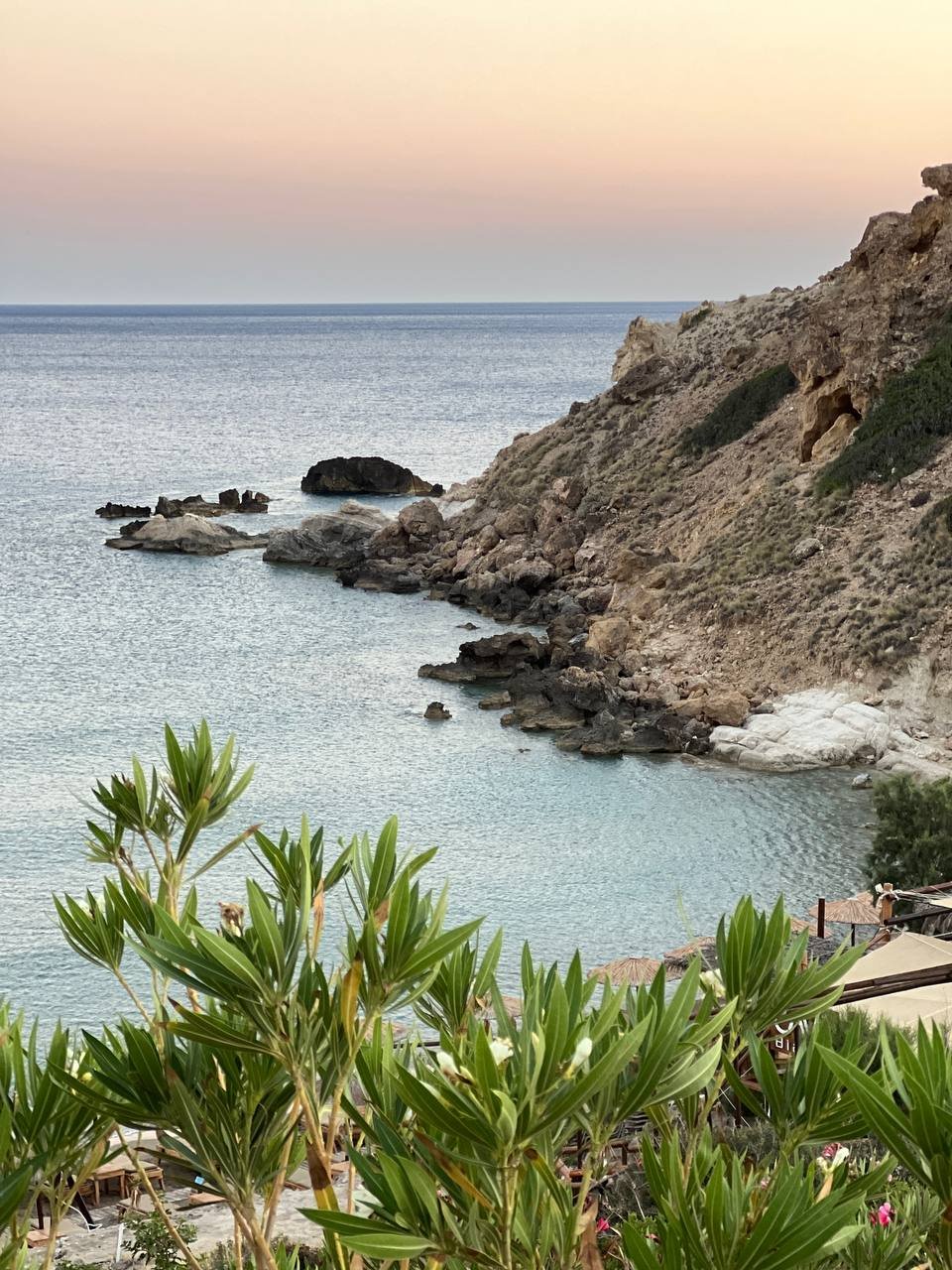
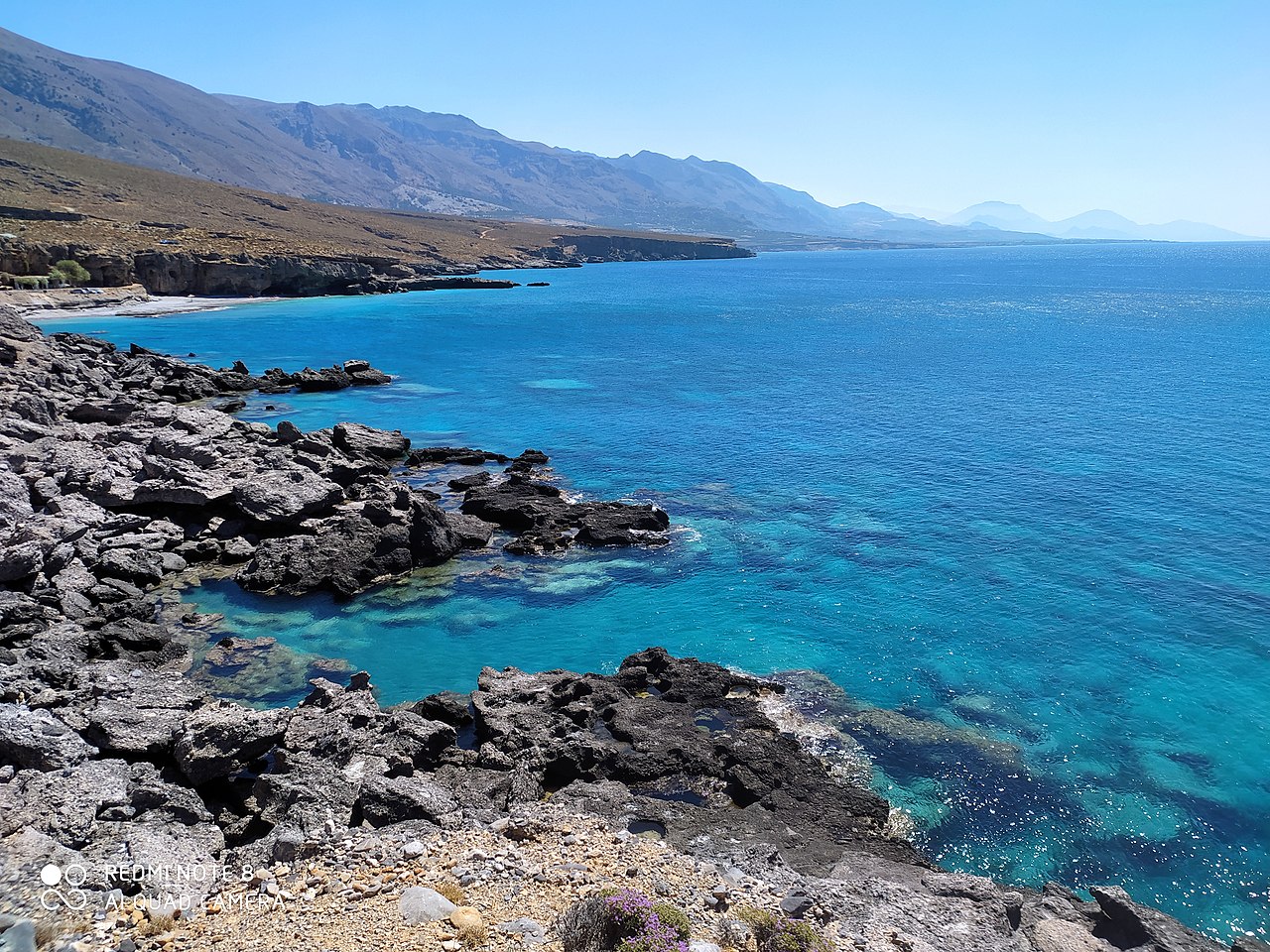
When to Visit Crete
Crete has a Mediterranean climate: hot, dry summers and mild, wet winters, with around 300 days of sunshine per year. Timing matters — the gap between May and August is significant in terms of crowd density, accommodation prices, and heat.
Peak season runs July through August. Temperatures in the north average 32–38°C; the south coast regularly hits 40°C. Every major beach is at capacity, prices double, and last-minute accommodation is essentially unavailable. Book at least 3 months ahead if visiting during this window.
Shoulder season — May, June, September, and October — offers the best balance for visiting Crete. Sea temperatures sit at 22–26°C, crowds are manageable, and rates drop 30–50% versus peak. Early June 2026 is delivering clear skies and highs of 32°C in the east. For current conditions before your trip, check the Crete weather update for June 10, 2026.
Low season (November–April): rainfall is regular, some coastal businesses close entirely, and mountain passes can be blocked by snow. Not suitable for a beach trip, but Minoan ruins, local villages, and the Archaeological Museum of Heraklion are far less crowded — and taverna prices reflect local rather than tourist demand.
- Best for beaches: June and September
- Best for hiking: April–May and October
- Best for budget travel: May and October
- Worst for crowds: July and August
Getting to and Around Crete
Crete has two international airports: Heraklion Nikos Kazantzakis (HER) in the centre-north and Chania Ioannis Daskalogiannis (CHQ) in the west. Both handle direct flights from most major European hubs — London, Paris, Amsterdam, Frankfurt, Vienna — from April through October. Flight time from London is approximately 3h30. In winter, connections typically require a stopover in Athens.
Overnight ferries from Piraeus (Athens) reach Heraklion in 8–9 hours and Chania in 7–8 hours. A basic seat starts around 30–45 EUR one-way; cabin berths cost more. Ferries run year-round on both routes.
Getting around the island requires a car. Crete is 260km long and up to 60km wide. The E75 motorway runs east-west along the north coast and is fast and tolled. The southern coast has no motorway — roads are winding single-carriageway tracks in places. Do not underestimate driving times.
Car rental in 2026 starts at 35–55 EUR/day for a small car with full insurance when booked online in advance. Airport counters charge significantly more during peak season. Fuel costs approximately 1.85–2.00 EUR/litre. The drive from Chania to Sitia (230km) takes around 3 hours on the motorway and costs 25–30 EUR in fuel and tolls combined. For a full east-to-west itinerary with realistic driving times, the honest 7-day Crete road trip guide covers the logistics in detail.
KTEL public buses connect Heraklion, Rethymno, and Chania on a regular schedule, but frequencies drop sharply outside this corridor. Taxis are available in cities and at airports but are not practical for cross-island travel.
Where to Stay in Crete: Choosing Your Base
Crete's four administrative regions each have a distinct character. Your base determines what you can visit without spending half your day in the car.
Chania (west): The most visually appealing city on the island. The old Venetian harbour is compact, walkable, and lined with restaurants and boutique hotels. Within reasonable driving distance of Balos Lagoon (45km), Elafonisi (75km), Falasarna (60km), and the Samaria Gorge trailhead (42km). The best base for first-time visitors to Crete. A basic room costs 55–75 EUR/night in shoulder season; harbour-view boutique hotels run 200–300 EUR/night in peak.
Rethymno (centre-west): A quieter alternative with its own Venetian fortress and a long sandy beach directly in town. Good access to Preveli (35km south) and the Cretan highlands. Mid-range hotels average 80–130 EUR/night in shoulder season. Less overrun than Chania.
Heraklion (centre-north): The capital and largest city (population ~180,000). Practical rather than picturesque. Located 15 minutes from Knossos — the largest and most significant Minoan archaeological site in the world. Central enough for day trips in either direction. Budget accommodation from 45 EUR/night.
Lasithi / Agios Nikolaos (east): Drier, quieter, and with some of Crete's clearest water. Elounda and Plaka are upscale resort enclaves. Vai palm beach is 90km northeast of Agios Nikolaos. The east draws fewer package tourists overall, which makes it a better choice if avoiding crowds is a priority.
Top Beaches in Crete: Facts and Access
Crete has over 1,000km of coastline and hundreds of beaches. The famous ones attract large volumes of visitors. Here is a factual overview of the most frequently visited:
Balos Lagoon (northwest, Gramvousa peninsula): Shallow turquoise water and sand with a faint pink tinge from crushed shells. Access is via a 4km unpaved road from Kaliviani (passable in a standard car, but rough and dusty) or by ferry from Kissamos port — approximately 18 EUR return, 30 minutes each way. The lagoon requires a 20-minute descent on foot from the car park. It receives over 2,000 visitors on peak summer days. Arrive before 9am or after 4pm to avoid the worst of it. See the Balos Lagoon visit guide for full logistics on ferries, parking, and what to bring.
Elafonisi (southwest, 75km from Chania): A semi-island accessible on foot across shallow flats at low tide. Pink-tinted sand, shallow water, and striking colour — arguably the most photographed beach in Crete. Parking costs 5 EUR. There is no natural shade anywhere on the beach. Extremely crowded July–August; more manageable in May or September.
Falasarna (west, 60km from Chania): A wide, long beach with deeper water and consistent afternoon wind. Less overrun than Elafonisi or Balos, with some taverna facilities. Good for swimmers.
Vai (far east, ~100km east of Agios Nikolaos): The largest natural palm forest in Europe, growing directly behind the beach. The beach itself is smaller than photos suggest. The Vai palm beach guide covers what to realistically expect, how long to allocate, and access options from the east.
Preveli (south coast, 35km south of Rethymno): A river flows through a palm-lined canyon directly into the sea. Distinctive and genuinely unusual. Access is via a steep 15-minute descent on foot. No facilities to speak of at beach level. Not suitable for young children or anyone with mobility limitations.
Food in Crete: What to Eat and What to Budget
Cretan cuisine is one of the most specific regional cuisines in Greece. It differs substantially from mainland Greek food in ingredients, preparation, and traditional dishes. Olive oil is the base of almost everything — Crete has over 50 million olive trees and produces some of the highest-rated extra-virgin olive oil in Europe.
Dishes worth ordering: dakos (barley rusk topped with grated tomato, mizithra cheese, and olive oil), staka (a rich cooked cream traditionally served with fried eggs), apaki (smoked pork marinated in wine vinegar and aromatic herbs), boureki (a baked pie of courgette, potato, and cheese), and grilled octopus or fresh fish on the south coast. Lamb and goat are the dominant meats. Wild herbs — thyme, oregano, sage — grow across the hillsides and appear in virtually every dish.
A full meal at a local taverna — starter, main, dessert, and a carafe of house wine — costs 15–25 EUR per person. Restaurants directly adjacent to major beaches and tourist attractions charge 28–45 EUR for the same meal. Supermarkets are well-stocked; a week's self-catered breakfast supplies costs under 40 EUR. For a detailed guide to authentic versus tourist-adjusted dishes, see the Traditional Cretan Food Guide 2026.
Regarding tipping: service charges are not automatically added to bills in Greece. Local practice differs from northern European norms. Read the guide to tipping in Crete restaurants before your first meal to avoid confusion.
Crete Travel Budget: Realistic Numbers for 2026
Crete sits in the mid-range tier for Mediterranean destinations — more expensive than mainland Greece or the Balkans, cheaper than the French Riviera or the Balearics. The following are realistic daily budgets for 2026, inclusive of accommodation, food, transport, and one paid attraction per day:
- Budget (40–70 EUR/day): Hostel dorm or very basic private room, self-catered breakfasts, one taverna meal, bus transport or shared car rental. Feasible in shoulder season only.
- Mid-range (130–200 EUR/day): 3-star hotel or Airbnb, two restaurant meals, rental car included (split between two people drops the daily transport cost to 20–30 EUR).
- Comfortable (260–420 EUR/day): Boutique or 4-star hotel, full-service dining, car, and guided tours or private excursions.
Paid entry costs to factor in: Palace of Knossos 15 EUR, Archaeological Museum of Heraklion 12 EUR (combined ticket available for 20 EUR), Samaria Gorge 5 EUR. Most beaches are free; some charge for car parking (3–8 EUR). A Balos ferry return ticket costs around 18 EUR per person.
Fuel is approximately 1.85–2.00 EUR/litre. The island has several toll points on the E75 motorway — budget 5–10 EUR for a full east-west crossing.