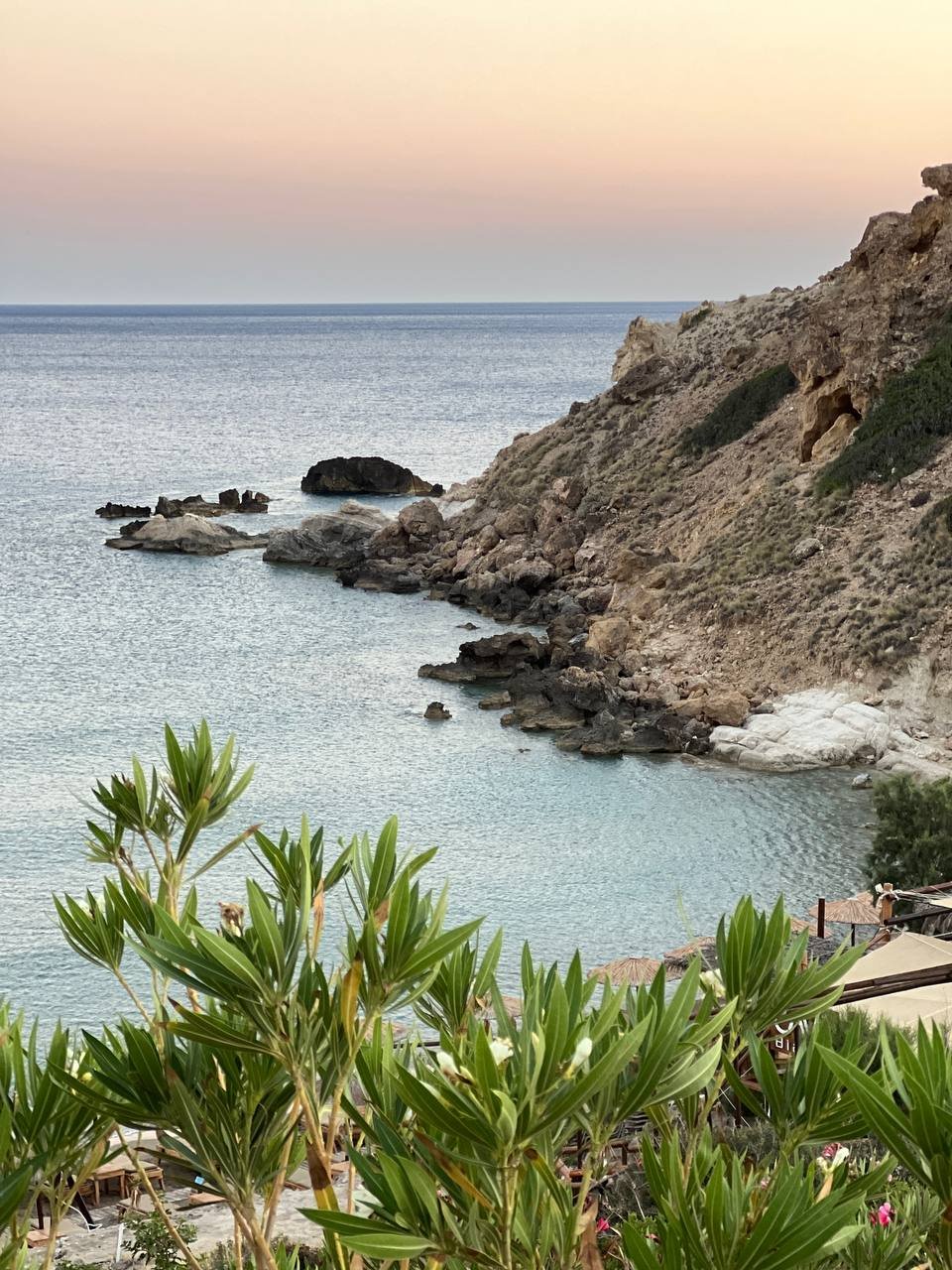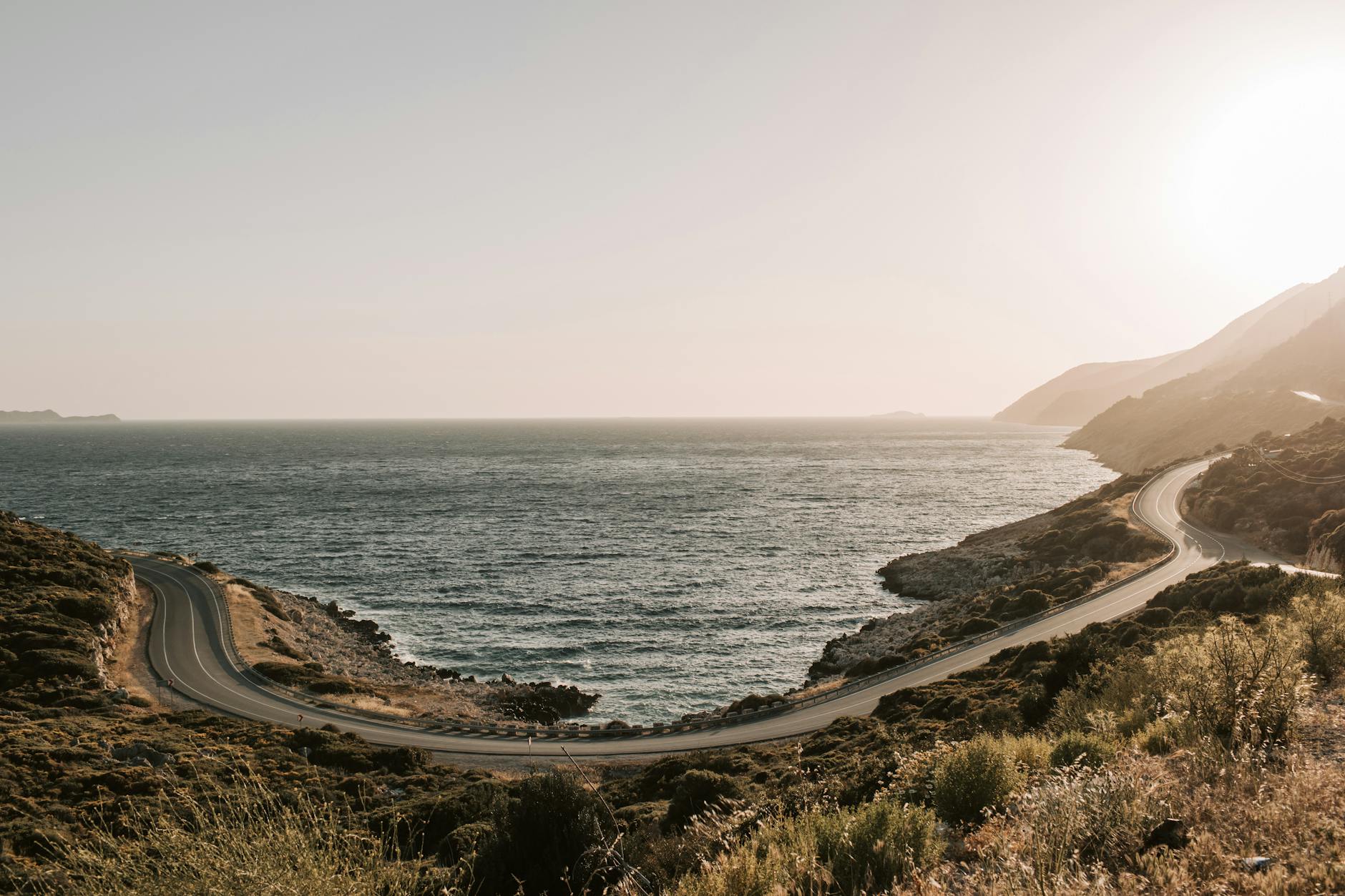
Most 7-day Crete itineraries look identical. Day one: arrive in the capital, visit Knossos. Day three: Rethymno old town. Day five: the famous lagoon on the northwest tip. Day seven: fly home with four thousand photos of the same cliffs everyone else photographed. The problem is not that these places are bad. The problem is the crowds, the two-hour waits, and the boat tours are now baked into the standard package. Nobody in the guidebooks tells you that most of these spectacles are best experienced from the road at 7am before the buses arrive.
After five years of driving this island, the route that actually works looks different. It starts east, moves south before going west, and treats the drive itself as the destination. This itinerary skips two of the four must-sees that every travel blog insists on, and replaces them with places that take fifteen minutes longer to reach and have water quality worth the extra distance.
- The standard itinerary and why it wastes your time
- Days 1-2: East Crete first
- Day 3: The south coast
- Days 4-5: Central Crete and Rethymno
- Days 5-6: West Crete
- The Elafonisi verdict
- Day 7: Knossos and out
- The driving reality
- When to go
The Standard Itinerary and Why It Wastes Your Time
The classic tourist loop concentrates on four or five spots that appear on every travel site and misses roughly eighty percent of the island. The north coast highway is fast, comfortable, and lined with beach clubs charging sixteen euros for a sunbed. It also carries ninety percent of all tourist traffic in July and August. The result is predictable: the famous spots are genuinely good but experienced under conditions that undermine what made them worth visiting in the first place.
The south coast road is what filters out most visitors. It is narrower, slower, partly unpaved in sections, and requires an actual decision to go there rather than following traffic. That friction is the point. The same beach that draws two hundred people in August draws twelve in October, and the water is identical.
The honest reframe for a 7-day trip: treat the island as three distinct zones, east, central, and west, with the south coast as a connector rather than an afterthought. Start where tourists end (the east), finish where they start (the northwest), and drive the south as your through-line between the two.
- North coast highway: fast, crowded, efficient for covering distance
- South coast road: slow, empty, far better for actual experience
- East Crete: structurally undervisited, highest beach-to-crowd ratio on the island
- West Crete: most photographed, best in shoulder season or at sunrise
Days 1-2: Start East, Not Where Everyone Else Does
The conventional wisdom says arrive near the capital, settle in, then work your way west. This makes logistical sense if you are following a tour group. It makes no sense if you have a rental car and seven days. Driving east immediately from the airport puts you ahead of the tourist flow rather than inside it.
Agios Nikolaos sits seventy kilometres east of the capital, roughly one hour on the highway. It functions as a working town with a working harbour, not a tourist village built around cafes serving the same menu in six languages. Two nights here gives you a base for the east without the resort infrastructure that adds cost and removes character.
Itanos Beach is accessible in under an hour heading further east from Agios Nikolaos. The ruins of ancient Itanos sit at the northern end of the beach. Infrastructure is minimal, which is accurate information about the experience, not a complaint. Palm Beach Vai, the famous palm forest, is fifteen minutes from Itanos. Go at opening time or after 5pm. Midday in August is a genuinely different experience.
Karoumes requires a twenty-minute dirt road. That twenty minutes removes roughly ninety-five percent of the day-trip crowd. The water is clear, the beach is shingle and sand, and there is nothing to buy, which is either a problem or a feature depending on your priorities.
- Day 1: Drive east to Agios Nikolaos (1 hour), evening at the harbour
- Day 2: Itanos Beach in the morning, Palm Beach Vai before 9am or after 5pm, Karoumes if road conditions allow
- Fuel note: Fill up in Agios Nikolaos. Stations become sparse heading further east
Day 3: The South Coast Takes Forty Extra Minutes and Is Worth Every One
Most 7-day itineraries skip the south coast entirely or treat it as a half-day excursion. Both approaches miss the point. The south coast is not a detour from the island. It is a different island, accessed through the same mountain passes that have always separated the two shores, and it requires committing to the drive rather than treating it as optional.
Keratokambos is a fishing settlement on the south-central coast. One taverna open for lunch, a handful of houses, no beach bar, no sunbed rental. The beach is long, pebbly, and almost always uncrowded. It represents a category of south coast village that exists throughout the central and eastern south, largely invisible to the standard itinerary because there is nothing to book in advance and no organised arrival infrastructure.
Driving west along the south coast, road quality varies. A standard rental car handles the main south coast road without difficulty. Some connector roads through mountain villages are single-lane and require patience. Build forty extra minutes into every south coast leg. Mapping apps calculate speed limits, not actual conditions.
Skinaria Beach, in the Plakias area, is small, pebbly, and has no beach facilities. Water clarity here is among the best on the central south coast, with rocky outcrops accessible from shore for snorkelling.
- Keratokambos: south-central coast, minimal services, reliable taverna for lunch
- Skinaria Beach: small, pebble, exceptional water visibility
- Fuel rule: fill up before leaving the main road for any south coast diversion
- Navigation: offline maps essential, mobile data drops in mountain sections
Days 4-5: Rethymno Is Good, Not for Two Full Days
Rethymno's Venetian old town is genuinely worth visiting. This is not a contrarian claim. The fortress, the harbour, and the narrow streets behind the waterfront have legitimate historic and architectural value that the photographs do not misrepresent. The contrarian claim is about time. Half a day in Rethymno, done well, delivers the experience. The second day is for people who have nowhere else to go.
Arrive in Rethymno late morning. Walk the old town for two to three hours. Have a long lunch at the harbour. Leave by mid-afternoon. That is the Rethymno experience that delivers. Staying two nights means paying peak-season prices in a crowded town while the south coast has empty beds at half the rate.
Rethymnon Beach is long, organised, and functional. It serves as an evening walk or a convenient morning swim. It is not a destination. Plakias Beach, thirty minutes south by mountain road, is less photogenic and significantly less crowded. In early June, when the north coast is still cold, south-facing Plakias is already warm enough to swim comfortably.
Knossos, fifteen minutes east of the capital, warrants a morning visit for archaeological context. The site is heavily reconstructed, a documented fact, not an opinion. Arrive at 8am, leave by 10am before the tour groups change the dynamics of the space.
- Rethymno old town: three hours maximum, then move on
- Rethymnon Beach: evening walk, not a destination in itself
- Plakias Beach: thirty minutes south, better swimming, lower crowd density
- Knossos: 8am arrival, ninety minutes, leave before 10am
Days 5-6: West Crete, One Beach Worth the Full Drive
The west of Crete has two features that appear on every list: a famous gorge hike and Elafonisi Beach. Both are real. Both are consistently experienced under conditions that most recommendations assume away, specifically that you are visiting in June or October and not August.
Sougia Beach is the coastal village at the southern end of the famous gorge route. If you walk the gorge, you end up here by default. If you are not hiking, Sougia is worth driving to independently. The beach is long, backed by a simple strip of tavernas, and far less visited than the beach clubs on the north coast. Water quality on the western south coast is noticeably cleaner than the central north coast in summer, because of lower visitor density and better current circulation in the bay.
Golden Beach on the west coast is accessible without a boat tour, unlike the more famous lagoon on the northwest tip. The drive there passes through sparsely populated land with mountain views that represent the interior of the island more honestly than any postcard coastline. The beach is long, backed by low dunes, and rarely at capacity outside of peak season weekends.
- Sougia Beach: western south coast, simple tavernas, excellent swimming
- Golden Beach: west coast, no boat required, accessible by car
- Budget a full day: the west coast drive with stops is a full day, not a half day
- Avoid: main western beaches on weekend afternoons in July and August
Elafonisi: Five Seasons, One Honest Verdict
Elafonisi Beach is not overrated. It is over-scheduled. The pink-tinged sand is real, a result of crushed shells mixed into the white sand near the lagoon section. The shallow turquoise water photographs accurately. The site earns its reputation on visual terms. What the reputation does not prepare you for is the operational reality in high season.
In July and August, the car park operates at capacity from mid-morning. Tour buses from the main western city arrive in waves from 9am. The beach surface visible in famous photographs disappears under towels by 11am. The experience you came for exists, but it requires timing it correctly rather than arriving at noon on a Saturday and being surprised by the logistics.
When to go: May, early June, late September, October. In these months the car park is never full, the lagoon section is accessible without negotiating sunbeds, and the pink sand is visible. The peak-season alternative is sunrise. The beach opens with the light and is calm for the first hour before traffic arrives from the main western city.
Kendrodasos, a wooded beach directly adjacent to Elafonisi, is in the same access area and consistently less crowded. If Elafonisi is at capacity, this is where to go without abandoning the day.
- Best months: May, June, September, October
- Peak season: arrive at sunrise or after 4pm
- Adjacent option: Kendrodasos, wooded, less crowded, same access road
- Elafonisi in October: the version that matches the photographs
Day 7: Knossos at Dawn, Airport by Afternoon
The final day works best with a single clear objective and no new stops. If you have not yet visited Knossos, do it now. The site is the most visited archaeological site in Greece, and genuinely contested among archaeologists. The early twentieth-century reconstruction by Arthur Evans used concrete and paint in ways criticised as interpretation rather than restoration. Knowing this before you arrive frames the experience correctly rather than diminishing it.
Arrive at 8am. Spend ninety minutes. Leave before the first tour group wave arrives between 9:30 and 10am. The difference between Knossos at 8am and at 11am is not marginal. At opening time the space is readable. When it fills, it is not.
Kastelli, on the north coast east of the capital, is relevant context for anyone planning a return visit. The new international airport under construction near Kastelli is projected to operate around 2028, with significantly higher capacity than the current airport. When it opens, arrival logistics for the eastern and central parts of the island will change substantially. For this trip, the current airport is twenty minutes from the city centre and forty from Knossos.
- Knossos: arrive 8am, ninety minutes, leave before 10am
- Reconstruction note: Evans' work is documented interpretation, not pure restoration
- Kastelli airport: projected 2028, will shift eastern Crete access patterns
- Transfer timing: 20 min from city centre, 40 min from Knossos
The Driving Reality Nobody Puts in the Itinerary
Crete's distances look manageable on a map and feel considerably longer on the road. The north coast highway is fast and reliable, a genuine motorway with consistent surface and clear signage. Everything south of that highway is a different category of road, and treating map distances as equivalent is the most common planning error on this itinerary.
Average speed on south coast roads: forty to fifty kilometres per hour on the main through-road, twenty to twenty-five on mountain connector sections. A route that looks like ninety minutes on a mapping app takes two and a half hours with two stops and actual road geometry factored in. This is calibration, not complaint.
Book the smallest rental car that fits your luggage. Village streets in the interior and south coast eliminate any vehicle wider than a compact. SUVs create passing problems on narrow mountain roads where one car must reverse to the nearest passing point. This happens regularly and adds time to sections already running slow.
Fuel management matters on this itinerary. The south coast and western interior have stretches exceeding sixty kilometres between stations. Fill up in every town with a pump. Download offline maps before leaving the main towns. Mobile data is unreliable in mountain sections and absent in several valley sections on this route.
- North coast highway: 90-100 km/h, reliable surface
- South coast main road: 40-50 km/h realistic average
- Mountain connectors: 20-25 km/h, single lane frequent
- Car size: compact or smaller, SUV creates problems
- Fuel: fill up whenever below half a tank heading south or west
When to Do This Trip (July Is Not Wrong, Just Harder)
The standard answer on Crete timing is to avoid July and August. Accurate but incomplete. The real question is what you are optimising for. Uncrowded beaches, easy parking, and lower prices: May, June, September, and October are clearly better. Guaranteed warm weather and every service fully operational: July and August deliver that, at the cost of everything else on the list.
May is the strongest month for this specific itinerary if any hiking is planned. The famous gorge route typically opens May 1. Wildflowers are at peak on the mountain sections of the drive. Sea temperature on south-facing coasts reaches a comfortable level by mid-May. Prices are at their lowest point of the operating season.
Early June is the strongest overall balance: warm enough to swim on south-facing coasts, infrastructure fully open, prices not yet at peak, beaches at roughly forty percent of August density. The north coast sea temperature reaches comfortable swimming level by mid-June.
September and October are the best months for this road trip format. The sea has accumulated a full summer of heat. Crowds drop sixty percent from the August peak. Rental rates follow. The light quality in late season is consistently better for photography than the high-summer haze.
- May: hiking season opens, low price, cool sea, some services still opening
- June: best overall balance of warmth, access, and crowd level
- July-August: fully operational, requires early starts and advance bookings
- September-October: warmest sea, lowest crowds, best value for this route
The honest summary. A 7-day road trip in Crete that delivers on its promise requires two things most itineraries do not build in: starting early on the days that matter, and a route that treats the south coast and the east as primary destinations rather than bonuses. The famous spots in the west are real. The empty version of the same coastline, forty minutes off the main road and two months outside peak season, is consistently better. The island rewards the driver who treats it as something to explore rather than a checklist to complete.