The standard travel-blog answer is stay in Chania. The standard forum answer is Heraklion is more authentic. Both miss the point entirely. Crete is 260 km long. Where you stay determines which 20% of the island you actually see, how much time you spend in a car, and whether your holiday matches what you came for. After five years living here and watching visitors repeat the same location mistakes, the conclusion is unavoidable: there is no best zone. There are only zones that match or do not match a specific traveler profile.
This comparison covers twelve distinct zones, from the package-holiday strips to the forgotten south coast. For each zone: who it suits, who should avoid it, and what the tourist brochures leave out. No zone gets inflated praise. Several get a clear verdict of not for most people.
- Heraklion and the North-Central Strip
- Rethymno Town and Its Beach
- Platanias and the Chania Coast Strip
- Chania Old Town
- South Central Coast: Plakias Area
- Sougia and the Far Southwest
- Agia Pelagia: The Underrated Bay
- East Coast Mid-Section
- Vai and the Far Northeast
- Kato Zakros and the Deep Southeast
- Keratokambos and the Forgotten South
- Interior Villages: The Long-Stay Option
Heraklion and the North-Central Strip
Heraklion is where most people land, and where most people should not stay more than two nights. The city is functional, not charming. The port area has good tavernas, the Archaeological Museum is one of the best in Greece, and the Minoan palace site 5 km south draws visitors for good reason. That is the complete list of arguments for basing yourself here.
The resort strip extending east of the city toward the airport is the lowest-quality accommodation zone on the island per euro spent. It was built for package holidays, club nights, and logistical convenience, not for travelers who want character or beach quality. The urban beaches along this stretch are overcrowded and bordered by a four-lane road. If a package-holiday format is what you want, it delivers. If it is not, you are paying city rates for suburban infrastructure.
- Best for: overnight transit, archaeology day-trippers, travelers with connecting logistics
- Avoid if: you want quality beaches, quiet evenings, or value-for-money accommodation
- Reality check: most visitors who book here spend half their trip driving west toward Rethymno or east toward the Sitia region
Rental car competition is highest around Heraklion airport, inflating prices in peak season. Budget 35 to 60 EUR per night for a decent room in the city center; beach hotels east of the airport start from 70 EUR and deliver less.
Rethymno Town and Its Beach
Rethymno is the zone that consistently outperforms expectations, and the one most systematically ignored by first-time visitors who default to the two obvious choices. The old town has a Venetian lighthouse, a working harbor, and Ottoman-era architecture that is architecturally coherent rather than reconstructed. Rethymnon Beach stretches 12 km east of the town and is one of the longest sandy stretches on the north coast, with calm water and a gradual depth that suits swimmers of all levels.
The honest caveat: in July and August, the town gets busy, and the hotel strip east of the old town has been developed into a continuous line of medium-grade properties with limited character. The sweet spot is staying in or just west of the old town, within walking distance of the harbor, and treating the beach as a day option rather than the primary draw.
- Best for: first-time visitors, couples, families, anyone who wants a base combining culture and beach access
- Avoid if: you want isolation, or your itinerary requires daily long-distance driving across the north coast highway
- Price range: 60 to 120 EUR per night for quality in the old town, dropping significantly outside July and August
Rethymno sits roughly equidistant between Heraklion airport (80 km) and Chania airport (55 km). For travelers who want flexibility across the central island, it is the most logical base on the north side.
Platanias and the Chania Coast Strip
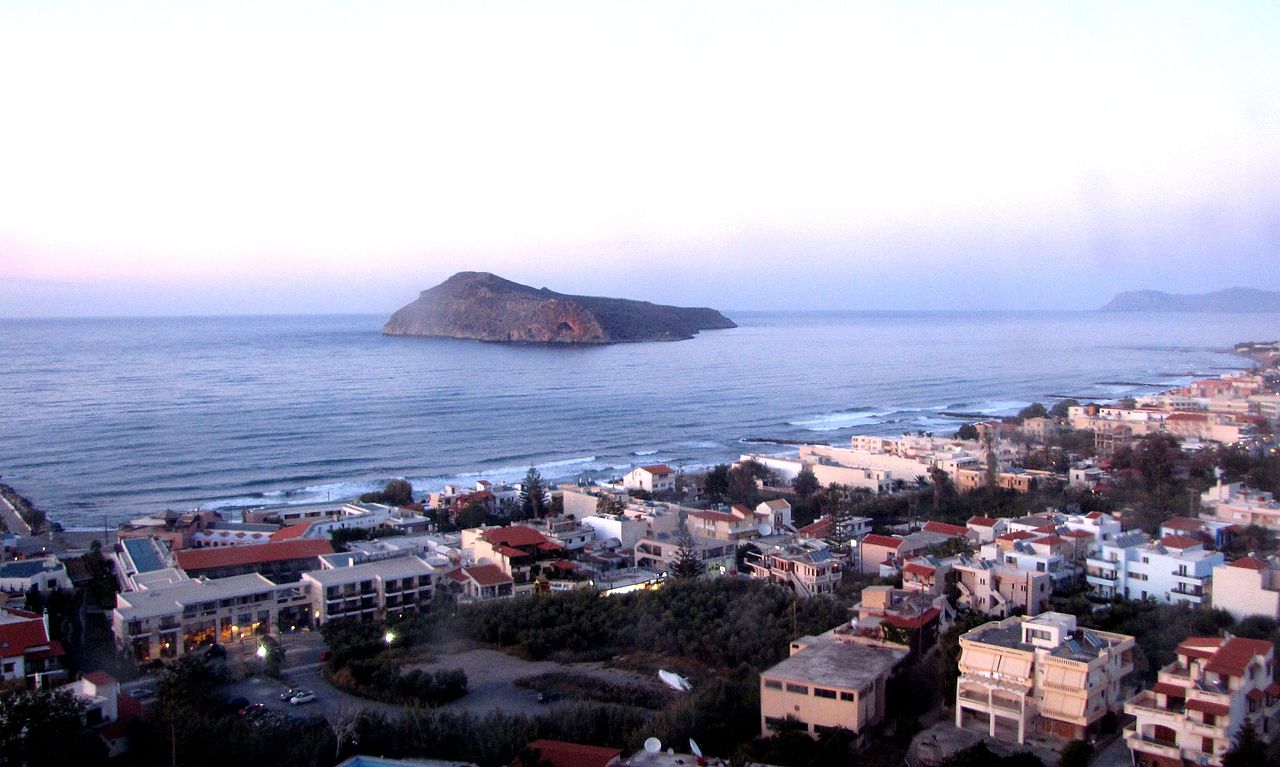
Platanias is what happens when a village gets absorbed by resort development over three decades. The original settlement still exists on the hillside above, but the coastal strip running east from Platanias toward the airport is now a continuous band of hotels, travel agencies, and organized beach bars. The beach is reasonable: sandy, sheltered, calm. The experience built around it is entirely manufactured.
This zone suits a specific traveler profile: families who want a low-effort, organized beach holiday with children's pools, water park proximity, and all-inclusive options available. For that profile, Platanias delivers reliably. Prices are mid-range, logistics are straightforward, and the drive to Chania old town takes under 20 minutes.
- Best for: families with young children, group bookings, travelers who want the classic organized Greek resort format
- Avoid if: you are looking for authenticity, walkable restaurant access, or the visual Greece from the photographs
- Reality check: the coastal strip has limited pedestrian-friendly zones; most evenings involve eating at the hotel or driving
Package pricing makes this zone 20 to 30% cheaper than Chania old town for comparable accommodation quality, which is a real argument if beach time is the priority over atmosphere. Car rental pickup is easy from the strip.
Chania Old Town
Chania old town is the most photographed area in Crete, and it earns the attention. The Venetian harbor is architecturally coherent, the lighthouse is iconic, and the covered market has actual local commerce alongside the tourist shops. It is genuinely beautiful, and that is the problem for many travelers.
The old town has become a victim of its own reputation. In July and August, the harbor front is so crowded in the evenings that moving between restaurants requires planning. Prices at harbor-facing restaurants run 30 to 40% above the island average. Accommodation inside the old town walls is expensive, often in converted historic buildings with narrow stairs, compact rooms, and parking impossible within a 10-minute walk. The noise from the harbor bars carries until 2 AM in peak season.
- Best for: short stays of 2 to 3 nights, couples on romantic trips, travelers whose priority is atmosphere over logistics
- Avoid if: you need a practical car base, are traveling in a group over four, or staying more than 4 nights (the premium normalizes quickly)
- Alternative: stay on the peninsula east of the city or near Kendrodasos on the west coast for access without the congestion
Budget 90 to 200 EUR per night for decent rooms inside the old town walls. The lack of parking infrastructure means day trips to the rest of the island require either a taxi to the car rental or choosing a property on the city outskirts.
South Central Coast: The Plakias Area
The south central coast is where independent travelers consistently end up after one visit to Crete and decide to return for longer. The zone around Plakias Beach sits at the end of a mountain road that cuts through the Cretan highlands, and the shift in atmosphere from the north coast is immediate. Fewer tourists, lower prices, and a beach culture built around people who actively chose to come this far.
Plakias Beach itself is a 1.5 km arc of sand and pebble with clear deep water and minimal facilities beyond a line of tavernas at the west end. The village behind it has a local grocery, independent restaurants, and studios running 40 to 70 EUR per night. The south coast here has consistent sunshine even in shoulder months, and the evening light off the mountain ridge is one of the better natural spectacles on the island.
- Best for: independent travelers, active couples, hikers using the coastal trails, two-week itineraries that want contrast to a north coast base
- Avoid if: you need easy airport access, want organized nightlife, or are traveling with children who expect pools
- Nearby: Skinaria Beach to the east for snorkeling, Mononaftis Beach further east along the coast
Count on 90 minutes to Heraklion and 70 minutes to Chania in normal traffic. That distance is not a dealbreaker for a dedicated south coast stay but rules out casual day trips to both airport cities.
Sougia and the Far Southwest
Sougia is the point where the road network effectively gives up. The village sits at the end of a mountain road with no through-route east or west along the coast. Sougia Beach is a long grey-pebble arc with cold deep water and essentially no tourist infrastructure: one road, a handful of rooms-to-let, two or three tavernas. That is the complete inventory.
For 90% of travelers, Sougia is too remote, too basic, and too inconvenient. For the remaining 10% who want exactly that, it is one of the best places on the island. Hiking access from the village is exceptional: the E4 European hiking trail passes through, the walk to ancient ruins at the west end of the beach takes 20 minutes, and the coastal path east toward the next gorge exit is one of the best day hikes in Crete.
- Best for: backpackers, solo hikers, experienced travelers who actively dislike organized resort zones
- Avoid if: you need reliable wifi, air conditioning in 35-degree heat, or a car (the approach road is punishing and slow)
- Also accessible: Kalivaki Beach, a quieter pebble cove reachable on foot to the east of the village
Accommodation in Sougia runs 30 to 50 EUR per night, among the lowest on the island. The summer ferry connection to villages along the southwest coast is the practical alternative to driving the mountain roads repeatedly.
Agia Pelagia: The Underrated North Cove
Agia Pelagia is a small bay 20 km west of Heraklion that consistently gets overlooked in favor of bigger names. Agia Pelagia Beach curves around a protected cove with calm, transparent water and a gradual approach that suits both children and older travelers. The village behind it has restaurants and small hotels without the resort-strip atmosphere of the larger north coast areas.
The practical case for Agia Pelagia is underappreciated. It is 20 minutes from Heraklion airport, which simplifies late arrivals and early departures significantly. The enclosed cove shape protects from the north winds (meltemi) that make other north coast beaches unpleasant on certain days in July and September. The accommodation-to-price ratio is notably better than comparable coves to the west, partly because the name does not appear in most travel features.
- Best for: couples on short trips of 4 to 6 nights, late arrivals into Heraklion, anyone wanting a calm base with day-trip range
- Avoid if: you want to be far from urban infrastructure or your itinerary centers on the west of the island
- Price range: 50 to 90 EUR per night for a studio with sea view in peak season
The bay is rimmed by low cliffs and the water depth increases quickly offshore, which makes it better suited to swimmers than to very young children. Rethymno is 50 minutes west and Heraklion is 25 minutes east, making it a functional central hub for a first-time north coast visit.
East Coast Mid-Section
The middle stretch of the east coast, running south from the Sitia area toward the northeastern tip, is where Crete still looks like it did in the early 2000s. Low development, long drives between settlements, and beaches that are effectively empty outside of August. The infrastructure trade-off is real: fewer quality restaurants, limited accommodation choice, and petrol stations spaced 30 to 40 km apart.
Itanos Beach at the northeast corner is a useful reference point for what the east coast offers: a double cove of pale sand and turquoise water with minimal facilities beyond a seasonal canteen. The water is calmer here than on the south coast in most weather conditions. The access track filters out most casual day-trippers, which means the beach remains uncrowded even in peak weeks.
- Best for: repeat visitors who want to leave the main tourist circuit, nature-focused travelers, couples who value space over convenience
- Avoid if: this is your first trip to Crete, you need reliable restaurant access in the evenings, or you are arriving without detailed advance planning
- Also on this coast: Krinakia Beach and Paralia Vlichadia, both accessible from the main coastal road with basic seasonal facilities
The nearest airport is Sitia, which has limited seasonal connections. Travelers arriving at Heraklion should count on a 2-hour drive before reaching the zone. Treat the east coast as a self-contained destination, not an add-on to a west-focused itinerary.
Vai and the Far Northeast: Day Trip Only
Vai is famous for its European palm forest, a dense grove of Phoenix theophrasti that extends to the waterline at Palm Beach Vai. The beach is photographed millions of times per year and looks extraordinary in images taken at low season. The reality in July and August is a beach at near-capacity, with a paid car park, rows of plastic chairs, a canteen, and the palm grove fenced off to prevent visitor damage.
The verdict is unambiguous: Vai is a half-day excursion from a base further south or west. Arriving before 9 AM or after 5 PM gives you the photogenic experience. Spending the night in the area has no practical advantage because accommodation within range is expensive relative to quality, and the zone has nothing to offer once the beach crowd disperses.
- Best for: a morning visit as part of an east Crete road trip
- Avoid as a base: entirely, unless you are already staying near Kato Zakros 25 km to the south and including Vai as one stop of several
- Better alternative: Itanos Beach, 3 km north via the same road, with significantly fewer visitors and equivalent water quality
The drive from Sitia takes 45 minutes. From Heraklion, the round trip is 5 hours of driving. Going to Vai from a western base as a standalone day trip is an inefficient use of a day unless it forms part of a proper 2-day east Crete loop with an overnight in Sitia.
Kato Zakros and the Deep Southeast
Kato Zakros sits at the far southeast corner of the island, at the end of a dramatic gorge road. The village has a Minoan palace ruin 400 meters from the water, a small beach, and a cluster of tavernas that stay occupied through summer. The atmosphere is end-of-the-road in the best sense: everyone here made a deliberate decision to come this far.
The archaeological site at Kato Zakros is one of four major Minoan palaces on the island and attracts a fraction of the visitors that the Heraklion site draws. The water in the bay is spring-fed in places, cooler than the surrounding coast but exceptionally clear. The gorge hike from the upper village takes 90 minutes each way and is one of the most dramatic walks in the eastern part of the island.
- Best for: archaeology enthusiasts, hikers, travelers doing a full east Crete circuit over 5 or more days
- Avoid if: this is a 7-night trip based in one location, or your priority is beach quality and water sports infrastructure
- Logistics: 3 hours from Heraklion airport, no public transport connections worth relying on, bring cash
Accommodation in Kato Zakros is primarily family-run rooms above tavernas in the 35 to 60 EUR per night range. The village has a taverna with strong local reputation for fresh fish, which is the primary evening activity. Card payment infrastructure is patchy throughout the village.
Keratokambos and the Forgotten South
Keratokambos is a village on the south-central coast that almost no mainstream travel publication mentions. It sits at the bottom of a mountain road that cuts through the highlands south of Heraklion, 45 minutes from the airport but feeling considerably more remote. The beach is a long grey-pebble strip with a handful of waterfront tavernas.
What makes Keratokambos worth knowing: the mountain ridge to the north provides consistent wind protection, the water is deep and clear, and the village functions as a real community rather than a purpose-built resort. Greek families vacation here. Accommodation is almost entirely locally operated, prices are low, and the food quality at the waterfront tavernas consistently exceeds that of comparable resort zones on the north coast.
- Best for: budget travelers, returning visitors who know the island well, anyone who places Greek authenticity above resort polish
- Avoid if: you need organized beach infrastructure, specific facilities for children, or quick access to the north coast highway
- Reality check: the approach road involves 18 km of mountain switchbacks; not recommended in wet conditions and slow even in good weather
Nightly rates run 35 to 55 EUR for studios, roughly 40% below north coast equivalents in peak season. The village has a small local market, a kafeneion open from early morning, and seasonal restaurants. It covers daily needs adequately without offering anything beyond them.
Interior Villages: The Long-Stay Option
The mountain villages of the Cretan interior are not mentioned in standard where-to-stay guides because they require a specific traveler. No direct beach access, long drives to the coast, and infrastructure ranging from adequate to genuinely limited. In exchange: temperatures 5 to 8 degrees cooler than the coast in July and August, near-complete quiet, and an experience of Crete that predates mass tourism.
For stays of three weeks or more, an interior base makes real sense. Villa rental prices drop significantly compared to coastal equivalents for weekly or monthly bookings. The mountain villages in the center of the island and those in the highland areas north of Sitia offer stone-house properties with mountain views at 400 to 700 EUR per week for a complete villa, compared to 900 to 1400 EUR per week for equivalent coastal properties in the same period.
- Best for: digital nomads, long-stay travelers (3 weeks or more), photographers, hikers who want the mountains as a primary base
- Avoid if: your stay is under 10 days, you do not have a car, or daily beach access is non-negotiable
- Practical note: most interior villages have a supermarket, a kafeneion, and seasonal restaurants; daily needs are covered without requiring a drive to the coast
The interior option is almost always underpriced relative to what it delivers for the right traveler profile. The problem is that most short-stay visitors default to the coast without investigating alternatives. For anyone working remotely during shoulder months, it is the most cost-effective arrangement on the island.
The Honest Verdict: Match Zone to Profile
Every zone on this list suits someone and fails someone else. The most expensive mistake in Crete is not picking an average zone. It is picking the wrong zone for your specific situation and discovering the mismatch on day two of a seven-night trip.
- First-time visitor, 7 nights: Rethymno old town or Agia Pelagia
- Family with young children: Platanias coast strip
- Couple, romantic short trip: Chania old town for 2 nights, then Plakias area
- Hiker, active traveler: Sougia or an interior village base with a car
- Budget-conscious independent: Keratokambos or Plakias area
- Archaeology focus: Kato Zakros for the east, Heraklion as a transit base for the center
- Digital nomad, 3 weeks or more: interior village rental with car
- East coast explorer: base near Sitia, day trips to Itanos Beach and Kato Zakros
Crete does not reward improvised location decisions. The island is large enough that a wrong base costs you real time and real money in fuel and car rental. The zones that look similar on a map are often very different in practice. Choose by traveler type, not by the most-recommended name in search results.