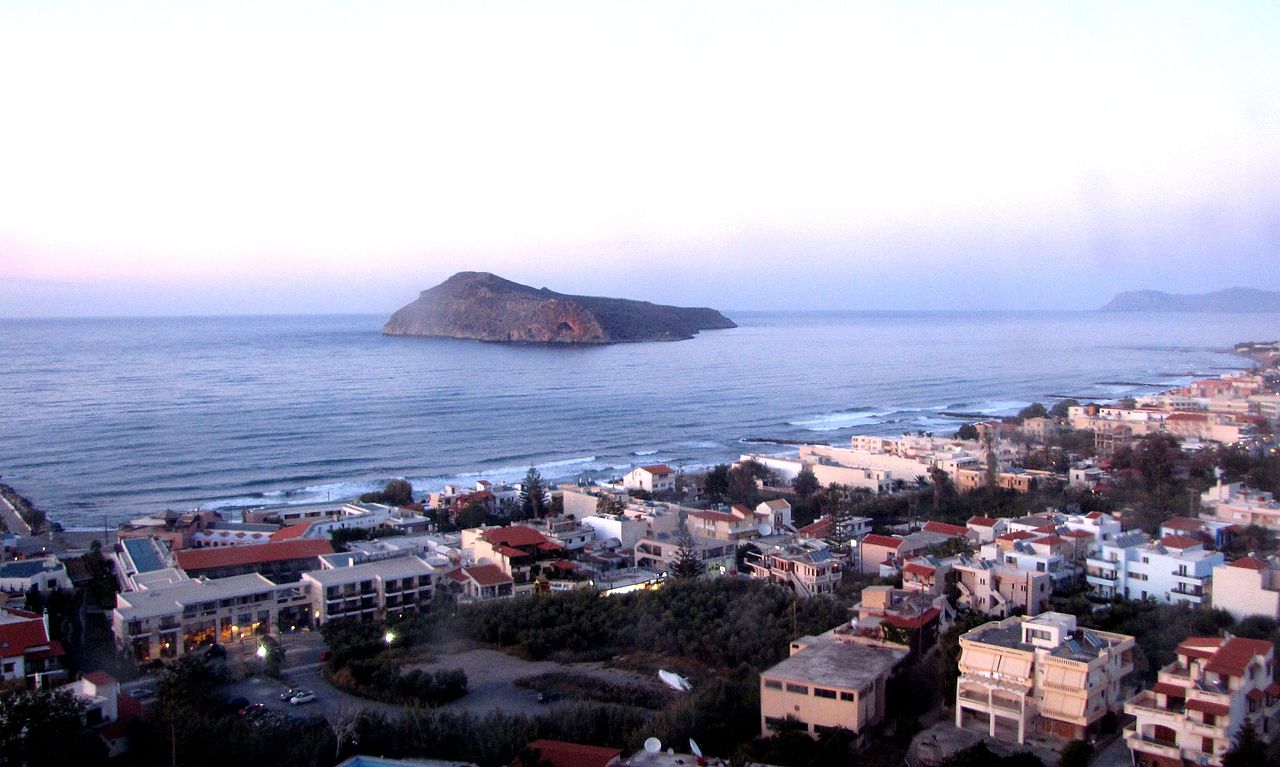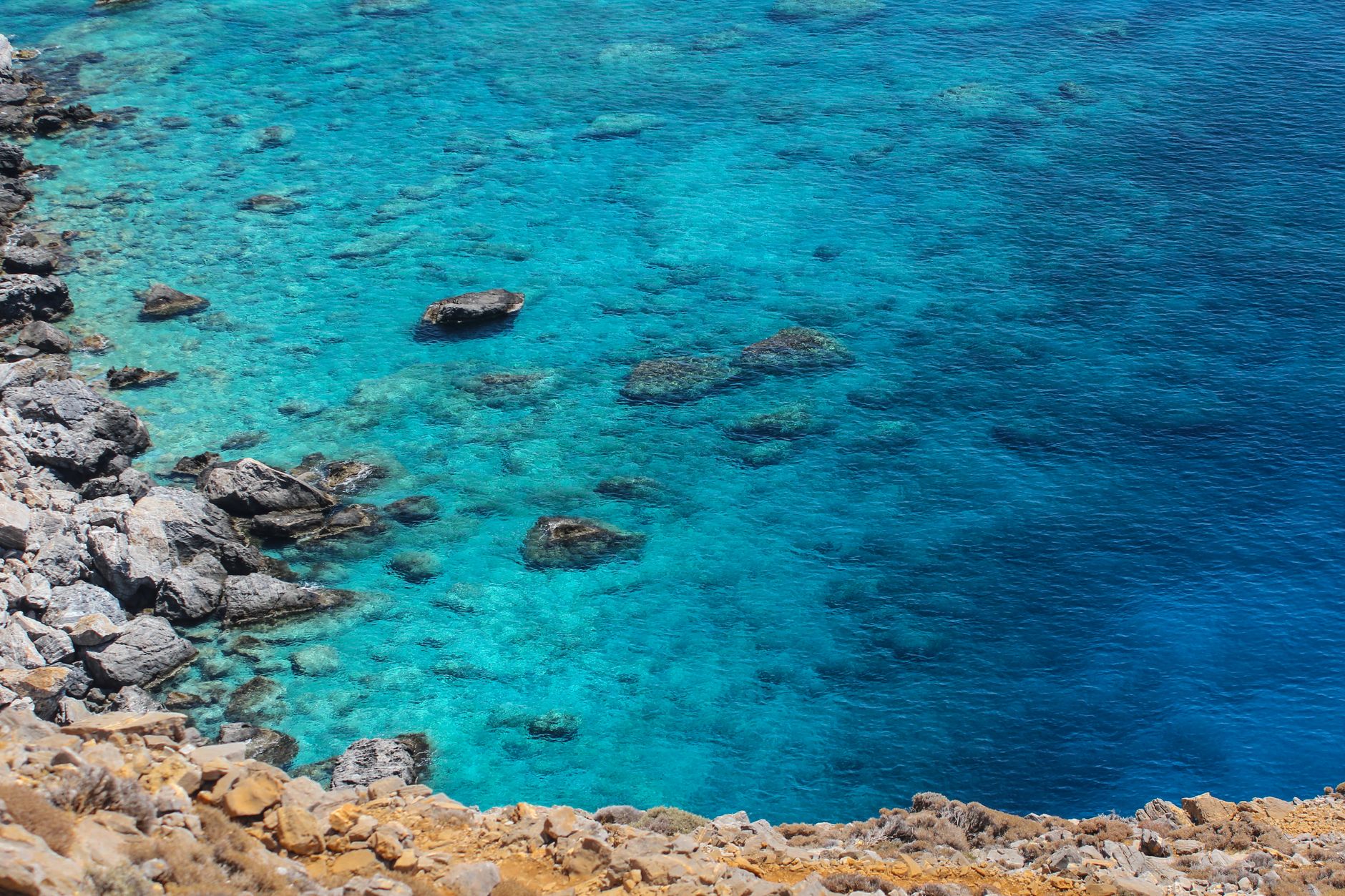
Every travel article about Crete will tell you it is one of the safest Mediterranean destinations for solo female travelers. That sentence is not wrong. It is, however, incomplete in ways that matter. Five years living on this island teaches you that safe is not the same as frictionless, and frictionless is not the same as identical across all zones and seasons. The consensus flattens a reality that is more specific: certain areas, certain hours, and certain months create conditions that differ substantially from others. This is the guide that explains those specifics.
Crete handled roughly 3.6 million visitors in 2025. Solo female travel across Southern Europe was up an estimated 18% year-on-year per EU tourism data. The island's crime rate remains among the lowest in the Mediterranean by any available metric. But low crime does not equal zero friction. The harassment that solo women report in resort zones during July and August is real, documented in thousands of firsthand accounts, and worth understanding before you book. This is not a brochure. It is a practical assessment based on what the data shows and what five years on this island confirms.
- Crime statistics: the honest baseline
- Resort zones vs. authentic Crete: where friction actually happens
- Nightlife: the one area where safe needs caveats
- Accommodation: decisions that change your experience
- Beaches for solo travelers: practical choices
- Transport: the gap everyone mentions, finally explained
- Cretan culture: what to expect from locals
- Building your solo itinerary for 2026
Crime statistics: the honest baseline
Crete's violent crime rate against tourists is genuinely low by European standards. Data from the Hellenic Police (ELAS) consistently places tourist-targeted violent incidents at under 0.02% of annual visitors. Petty theft, including phone snatching and bag grabs in crowded beach areas, represents the largest category of incidents reported by foreign women. These incidents concentrate in three zones: the main resort strip on the north coast, large beach club environments, and bus stations in the larger towns during peak hours.
Sexual assault targeting tourists is significantly rarer than in comparable destinations. When incidents do occur on record, they follow a consistent pattern: late-night, high-alcohol environments, concentrated in July and August. That pattern contains actionable information. The risk is not Crete as a whole. The risk is specific conditions within Crete, and those conditions are predictable.
Travel insurance costs between 40 and 70 EUR for a two-week Crete stay for most European nationals in 2026. Worth having, not because the risk is high, but because medical care on remote parts of the island is limited and evacuation from the south coast is not trivial.
- Petty theft in crowded beach and market areas: highest incidence, lowest severity
- Low-level harassment in resort nightlife zones: concentrated in July and August, predictable locations
- Transport-related vulnerability: arriving or leaving isolated areas alone after dark
- Drink-related incidents in large beach clubs: reported primarily in the largest resort zones, peak season only
Resort zones vs. authentic Crete: where friction actually happens
The most important distinction for solo female travelers in Crete is not between Crete and other destinations. It is between which Crete you are visiting.
The north-coast resort corridor concentrates the vast majority of package tourism, organized nightlife, and the friction that comes with it. Solicitation by bar and tour staff targeting solo women, aggressive excursion selling, and low-level evening harassment are common enough in these zones to be expected, not exceptional. If you have spent time in comparable environments in Mykonos, Corfu, or the Spanish costas, you know exactly this register.
Authentic Crete is a different experience. Smaller working towns like Agios Nikolaos in the east, or Siteia further along the same coast, have real communities with daily routines and a social fabric not organized around the tourist economy. Solo women who base themselves in these areas consistently report a different quality of daily life: curious, occasionally old-fashioned in social dynamics, but not predatory. The ratio of Greek to tourist faces in the street changes everything.
If your trip runs two weeks or longer, consider a maximum of two or three nights in the heavy-resort zones for logistical convenience, and the rest of your time in smaller towns, village guesthouses, and the south coast. The experience is qualitatively different, and so is the friction level.
Nightlife: the one area where safe needs caveats
Most articles about solo female travel in Crete skip this section or reduce it to the instruction to stay in groups. Neither is useful. Here is the actual situation.
Large beach clubs and party strips on the north coast operate consistently with comparable environments across Southern Europe: high density, high alcohol, and a subset of men who treat solo women as targets of opportunity. The specific risk is not primarily violent crime. It is drink-spiking, reported in travel forums primarily in the largest resort zones, social isolation in environments without easy exit, and pressure to remain in situations that have become uncomfortable.
The mitigation is practical, not about avoiding nightlife entirely:
- Book accommodation within walking distance of wherever you plan to spend evenings. Late-night transport is thin outside the main towns.
- Rent a scooter if you are comfortable on one. Autonomy changes the risk profile substantially.
- Establish your exit route before you are tired or have been drinking. Decide it when you are sober.
- In beach clubs, watch your drink being poured where possible. Standard European nightlife practice, not Crete-specific paranoia.
Smaller-town nightlife in harbor squares and local music bars is a completely different register: low-key, multigenerational, and unlikely to generate friction. The evening culture in a town like Agios Nikolaos is pleasant for solo women without any of the resort-zone dynamics.
Accommodation: decisions that change your experience
Solo female travelers consistently identify accommodation choice as the single highest-leverage decision for their Crete experience. The relevant split is between large resort hotels, which are efficient and anonymous, and smaller guesthouses, family-run pensions, and apartments, which provide more social context, better local knowledge, and usually a safer daily environment by default.
The case for smaller accommodation: a guesthouse owner in a working town like Rethymnon knows the local context and can provide orientation that large hotels do not. Women who stay in family-run accommodation report feeling more grounded and less targeted than those in anonymous resort blocks. You are a person with a name, not a room number.
The case for larger hotels: security infrastructure, 24-hour front desks, and a form of anonymity that has its own value. For women who prefer that no one at their accommodation knows their movements, this matters.
- First night in any new area: choose a pension or small hotel in the town center, not a rural villa or remote beach location.
- South-coast beaches like Plakias Beach and Sougia Beach have small-scale accommodation specifically oriented toward independent travelers. This self-selection creates a useful social environment.
- Avoid rural self-catering listings that require a car to reach any services. Verify exit options before booking, not after arriving.
- Check that check-in hours align with your arrival time, particularly for evening flights into the east-coast regional airport.
Beaches for solo travelers: practical choices
The beach question for solo women in Crete is less about safety than about social environment and logistics. Organized beaches with sunbed rentals, beach bars, and staff on site provide density and ambient social infrastructure. Isolated beaches offer solitude but require more deliberate preparation.
For a first solo trip, some practical choices from our verified database:
- Rethymnon Beach (central coast): long, organized, high foot traffic all day. Easy access from the town center on foot. Good facilities throughout the season. Straightforward and forgiving for orientation.
- Agia Pelagia Beach (central coast): smaller, with a more local clientele and less package-tourist density than the main resort beaches. Better for genuine conversation and a calmer atmosphere.
- Plakias Beach (central south coast): the established hub for independent and backpacker travelers. Social infrastructure exists specifically for this demographic, including a well-known community of solo women traveling long-term.
- Kitroplatia (east coast): an in-town beach with a genuinely local flavor. Good for a day stop during a circuit of the east.
- Itanos Beach (far east coast): remote and worth the drive. Bring everything you need. Tell someone your location and your return plan before you leave your vehicle.
For any remote beach: arrive with enough water and food for your full stay, verify the return route before you park, and do not plan to be driving unfamiliar mountain roads back to accommodation after dark.
Transport: the gap everyone mentions, finally explained
The transport situation is the most consistently underreported practical safety issue for solo female travelers in Crete, and it directly determines your planning options. The state in 2026:
Public buses (KTEL) cover the main north-coast corridor reliably, with frequent connections between the larger towns during daylight hours. Off this axis, frequency drops sharply. South-coast routes operate one or two buses daily on the best-served roads and nothing on secondary routes. Miss the last bus from a south-coast location and your options are: expensive taxi from a remote area, or staying overnight somewhere unplanned.
Taxis are available in all towns but advance booking is standard outside city centers. Street hailing is not common. Rideshare apps operate in very limited coverage zones on Crete in 2026.
- Scooter rental (25 to 45 EUR per day, season-dependent): the most common independent traveler solution. Requires a valid driving license for anything above 50cc. Gives genuine autonomy. Most coastal roads are manageable for confident riders. Mountain roads require experience and attention in both directions.
- Car rental (from 35 EUR per day in shoulder season): safer for mountain routes, more practical for luggage. The answer for anyone not comfortable on two wheels.
- KTEL bus pass: adequate for a north-coast-only itinerary. Significantly limiting everywhere else on the island.
Do not plan a south-coast or east-coast itinerary without your own transport unless you have mapped the bus schedules in advance and built overnight stops into the plan at each remote location.
Cretan culture: what to expect from locals
The characterization of Cretan men that no travel guide will give you directly: they are neither uniformly harmless nor uniformly problematic. There is a generation gap that matters practically.
Men over 50 in rural areas operate with social norms that predate the tourist economy. They may stare, comment, or engage in ways that feel intrusive by northern European standards. This is cultural friction, not predation. Kritsa, the traditional craft village in the Lasithi plateau region, is a useful illustration: solo women who visit consistently report respectful, occasionally old-fashioned interactions and nothing threatening. The same pattern holds across inland villages generally. Philoxenia, the Greek tradition of hospitality toward strangers, is observable in daily life and not a performance for tourists.
Younger Cretan men in tourist-facing roles and urban areas are largely indistinguishable from young men anywhere in Southern Europe. The subset who behave badly toward solo women clusters in specific environments (resort nightlife, large beach clubs during peak season) rather than representing the wider population.
What you will not find in authentic Crete: aggressive tout culture. No one will follow you down a street. No one will grab your arm to pull you into a restaurant. These behaviors occur in the resort zones occasionally. They do not occur in working Cretan towns, and their absence is one of the more striking differences between authentic Crete and the north-coast resort corridor.
Building your solo itinerary for 2026
A two-week solo itinerary structure that works for most risk profiles and experience levels:
- Days 1 to 2: Arrive and base in a central working town. Agios Nikolaos in the east or Kastelli in the far west are well-oriented starting points. Get your bearings, arrange transport, walk the streets at different hours of the day and early evening. Do not start with a remote villa or beach retreat before you have local context.
- Days 3 to 10: Rent a scooter or car. Move through the island at your own pace. The south coast, including Plakias Beach and Sougia Beach, offers a qualitatively different environment from the north: fewer package tourists, more independent travelers, better-value accommodation, and a well-established community of long-stay solo visitors who already know the local logistics.
- Days 11 to 14: East Crete. Siteia and the surrounding area reward slower travel and deliver a working Cretan town atmosphere without the resort overlay. Palm Beach Vai, the most photographed location in eastern Crete, is worth the trip, but arrive before 9am or after 5pm in July and August. The midday crowds are significant and the atmosphere changes entirely with them.
The general principle: mix organized beach infrastructure with quieter options. Mix nights in working towns with nights in smaller settlements. Do not build an itinerary that concentrates all time in the north-coast resort corridor. This is both a quality-of-experience recommendation and a friction-reduction strategy for solo women specifically.
The verdict
Crete in 2026 is genuinely safe for solo female travelers by any comparative metric that holds up to scrutiny. Violent crime rates are low, comparative data from other Mediterranean destinations is favorable, and the consistency of firsthand accounts across years of solo travel is clear. The caveats are specific and actionable: resort-zone nightlife in peak season requires the same judgment you would apply anywhere in Southern Europe, and remote areas require more logistical planning than a well-served destination. Neither caveat changes the overall assessment. They refine it. The island rewards women who treat it as a place with its own logic rather than a generic beach holiday with a Greek flag on it. That means the south coast, the authentic towns, the inland routes, and the slower pace that lets you read the context around you before committing to a situation. Plan deliberately. Move confidently. The island will meet you there.