Crete is one of the most biodiverse islands in the Mediterranean. Isolated from mainland Greece for millennia, it has evolved a distinct set of endemic species — plants and animals found nowhere else on Earth. This guide covers the key wildlife, the best locations to find it, and the practical details you need to plan a nature-focused trip in 2026.
Endemic Animals of Crete: What Lives Here and Nowhere Else
Crete wildlife is defined by its endemism. The island's long isolation — combined with habitats ranging from sea-level beaches to 2,456-metre peaks — has produced species and subspecies unique to this island.
The most significant endemic mammals include:
- Kri-kri (Capra aegagrus cretica) — the Cretan wild goat, a relic population considered the ancestor of domestic goats
- Cretan wildcat (Felis silvestris cretensis) — extremely rare, inhabits dense maquis scrub in mountainous zones above 600 m; rarely observed directly
- Cretan spiny mouse (Acomys minous) — endemic rodent found in rocky terrain across the island
Reptile endemism is equally notable. The Cretan wall lizard (Lacerta cretensis) colonises rocky slopes throughout the island. The European glass lizard (Pseudopus apodus) reaches up to 1.4 m here and is frequently mistaken for a snake — it is harmless. The blunt-nosed viper (Macrovipera schweizeri) exists only on two offshore islets and does not occur on the main island.
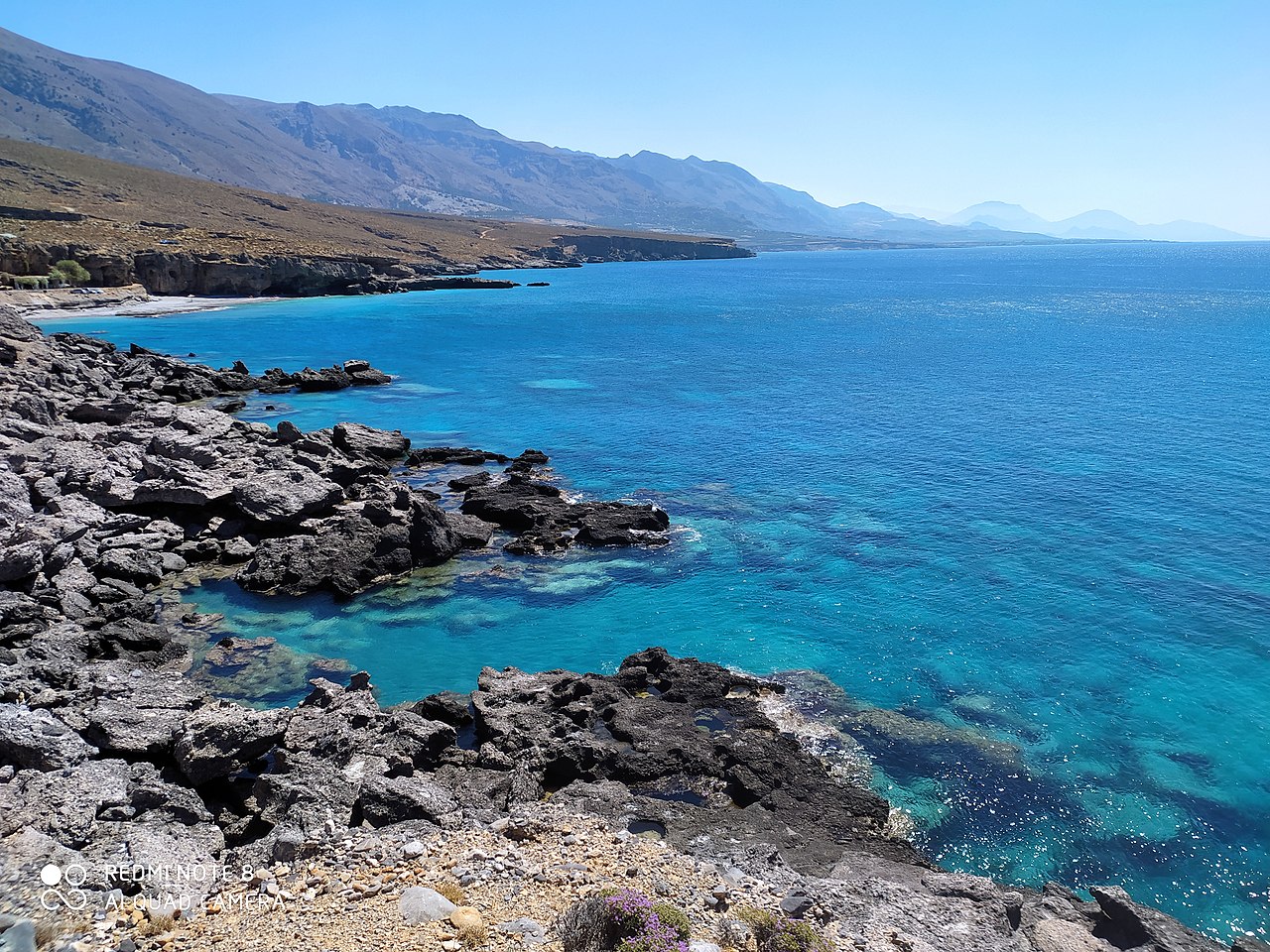
Marine endemism extends offshore. Mediterranean monk seals (Monachus monachus) occasionally use remote sea caves along the southwestern coast — sightings have been recorded near the Gramvousa peninsula and the coastline around ancient Lissos. Fewer than 800 individuals remain across the entire Mediterranean, making each sighting significant. Any sighting should be reported to MOm (the Hellenic Society for the Study and Protection of the Monk Seal).
The Kri-Kri Ibex: Crete's Wild Mountain Goat
The kri-kri ibex is the flagship species of Cretan natural heritage. Classified as a subspecies of wild goat (Capra aegagrus), it is a living relic linked to animals domesticated by Neolithic settlers around 10,000 years ago. The current population is estimated at 2,000–3,000 individuals. It is fully protected under Greek law.
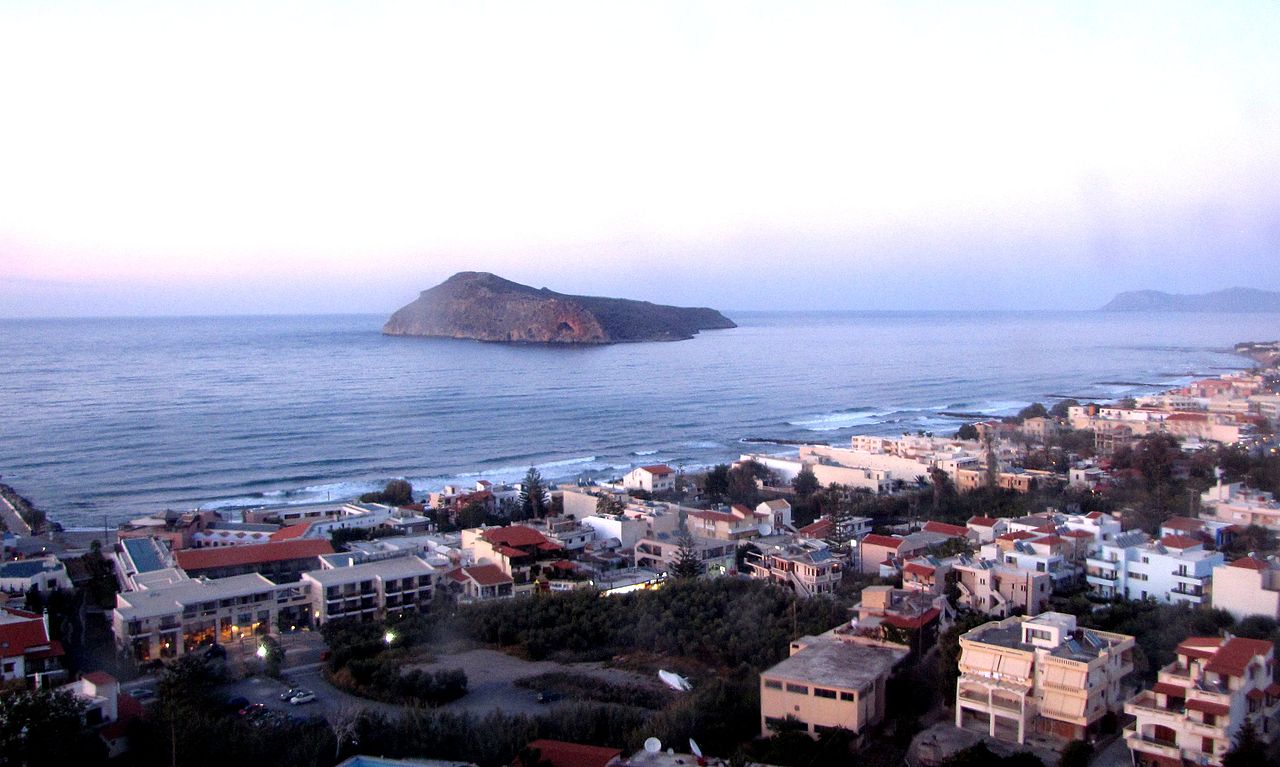
The main wild population lives in the White Mountains (Lefka Ori) in western Crete, particularly within Samaria National Park. Refuge populations have been established on three offshore islands — Dia (8 km north of Heraklion), Agii Pantes, and Thodorou (near Chania) — to provide insurance against mainland population decline.
Where to see kri-kri in 2026:
- Samaria Gorge — the most reliable location. The 16 km trail from Xyloskalo (1,227 m altitude) to Agia Roumeli passes through core habitat. Early morning in the upper gorge during May and October gives the best sightings. Entrance fee: 5 EUR. The gorge opens in late April or early May depending on water levels, and closes by end of October.
- Thodorou island — accessible by boat from Platanias, 15 km west of Chania. Day trips available April through October from local operators; expect to pay 15–25 EUR per person.
- Omalos plateau rim — the rocky cliffs above Omalos village (1,000 m) are worth scanning at dawn with binoculars before descending the gorge.
Males are identifiable by curved horns reaching 85–100 cm. Both sexes carry a distinctive darker dorsal stripe. Activity peaks in early morning and late afternoon; midday heat pushes animals into shade and higher elevation. The optimal viewing months are April–June and September–October.
Distance from Heraklion to Xyloskalo (Samaria trailhead): 75 km, approximately 1 hour 30 minutes via the E75 motorway and regional roads through Omalos. Buses from Chania bus station depart at 06:15 and 07:30 during the open season at approximately 2.50 EUR each way.
Flora of Crete: Endemic Plants, Wild Herbs and Orchids
The flora and fauna of Crete include approximately 1,700 plant species, of which around 170 are endemic to Crete — a higher endemism rate than most Mediterranean islands of comparable size. Limestone geology, altitude variation exceeding 2,400 m, and the island's historical isolation all contribute.
Key endemic and notable plant species:
- Dittany of Crete (Origanum dictamnus) — the most iconic Cretan endemic. A small, woolly-leaved herb with pink flowers, it grows on limestone cliff faces between 400 and 1,800 m. Protected by law. Found in gorges throughout the Dikti and Lefka Ori ranges; best observed in May–July when flowering.
- Cretan palm (Phoenix theophrasti) — the only palm native to Europe. The largest grove is at Vai beach near Sitia in far eastern Crete: approximately 5,000 trees across 20 hectares, designated a natural monument. Vai is 180 km east of Heraklion, roughly 2 hours 30 minutes by car.
- Cretan ebony (Ebenus cretica) — a compact shrub producing vivid pink flower spikes on rocky hillsides from April to May. Widespread across central and eastern Crete.
- Anchusa cespitosa — cushion-forming endemic found only on the Lefka Ori summits above 1,800 m, one of the highest-altitude endemic plants in Europe.
Spring — specifically late March to early May — is the peak season for Cretan wildflowers. The Lasithi plateau (840 m altitude), Omalos plateau, and the valleys around Spili produce dense displays of orchids (Crete records over 60 orchid species), anemones, peonies, and wild tulips. The Dikteon Cave on the Lasithi plateau sits within one of the most botanically rich areas on the island — the plateau floor and surrounding slopes are reliable sites for endemic plants alongside standard Aegean flora.
Wild aromatic herbs — thyme (Thymus capitatus), Cretan sage (Salvia fruticosa), oregano, and rosemary — blanket the garrigue across all four prefectures. These are harvested commercially from April onwards and are available at weekly markets in Heraklion (Tuesday/Thursday/Saturday), Chania (Saturday) and Rethymno (Thursday).
Best Nature Reserves and Wildlife Spotting Locations in Crete
Crete has three formally protected national park areas and several additional sites that reward wildlife observation:
Samaria National Park — Chania, western Crete
Established 1962. Covers 4,850 hectares. Beyond the gorge walk, the park boundary extends across the high White Mountains. Golden eagles, griffon vultures, bearded vultures, and peregrine falcons are all present year-round. The gorge is managed by the Chania Forest Service; visitor numbers are capped in peak season.
Lake Kournas — Rethymno prefecture
The only natural freshwater lake in Crete, 4 km inland from Georgioupolis and 46 km east of Chania. From October through March the lake attracts consistent waterfowl: coots, little grebes, great crested grebes, and marsh harriers. Balkan terrapins (Mauremys rivulata) bask on rocks along the southern bank on clear days. Kayak rental available from the lakeside village (approximately 10 EUR per hour) which provides a quieter observation angle than the roadside viewpoints.
Agia Lake — 7 km south of Chania
A coastal lagoon adjacent to a wastewater treatment facility — unglamorous in description, outstanding for birds. From November through February it regularly holds 20–80 greater flamingos, alongside spoonbills, grey herons, little egrets, and cormorants. Free access via a track off the Chania–Souda road. The surrounding reed beds hold Cetti's warblers year-round and migrant warblers in April–May and September–October.
South coast beaches — loggerhead sea turtles
The loggerhead sea turtle (Caretta caretta) nests on sandy south-facing beaches from June to August. Primary nesting sites include Komos and Matala beaches (Heraklion prefecture), Rethymno town beach (the largest single nesting beach in the Mediterranean outside of Cyprus), and the beaches of Chrissi island. Hatchlings emerge August–September. The NGO ARCHELON monitors all major sites and runs volunteer field programs — applications open in January. Disturbing marked nests carries criminal penalties under Greek law.
Vai palm grove — Lasithi prefecture, far east
Protected natural monument managed by the Municipality of Sitia. Access to the beach is free; the palm grove core zone is restricted to prevent soil compaction. Early morning visits (before 09:00) allow quiet observation; the site becomes crowded with day-trippers from June through August.
If you are planning a multi-day nature itinerary, the Crete packing guide covers what to bring for gorge walking and mountain wildlife watching — layering is essential in spring when conditions shift quickly with altitude.
Birdwatching in Crete: Raptors, Migrants and Wetland Species
Crete sits on a significant eastern Mediterranean flyway. Combined with its resident raptor assemblage, this makes it one of the most productive birdwatching destinations in Greece.
Resident raptors:
- Bearded vulture (Gypaetus barbatus) — present year-round in the White Mountains. Wingspan up to 2.8 m; identifiable by its wedge-shaped tail. Best observed from the Omalos plateau rim and the upper Samaria Gorge at dawn.
- Griffon vulture (Gyps fulvus) — more frequently seen. Soaring birds are regularly visible over all three mountain ranges, particularly during the warm mid-morning thermals.
- Golden eagle — resident in Lefka Ori and Dikti year-round. Pairs hold large territories; best observed near cliff edges in early morning.
- Eleonora's falcon — breeds on sea cliffs around offshore islets from April to October. In September and October it switches to hunting migrating passerines, often in spectacular aerial displays visible from coastal headlands near Heraklion and Sitia.
Winter species (November–March): Greater flamingo at Agia lake and the Elounda lagoon near Agios Nikolaos. Dalmatian pelican is an occasional winter visitor to Lake Kournas. Black-throated divers and Yelkouan shearwaters occur offshore.
Spring migration (April–May): European rollers, bee-eaters, hoopoes, and multiple warbler species pass through. Olive groves and maquis scrub along the north coast — particularly around Georgioupolis and the Apokoronas peninsula — produce the highest species counts during this window.
The current November conditions in Crete — mild temperatures and low rainfall — make wetland and lake sites practical this month without the heat stress of summer. Flamingos typically begin arriving at Agia lake through November.
Recommended equipment: 8x42 binoculars minimum; a 20–60x spotting scope for raptor watching. Lars Jonsson's Birds of Europe remains the standard field guide. The Hellenic Ornithological Society (ornithologiki.gr) maintains a Greek species database with Cretan records updated by local observers.