Most visitors land at Heraklion airport, check into a nearby hotel, and call it a base. It is the path of least resistance, and for most travellers, it is a mistake. Heraklion is Crete's administrative capital. Its port handles cargo. Its waterfront is a sequence of traffic lanes and tourist restaurants operating on captive-audience logic. The city works for transit. It does not work particularly well as a holiday base.
Rethymno sits approximately 80 kilometres to the west and functions at a different register entirely. Its Venetian old town is intact and largely pedestrianised. Its beach is a 12-kilometre stretch of sand beginning at the city edge. The nightlife is present without being exhausting. After five years in Crete, the verdict is consistent: the majority of leisure travellers are better served by Rethymno, and the gap between the two cities is considerably wider than most travel guides acknowledge.
- The airport trap that fills Heraklion hotels
- Old town comparison: Venetian heritage vs urban sprawl
- Beach access: the Rethymno advantage
- Day trip radius from each city
- Food scene: quality vs tourist volume
- Crowds, noise, and the summer crush
- Who actually benefits from staying in Heraklion
- Cost reality check
- The verdict
The Airport Trap That Fills Heraklion Hotels
Heraklion airport is one of the busiest airports in Greece. In peak season, it processes thousands of arrivals daily. The psychological leap from landing here to staying here is understandable, and the hotel industry is structured to benefit from it. The airport sits a few kilometres from the city centre. Rethymno is approximately 80 kilometres further west, roughly 90 minutes by public bus or 70 minutes by car on the northern coastal highway.
That extra transit time is the only genuine argument for choosing Heraklion as a base. It is not a trivial argument, particularly for late arrivals with luggage and children. But for travellers with any flexibility, the trade-off resolves in favour of moving west. Buses between the two cities run frequently throughout the day, fares are low, and the coastal road is one of the more pleasant drives in this part of the Mediterranean.
The airport's gravitational pull concentrates tourist infrastructure, tourist pricing, and tourist crowds in a city whose underlying character is commercial and administrative. Restaurants near the port know they have a captive audience. Mid-range accommodation in the city's tourist zone is priced above what the setting warrants. The visitor who stays in Heraklion because of the airport is, in most cases, paying a convenience tax on a convenience they will not need again after day one.
Old Town Comparison: Venetian Heritage vs Urban Sprawl
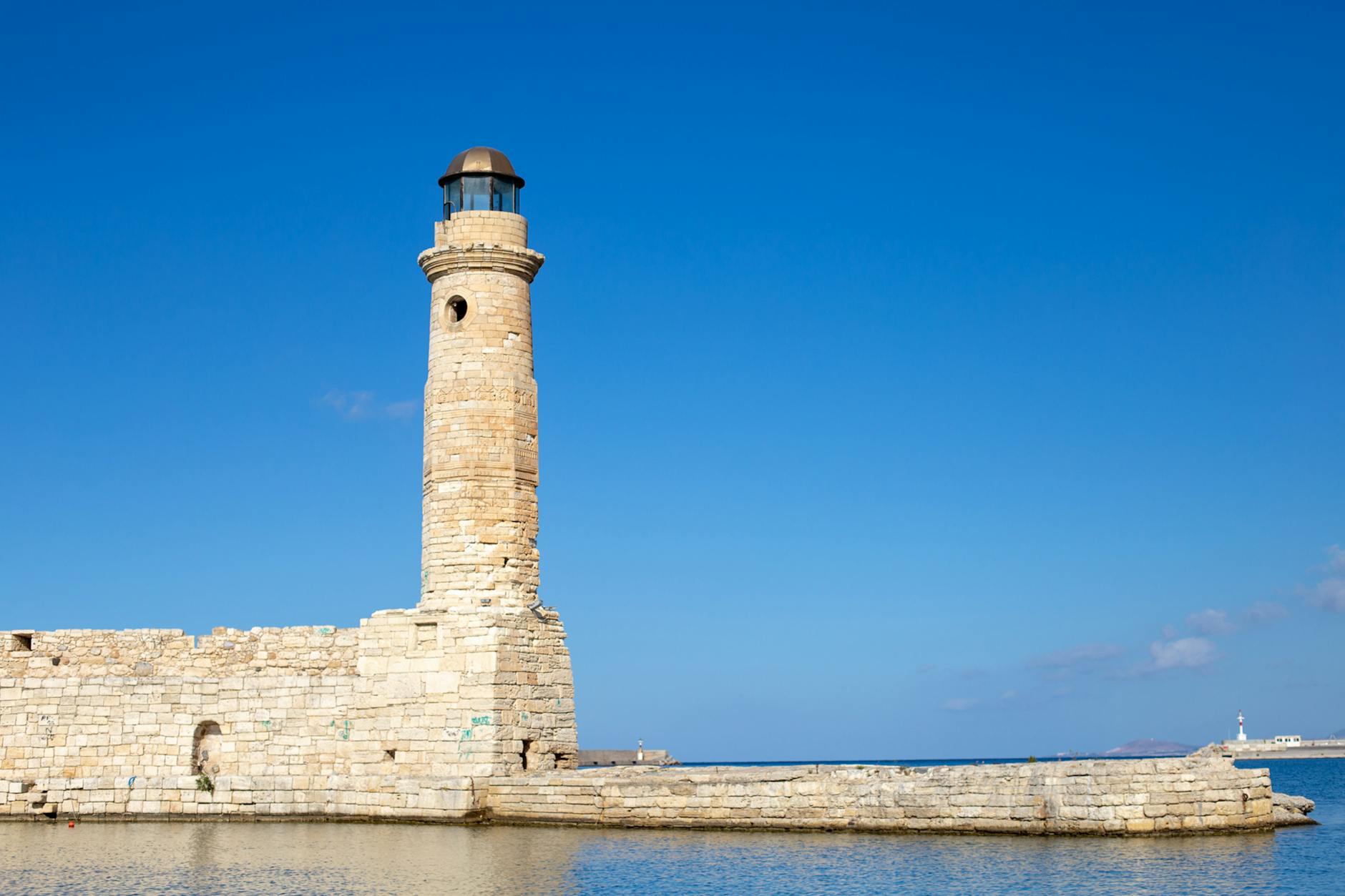
Rethymno's old town is the city's clearest argument. It is compact, largely pedestrianised, and built on a Venetian street grid that survived subsequent centuries of occupation largely intact. The harbour fortress, the lighthouse at the harbour entrance, the loggia on the central square: these are not reconstructions. They are continuous pieces of a city inhabited without interruption for centuries, and they give the streets a texture that no amount of renovation can fabricate.
Heraklion has genuine monuments. The fortress at the harbour mouth is impressive. The city's main archaeological museum holds the finest collection of Minoan artefacts anywhere in the world. These are legitimate reasons to visit for a day. They are not sufficient reasons to base yourself there for a week.
Outside its handful of monuments, Heraklion is a functioning mid-sized Greek city: heavy traffic, unremarkable modern construction, a commercial centre catering primarily to its own residents. This is not a criticism. It is a description of what it offers a leisure visitor. Rethymno's old town delivers considerably more. The evening promenade along the waterfront, past lit cafes and the Ottoman fountain on the square, is the kind of thing that stays in memory. The equivalent in Heraklion requires more effort and returns less.
Beach Access: The Rethymno Advantage
Rethymno Beach begins at the eastern edge of the old town and extends northeast for approximately 12 kilometres without interruption. It is urban beach in the best sense: clean sand, clear water, and a ten-minute walk from most accommodation in the centre. In August it fills. In May, June, September, or October, it offers significant stretches with genuine room to settle.
Heraklion has no comparable city beach. The waterfront is the port. The nearest beaches require a bus or car and sit within resort developments built specifically to serve the airport-arrival visitor. Agia Pelagia Beach to the west offers reasonable conditions, but it is 30 minutes by car and functions as a resort bay rather than a natural extension of city life.
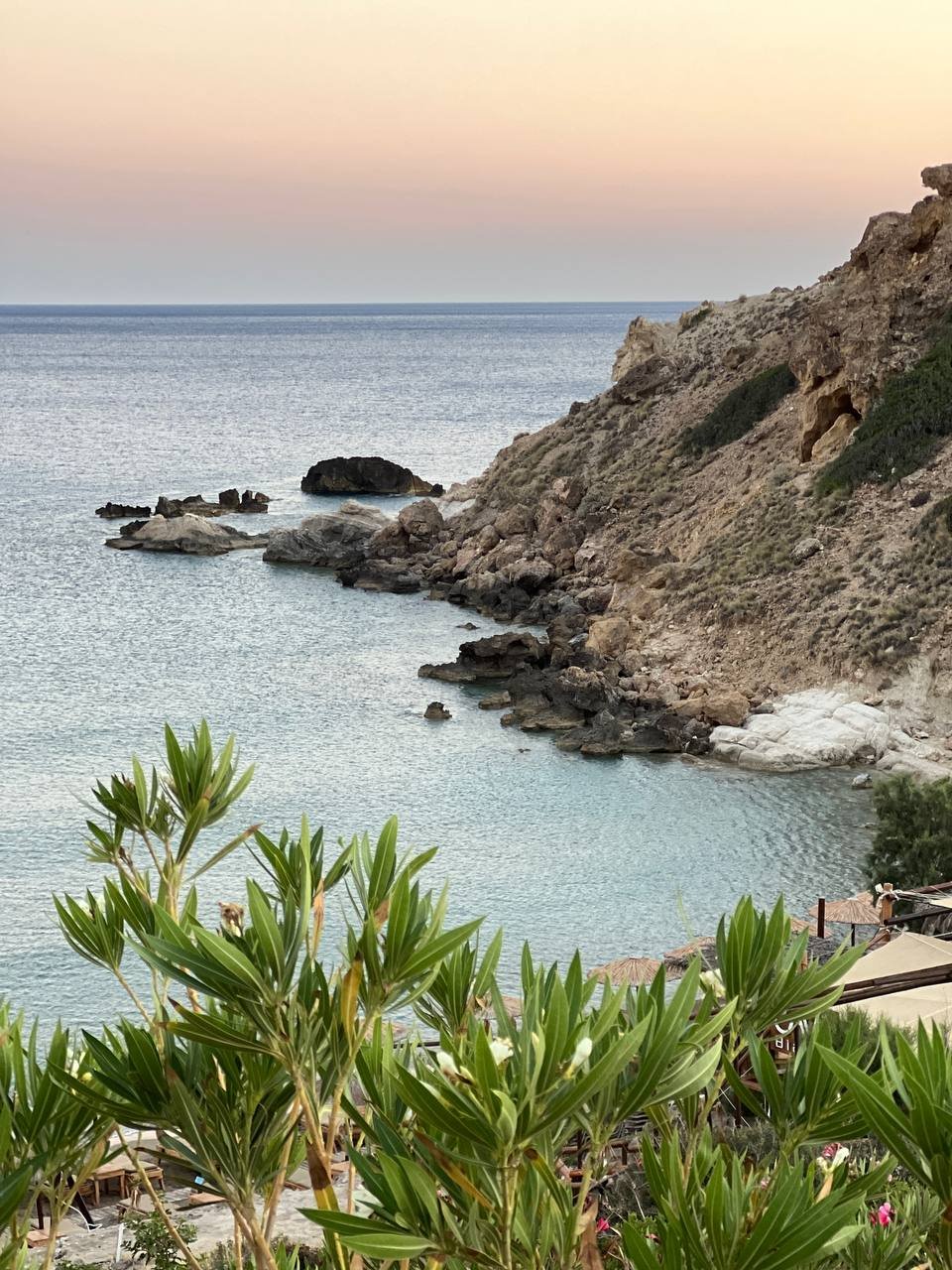
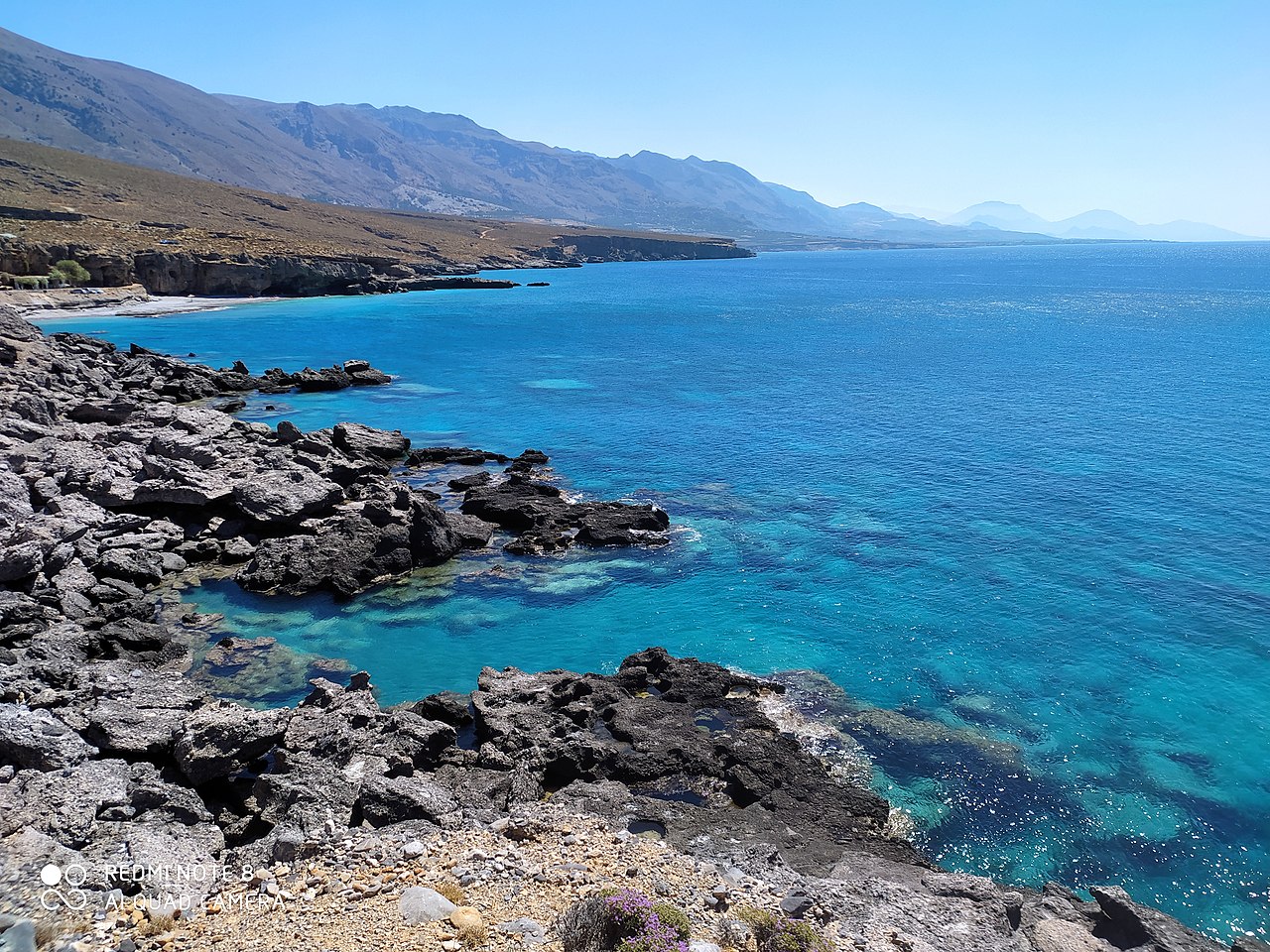
From a Rethymno base, the south coast is also accessible. Plakias Beach lies approximately 35 kilometres south across the mountains and offers a wider, more exposed marine environment with a stronger seasonal character. Skinaria Beach is smaller and favoured by divers. Neither requires more than an hour from the city. The equivalent south coast options from Heraklion involve longer transit through less navigable terrain, particularly without a car.
Day Trip Radius: Rethymno Is More Central Than You Think
The standard objection to Rethymno as a base is that it adds distance to Heraklion's main Minoan sites. This is accurate: the Minoan palace ruins south of Heraklion are around 90 minutes from Rethymno by public transport. If ancient Minoan civilisation is the primary reason for the trip, Heraklion has the better logistical argument. That is an honest concession.
For most travellers, the day trip picture from Rethymno is broader. To the west: the White Mountains region, the main gorge hike in the western mountains roughly 70 kilometres away, and the far western coast. To the east: Heraklion itself as a full day visit on frequent buses, then the foothills of the central mountain range, then more distant eastern sites by car. Archanes, a well-preserved village with its own archaeological context, sits south of Heraklion and works as a logical add-on to an eastern day trip from any base.
Rethymno also places you within better reach of the quieter villages of the central mountain plateau and the monasteries of the south. These are less-visited areas where the island's interior character is more genuinely present than anything along the Heraklion coastal strip.
Food Scene: Quality vs Tourist Volume
Heraklion has a food reputation built on its central market area and a cluster of serious restaurants in the side streets south of the main square. These places exist and deliver good food. They also require knowing exactly where you are going, and the discipline to ignore the tourist traps that surround them: menus posted in six languages with photographs of every dish, touts at the door, tables spilling onto every pavement.
Rethymno's old town maintains a higher density of honest tavernas relative to its tourist footfall. Partly because the city attracts more repeat visitors and Greek domestic tourists, both of whom have lower tolerance for poor food at inflated prices. The fish restaurants directly on the Venetian harbour have become formulaic in some cases. But the streets two rows back from the water maintain standards that Heraklion's tourist zone does not consistently match.
Plaka, accessible from either city as a half-day drive, offers fresh seafood in a setting that has not yet been absorbed into the resort circuit. It is one of the stronger arguments for renting a car regardless of which city you choose as your base.
Crowds, Noise, and the Summer Crush
Both cities are genuinely crowded in July and August. This is not negotiable in Crete in summer. The relevant question is what kind of crowds, and what escape routes are available when you need them.
Heraklion in peak season faces a compounding problem: cruise ships dock at the main port and release passengers directly into the city centre for three to five hours at a time. The same monuments, the same restaurants, the same streets absorb several thousand additional visitors daily on a rotating cycle. Hotel prices in this period reflect demand driven partly by cruise itineraries rather than any quality threshold that benefits the traveller paying them.
Rethymno receives fewer cruise calls. Its tourist season runs from June to October, but the peak weeks are less acute. The old town distributes crowds better: multiple squares, a seafront promenade, and a network of back streets that absorb foot traffic without bottlenecking into a single corridor. Early morning and after 21:00 in Rethymno, even in August, yield genuine quiet. The equivalent in Heraklion is harder to locate.
Who Actually Benefits from Staying in Heraklion
Being direct about this: Heraklion is the right base for a specific subset of visitors. Outside that subset, the case weakens considerably.
- Minoan archaeology as the primary goal. The palace ruins and the city's main archaeological museum together warrant at least two full days to see properly. Visiting both from Rethymno is feasible but adds cumulative transit fatigue that compounds across a short trip.
- Very late arrivals or very early departures. A 23:00 arrival before a 06:00 departure makes the airport area rational. Rethymno is not the answer for a single-night transit stop.
- Business travel. Heraklion concentrates Crete's commercial and administrative functions. If meetings are the reason for the visit, base yourself accordingly.
- Eastern Crete as the main destination. If Siteia or the far eastern coast is the objective, Heraklion is closer and serves as a logical first night before continuing east.
Outside these categories, the argument for Heraklion as a leisure base almost always reduces to airport proximity. That is a real convenience for one journey, not a reason to choose a city for an entire stay.
Cost Reality Check
There is a persistent assumption that Rethymno is the budget option and Heraklion the more expensive city. The reality is more nuanced. Boutique accommodation in Rethymno's Venetian quarter is not cheap. What it offers is better value: a liveable setting, walkable beach access, and a food environment where prices are not inflated by cruise passenger throughput.
Budget accommodation in Heraklion clusters near the port and the main bus station. These locations are functional and consistently noisy. Mid-range hotels in the Heraklion tourist zone are priced at parity with or above equivalent options in Rethymno, for a materially worse environment. Apartment rentals in Rethymno's old town and its immediate surroundings consistently outperform Heraklion equivalents on the location-to-price ratio.
Running costs during the stay, transport, food, and day trip logistics, tend to be comparable between the two cities. Rethymno's structural advantage is that more of what you want is within walking distance of a well-chosen base. That reduces incidental transport spending and, more importantly, the daily friction that accumulates when your accommodation does not put you close to what you came to see.
The Verdict
Rethymno is the better base for the majority of visitors to Crete. The old town is more liveable than anything Heraklion offers leisure travellers. The beach is immediate. The day trip radius is broader than the airport's gravitational pull suggests. The food delivers better value. The crowds are more manageable. The case is not close.
Choose Heraklion if Minoan ruins and the main archaeological collection are your primary objectives, if your schedule centres on very early or very late flights, if business is the reason for the trip, or if you are continuing to the eastern end of the island. In every other scenario, the 90-minute bus west is worth taking. The difference between the two cities is significant, and it is consistent across seasons.