Every travel article tells you the same thing: go to Crete in July or August for guaranteed sunshine. After five years of living here, that advice reads as a marketing formula, not honest guidance. Peak summer means temperatures that regularly hit 38°C, accommodation rates 40 to 60 percent above May levels, and beaches where finding space requires arriving before 9am. The sunshine is real. The idea that July and August represent the best time to visit is not.
The data points in a different direction. Sea temperatures in September (26-27°C) are warmer than in June. Prices drop the moment August ends. Restaurants have time for you again. The shoulder seasons, May through June and September through October, deliver the same Crete with measurably better conditions for the majority of travellers.
- The peak season lie: what July and August really look like
- May and June: the optimal window
- September and October: the hidden argument
- Month by month: what the numbers say
- What peak season actually costs you
- Crowds: beyond the inconvenience
- Spring hiking: a separate and compelling case
- November to April: the honest assessment
- Verdict: when to actually book
The Peak Season Lie: What July and August Really Look Like
July and August are the months most tourists choose and the months least suited to doing anything beyond lying on an organised beach. Average coastal temperatures sit at 29-32°C, with inland areas regularly reaching 38-40°C. The UV index stays at 10-11, classified as extreme, from late June through August. Walking a gorge trail, visiting a hilltop site or driving into the interior in these conditions is not uncomfortable. It is punishing.
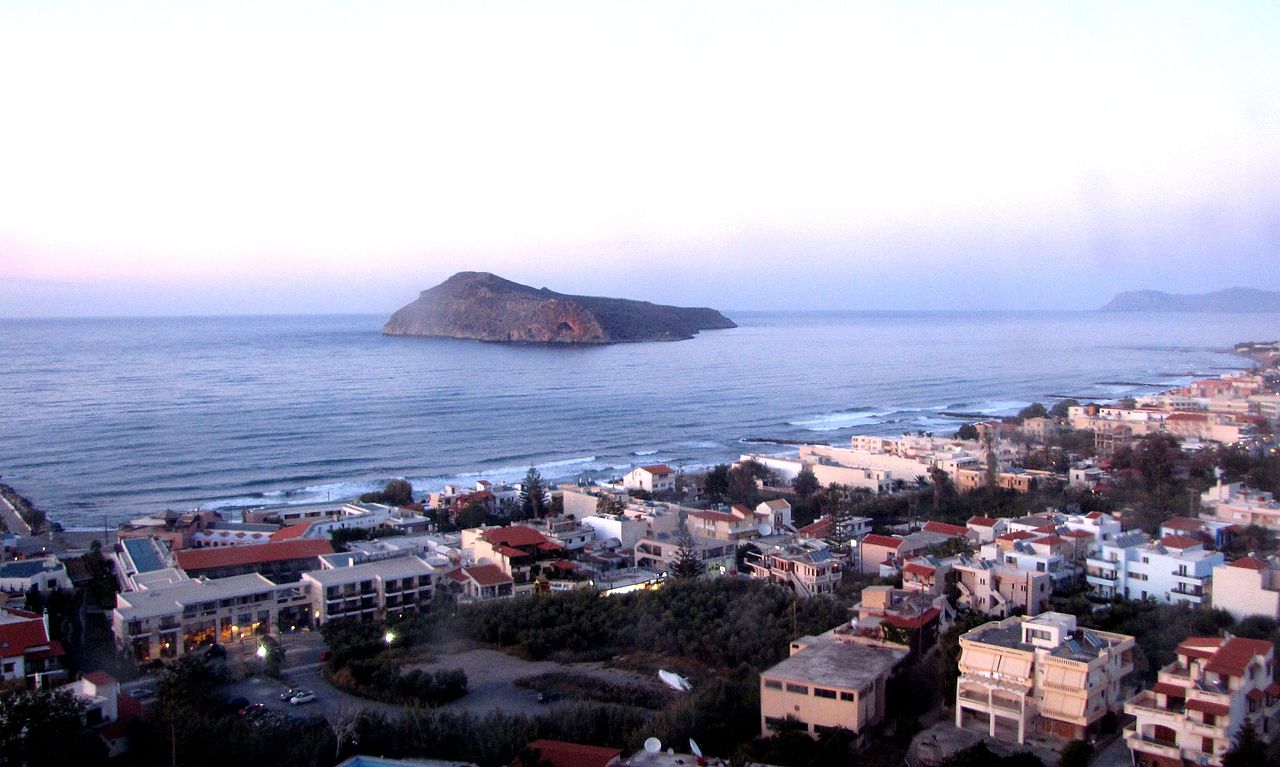
The practical consequences compound. Roads around popular coastal stretches are congested from mid-July. Accommodation at Plakias Beach or Rethymnon Beach commands peak rates 50-80% above April equivalents. Ferries and flights book out weeks in advance. Restaurants in tourist zones run three sittings per evening and rush the service accordingly.
None of this means Crete is not beautiful in August. It is. But the conditions that make the island genuinely enjoyable, space, bearable heat, unhurried service, are precisely what July and August systematically remove. For families with young children or travellers over 50, the heat alone is a serious factor that guides consistently downplay.
May and June: The Optimal Window
Temperatures in May average 22-25°C, rising to 26-28°C in June. Both months see essentially no rain, one to two days of precipitation at most. The sea reaches 21°C by mid-May and 24-25°C by late June, swimmable for most visitors at any time of day, not just the brief morning window before the heat becomes oppressive.
Accommodation reflects the softer demand. A property priced at 120 EUR per night in August typically lists at 75-90 EUR in May, a reduction of 25-35 percent. Flights follow the same pattern across most routes from western Europe.
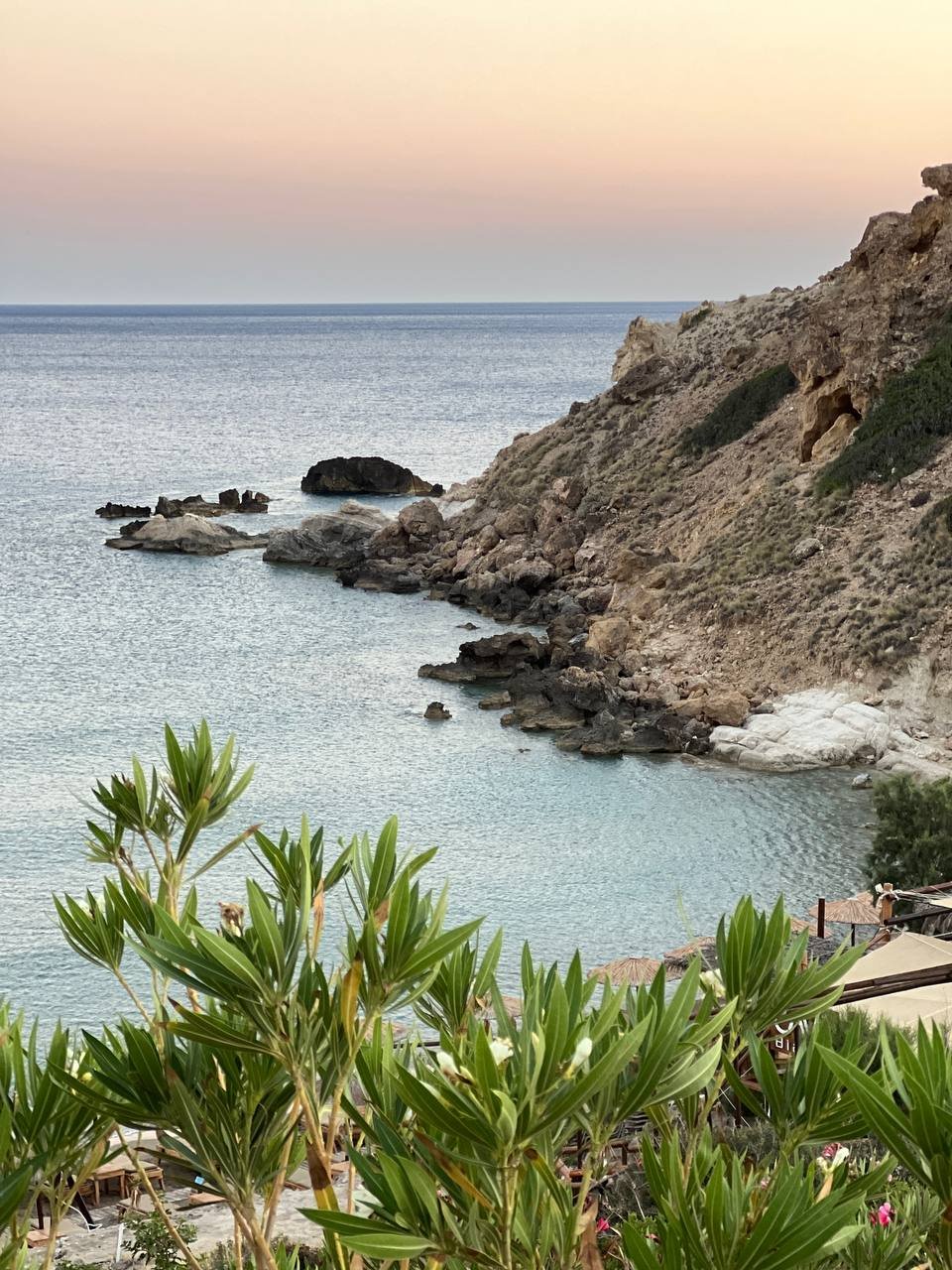
Sougia Beach on the west coast and Plakias Beach on the central coast both have natural, uncrowded settings as their main draw. In May, both are accessible without the logistical effort that August requires. The water is clear before the constant disturbance of high season. For travellers combining beaches with gorge walks, village visits or market trips, May and June are the months where all of it is simultaneously possible. By August, the inland heat makes that combination impractical except early morning or late afternoon.
September and October: The Hidden Argument
The sea temperature in September sits at its annual peak: 26-27°C, warmer than any June reading. Summer's accumulated heat holds the water temperature well into October (24-25°C), while air temperatures ease to a more comfortable 25-27°C on the coast. The contrast with August is immediate: crowds thin from August 15 as European school calendars take over, prices correct almost immediately, and the island operates at a more human pace.
What September offers that June cannot is a sea that is genuinely warm rather than merely acceptable. The difference between 22°C and 26°C is not trivial in the water. September also benefits from the full operational momentum of the summer season: restaurants and facilities at their best, not still finding their rhythm as in early May.
October grows variable after mid-month. Rainfall probability rises, particularly in the second half. But early October, roughly the first three weeks, often extends September conditions at lower prices. Palm Beach Vai on the east coast and Trachilias Beach are accessible and far less congested than at any point from June through August.
Month by Month: What the Numbers Say
The standard seasonal narrative obscures meaningful differences within the high season. Figures below are coastal averages. Inland temperatures run 4-7°C higher throughout summer.
| Month | Avg Air Temp | Sea Temp | Rainy Days | UV Index |
|---|---|---|---|---|
| April | 18°C | 18°C | 5 | 7 |
| May | 22°C | 21°C | 2 | 9 |
| June | 26°C | 24°C | 1 | 10 |
| July | 30°C | 26°C | 0 | 11 |
| August | 31°C | 27°C | 0 | 11 |
| September | 27°C | 27°C | 1 | 9 |
| October | 23°C | 24°C | 5 | 6 |
| November | 18°C | 21°C | 9 | 4 |
The sea temperature difference between July (26°C) and September (27°C) is marginal. The air temperature gap of 3-4°C matters when you are doing anything beyond lying still. July and August UV sits at the maximum extreme category, requiring SPF 50 reapplication every 90 minutes for fair-skinned visitors. May's UV of 9 is still high but manageable with standard precautions.
What Peak Season Actually Costs You
The headline price difference between August and May is well known. Less discussed is the cost stack that compounds across every element of the trip. A coastal villa renting at 85 EUR per night in May crosses 130-160 EUR in August. A round trip from Paris to Crete that costs 180-220 EUR in May runs 380-480 EUR in August on comparable routes.
Add the incidentals: organised boat trips to secluded east coast beaches require advance booking weeks out. Restaurant covers at tourist-facing venues run 15-20 EUR per person for meals that cost 9-12 EUR in shoulder season. Car rental follows the same demand curve upward.
A one-week trip for two in August, priced against the same week in May, consistently shows a 40-60 percent total cost difference across accommodation, flights and discretionary spending. For a family of four, the delta often crosses 1,000 EUR. The counterargument is that school holidays remove choice for many families. That is a real constraint. For everyone else, the financial case for shoulder season is direct and documented.
Crowds: Beyond the Inconvenience
The volume problem in July and August is most visible at marquee attractions, but it cascades into every dimension of the experience. Gorge trails that take 4-5 hours in May take 6-7 in August due to congestion at chokepoints. The exit near Sougia Beach backs up in peak season as water taxis and buses fail to clear visitors fast enough.
Beyond logistics, the character of places changes at capacity. Orthi Ammos on the west coast works specifically because of its natural quiet. That quality disappears by definition when the beach is full. The selling point and the experience are the same thing. Crowd volume removes both simultaneously.
Peak-season Crete requires arriving at beaches before 9am or after 4pm, pre-booking restaurants 24-48 hours out, adding 20-30 minutes to any coastal drive, and planning around the island rather than with it. Shoulder season restores a margin of spontaneity. Arriving at Plakias Beach at 11am in late September and finding space without effort is the norm. For many travellers, that change in operating conditions is the difference between a holiday that felt rushed and one that did not.
Spring Hiking: A Separate and Compelling Case
For any trip that includes hiking, late March through May is not just better than summer. It is the only viable option for most walkers. Gorge trails become genuinely risky in July and August for anyone without specific high-heat experience. The combination of extreme UV, absent shade, no water sources and 35°C temperatures creates real physical risk. Rescue operations on island trails peak in August, not February.
Spring reverses all of those conditions. Late March and April bring the wildflower season: orchids, anemones and poppies across the hillsides and interior plains. Trails through the interior are green rather than scorched. Water sources are active. The light in April and May, low and warm compared to summer's bleaching midday glare, renders the landscape in a way that August cannot.
After a gorge walk ending near Sougia Beach in May, the sea at 21°C is cold enough to be genuinely refreshing after exertion. That specific combination disappears when the water exceeds 25°C and becomes just a warm bath. For anyone with hiking as a primary trip objective, mid-April to early June is the correct season. There is no close second.
November to April: The Honest Assessment
Winter in Crete is mild by northern European standards and genuinely rainy by Mediterranean ones. November through February averages 8-12 rainy days per month on the north coast. December and January average 13-15°C. The sea drops to 17-18°C by February, ending the swimming season for most visitors.
What remains is real. Archaeological sites, markets and mountain villages are accessible without crowds at prices that sit at the annual floor. Coastal accommodation runs 60-70% below August rates. Restaurants are staffed by owners rather than seasonal workers, which changes both food quality and the conversation. Interior villages see almost no tourism from November to March.
A winter week built around food, ruins and interior exploration is a coherent trip for the right traveller. Itanos Beach on the east coast remains photogenic in winter light, one of the few coastal spots that rewards an off-season visit. Most resort zones close November through March. Pack rain gear and layers. Set expectations for beaches at zero and recalibrate toward culture and landscape.
Verdict: When to Actually Book
Full flexibility? The answer is September. Sea at annual peak temperature, crowds thinning, prices correcting, full infrastructure operational. If September is not possible, May offers the best overall conditions for any trip combining beaches with active travel.
June is strong but increasingly priced up as demand has shifted into it. July is defensible for beach-primary stays if you can manage the heat. August is the worst month on nearly every metric except the number of other people doing the same thing, which is a poor measure of quality.
For families tied to school calendars, late June and early September mark the outer edges of the peak period and offer the best available compromise.
- Optimal: September, then May
- Strong: early June, early October
- Manageable with right expectations: July, late June
- Avoid unless school-forced: August
- For hikers and culture: April to mid-May