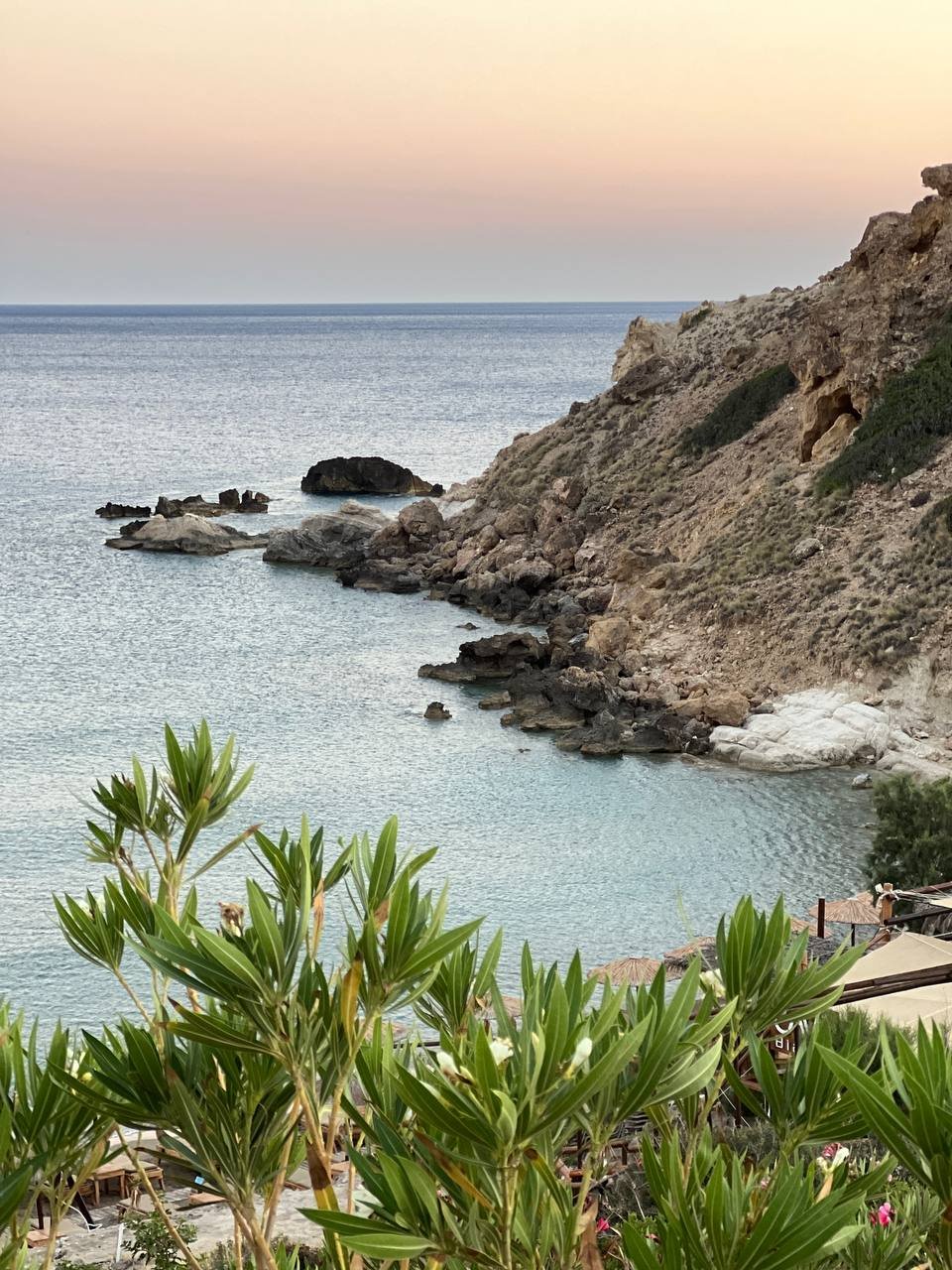
Every year, millions of travelers squeeze their Crete trip into July and August. The beaches are packed to the point of absurdity, restaurants are booked three weeks out, and a three-bedroom villa runs 180-220 EUR per night. The sea hits 27°C, yes. But the experience has become indistinguishable from any other Mediterranean package holiday, with the same crowds, the same noise, and the same Instagram queues at the same viewpoints.
Here is what the guidebooks skip. From mid-October through November, Crete operates in a completely different mode. The sea holds at 21-24°C, still warm enough for daily swimming. Accommodation drops 40-60%. Archaeological sites breathe. Villages return to their actual residents. The olive harvest begins, and the food changes entirely. If your schedule has any flexibility at all, the argument for avoiding high season is not just reasonable. It is overwhelming.
- What fall weather actually looks like
- The sea is still swimmable
- The 40-60% price drop explained
- The beaches in fall
- October is when hiking begins
- Sites and culture without crowds
- The fall food calendar
- October vs November
- The real limitations
What Crete's Fall Weather Actually Looks Like
The fear is rain and cold. The reality is different. October in Crete averages 22-23°C during the day, with nights dropping to 13-15°C. Rain occurs, but the October average is only 40-50mm across the month, concentrated in brief afternoon episodes rather than sustained grey drizzle. Compare that to Paris in October: 60mm of rain, 14°C highs, and no sea. The comparison is not even close.
November shifts the balance. Average highs drop to 18-19°C and rainfall increases to 80-100mm per month, with more frequent fronts arriving from the west. The north coast takes the brunt of these systems. The south coast, sheltered by the White Mountains and the Psiloritis range, stays drier and warmer by several degrees. A week in early November on the south coast can feel entirely different from the same week on the north coast.
Practically: pack a light jacket for evenings and a rain layer for November. Plan outdoor activities for mornings. Accept that one or two days may be overcast. This is not a deal-breaker. It is a trade-off most experienced travelers make happily for everything else fall provides.
- October daytime average: 22-23°C
- November daytime average: 18-19°C
- October rainfall: 40-50mm, brief episodes
- November rainfall: 80-100mm, more frequent fronts
- Best area for weather: south coast, sheltered from northern systems
The Sea Is Still Swimmable: The Fact Nobody Leads With
This is the single most important piece of information for anyone considering a fall trip. The Mediterranean does not cool down the moment September ends. Because of thermal inertia, the sea around Crete retains heat accumulated over four months of summer. In October, surface temperatures typically sit at 22-24°C. In early November, they range from 20-22°C. These are not marginal figures. 22°C is warmer than the average sea temperature in Brittany in August.
The practical consequence: swimming in October in Crete is comfortable by any reasonable standard. You will not be fighting for a patch of sand at Rethymnon Beach, or walking half a kilometer from the nearest parking to reach Plakias Beach. You walk down, you swim, you stay as long as you want. Beach infrastructure, sunbeds, and tavernas thin out progressively through October and largely close by mid-November, meaning free beach access almost everywhere.
For diving and snorkeling, October and November are arguably superior to summer. Visibility improves as the crowds disappear, and the sea life is active without the surface disturbance of 400 tourists arriving by boat every morning. Several dive centers on the south coast operate through October. The water clarity in fall is noticeably better than in the peak season churned by boat traffic and swimmers.
The 40-60% Price Drop: What It Actually Means in Practice
In August, a well-positioned three-bedroom villa with a pool near the south coast costs 200-300 EUR per night. The same property in October: 90-140 EUR. In November, if it stays open: 70-110 EUR. Over a two-week trip, the saving runs to 1,500-2,500 EUR for a group of four. Enough to cover flights twice over.
Flights follow the same logic. Direct flights from major European hubs peak at 300-600 EUR per person in August. October fares drop to 80-200 EUR. November can fall below 100 EUR on many routes. The total cost of a fall trip is often half the cost of the identical trip taken eight weeks earlier.
Car rental drops proportionally, from 80-120 EUR per day in peak season to 30-50 EUR in fall. Restaurants that had mandatory bookings and fixed tourist menus in summer revert to normal operation. You walk in, eat what locals eat, and pay local prices. A full dinner for two with wine at a harbor taverna costs 35-50 EUR instead of 70-100 EUR. These are not rounding errors. This is a structurally different trip budget.
- Villa rental: 40-55% cheaper than August
- Flights: 50-70% cheaper on most routes
- Car rental: 50-60% cheaper
- Restaurant meals: 30-40% cheaper, back to real menus
The Beaches in Fall: A Completely Different Proposition
In July and August, the most accessible beaches on the north coast are essentially unusable for anyone who values space. Thousands of sunbeds, vendors, motorized water sports, and tour buses define the experience. The water is crowded. The sand is at a premium. The ambient noise is constant.
October changes this fundamentally. Rethymnon Beach, one of the longest sandy stretches on the central coast, has actual space. Plakias Beach, backed by tamarisk trees and accessed via a quiet village, is near-deserted by mid-October. On the east coast, Moni Kapsa Beach, a remote pebble beach beneath a clifftop monastery, becomes accessible without the summer boat traffic. The experience is qualitatively different: you are on a beach, not in a crowd that happens to be near water.
On the central coast, Psaromoura Beach and Kokkino Volakas are worth visiting specifically in fall, when road access is clear and the water has not yet cooled significantly. The west coast sees Vatalos Beach quiet and fully accessible. These are not consolation prizes. These are beaches operating as they were always meant to be experienced.
October Is When Hiking Season Begins, Not Ends
The most common misconception about hiking in Crete is that the season ends with summer. The opposite is true. Hiking in July and August is a serious undertaking. Temperatures in gorges and on exposed ridgelines regularly exceed 38-42°C. Trails that take four hours in October become exhausting and dangerous six-hour ordeals in August, with a real heat stroke risk. The Cretan mountain rescue service handles dozens of heat-related callouts every summer season.
October is the opening of proper hiking season. Temperatures are manageable, vegetation is still present, and trails dry out after any early autumn rains. The gorges on the south coast, cutting through the mountains toward small coastal villages, are fully accessible and genuinely rewarding. Arriving on foot at a remote coastal settlement after a canyon descent, with a handful of empty tables at the waterfront taverna, is not the same experience as arriving by rental car in a parking lot behind a beach bar in August.
November narrows the window. Some high-altitude trails above 1,500m become wet and require proper footwear and gear. Low-level coastal paths and gorge hikes remain accessible throughout the month. November is particularly good for the east coast interior, where the landscape turns green after the first autumn rains and the light has the quality that photographers spend serious money chasing.
Archaeological Sites and Culture Without the Crowds
Crete's major Minoan archaeological site near Heraklion processes roughly 1.5 million visitors per year, the majority squeezed into a three-month summer window. In August, moving between the main structures requires patience and tolerance for being caught in the background of 10,000 simultaneous selfies. Understanding a 3,500-year-old palace complex becomes nearly impossible in these conditions. The audio guide competes with ambient noise from four tour groups arriving simultaneously.
In October, the same site carries perhaps one-tenth of that traffic. You can stand in front of the frescoes and actually read the panels. A private guide can be hired for a fraction of the summer price, and their attention is entirely yours. The site closes at 15:00 in winter months, so morning visits are optimal, but there is no queue, no crush, and no noise beyond the wind.
Crete's network of Byzantine churches, Venetian fortresses, and Ottoman fountains scattered across the island rewards fall visitors for the same reason. A traditional fishing village on the south coast, quiet and unhurried in October, is a place where you can sit and talk to local residents over coffee. In August it exists primarily as a pit stop on the bus tour circuit between beaches.
Olive Season, Fresh Oil, and Why the Food Changes
October and November are the most interesting months to eat in Crete. This point is almost never made in mainstream travel content, which fixates on summer and its grilled fish. The olive harvest begins in October and runs through December. Fresh olive oil, pressed within days of harvest, is fundamentally different from what arrives in a tourist restaurant in July. It is green, peppery, and pungent, used in quantities that signal genuine pride. Every village produces its own. Every taverna knows whose oil is on the table.
The autumn food calendar also includes: grape marc spirit distillation (raki, also called tsikoudia), the arrival of fresh cheeses from highland flocks beginning their seasonal descent, mushrooms in the mountainous interior after the first rains, and the last summer tomatoes giving way to winter greens. Restaurants in October cook for locals, not for tourist volume. The food is better, the sourcing is more honest, and the taverna owner is likely to sit down with you after the last cover.
Plaka, a small coastal spot known for seafood, is worth visiting specifically in October and November when the fish comes from local boats rather than larger supply operations. The price per kilogram drops materially compared to peak season, and the freshness is not in question.
- October: olive harvest begins, fresh oil available, raki distillation starts
- November: peak harvest, highland cheeses, mushrooms, winter greens arrive
- Both months: kitchens cooking for 30 covers instead of 200 produce visibly different food
October vs November: Two Different Trips
They are not interchangeable. October is the stronger month for most travelers. The weather is reliable, the sea is warm, and most tourist infrastructure still runs at reduced capacity. You get beaches, hiking, food, and sites in a single trip with predictable conditions. The first three weeks of October in particular approach the ideal: summer without the summer, or more precisely, Crete without the damage summer does to Crete.
November is a different calculation. The payoff is greater solitude and lower prices, but the risk of multi-day rain periods is real, particularly after mid-month. The north coast can run grey and windy for three or four consecutive days when Atlantic fronts push through. The south coast remains better insulated from these systems, and the east coast interior sees longer dry spells. Plan for the south or east in November, not the north.
For a first fall trip: book October, specifically the first three weeks. Stay on the south or east coast for maximum weather reliability. For repeat visitors who know the island in summer: November offers something genuinely different. A Crete operating at its own pace, unconcerned with tourism, where the hospitality that remains is entirely authentic and not professionally performed.
The Real Limitations: An Honest Assessment
Fall in Crete is not for everyone. The following are genuine constraints, not minor inconveniences to be dismissed.
Nightlife is essentially absent by November. The clubs and beach bars that define the party corridor on the north coast in summer are closed. If the social atmosphere of high season is part of what you are seeking, fall will disappoint without qualification. Direct flights thin out significantly by October and become sparse in November, particularly from smaller regional airports. Some weeks require connections through Athens or another hub, adding two to three hours of travel each way.
Beach-adjacent tavernas, boat tours, and water sports operations close progressively from mid-October. The infrastructure assumes a short season. Some roads on the south coast that were maintained for summer traffic may not have been cleared after the first autumn rains. Four-wheel drive is genuinely useful if you plan to reach remote beaches like Psaromoura Beach or Moni Kapsa Beach. Finally: many of the best family-oriented properties do not stay open past late September. School calendars constrain who can travel in fall. This is a real structural limitation for families with young children, not a preference issue.