October Weather in Crete: What the Data Actually Shows
Crete in October sits in a transition zone between summer and autumn — warm enough to swim, cool enough to hike, but with increasing rain risk as the month progresses. Understanding which part of the island you are visiting matters more in October than in any other month.
Average daytime temperatures range from 22°C to 27°C in early October, dropping to 19°C to 24°C by the end of the month. Night temperatures fall to 15–18°C, so pack a light layer for evenings. The sea holds its summer warmth well: water temperatures average 23–25°C in the first two weeks, declining to around 22°C by late October — still comfortable for swimming by most standards.
The critical variable is geography. East Crete — the areas around Elounda, Agios Nikolaos, Sitia, and Vai — is consistently drier and warmer in October than the rest of the island. The eastern tip receives fewer than 20mm of rainfall in October on average. West Crete, particularly the north coast around Chania and the Akrotiri peninsula, is more exposed to Atlantic weather systems tracking in from the northwest. October 2026 has already demonstrated this pattern clearly: severe storms struck western and northern Crete in late September and early October, while the south and east remained dry and warm. For a detailed breakdown of conditions across the island, see our Crete weather report for 3 October 2026.
Monthly rainfall averages 50–80mm across the island, but distribution is uneven. Heraklion receives about 40mm, Chania closer to 70mm. Storms in October tend to arrive as short, intense events rather than prolonged grey drizzle — often clearing within hours. That said, when a system does arrive, it can be severe. Plan flexible itineraries rather than locking in a single day for outdoor activities.
The Late Season Advantage: Crowds, Prices and Atmosphere
Visiting Crete in October means a fundamentally different experience from July or August. Peak season ends decisively around mid-September. By October 1, the island has shed 50–60% of its summer visitor volume. The practical effects are immediate and significant.
Hotel and villa prices drop 30–50% compared to August rates. A beachfront room in Elounda that costs €250 per night in August is typically available for €120–150 in October. Villa rentals with private pools — a key draw for families — often fall from €350–500 per night in peak season to €180–280 in October. Last-minute deals that simply do not exist in summer become viable in the second and third weeks of October.
Car rental prices follow the same trajectory. Expect to pay €30–50 per day for a compact in October versus €60–90 in August. Traffic on the E75 national road is noticeably lighter. The mountain roads — essential for reaching inland villages, gorges, and archaeological sites — are virtually empty of tour buses and rental car convoys.
The atmosphere in October shifts toward authentic local life. Tavernas that run on tourist autopilot in summer slow down and often improve. The old towns of Chania and Rethymno become navigable without crowds. Heraklion's Archaeological Museum — one of the most important in Europe, housing the Minoan collection from Knossos — can be explored at a reasonable pace without queuing at peak hour.
October also marks the beginning of the olive harvest season, one of the most important agricultural events in Crete. The harvest typically starts in the Messara plain and eastern regions in early October, extending through November and December. Several agrotourism operations offer hands-on picking experiences and direct-from-producer olive oil purchases at prices far below retail. For dates, locations, and how to participate, see our detailed guide to the olive harvest in Crete 2026.
Beaches in October: Which Are Still Worth It
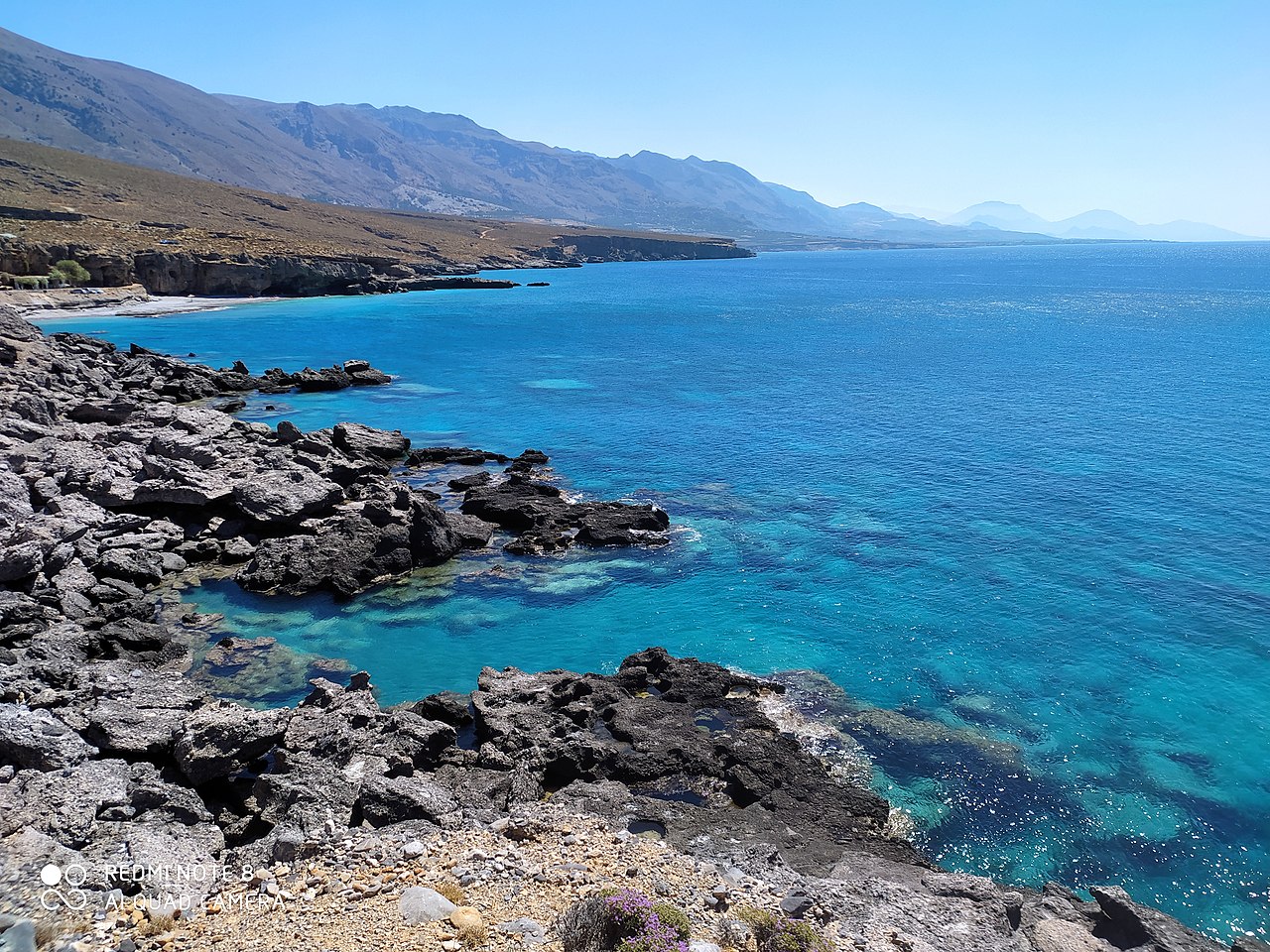
With sea temperatures holding at 22–25°C, Crete's beaches in October remain fully swimmable. The question is not whether you can swim — you can — but which beaches remain serviced and which are most protected from the northerly winds that increase through the month.
The south coast is the standout choice for late season Crete. Protected from northern winds by the White Mountains (Lefka Ori) and the Dikti range, beaches along the Libyan Sea retain summer conditions well into October. Matala, Plakias, Sougia, and the beaches around Paleochora all benefit from south-facing orientation and natural wind shelter. Water clarity on the south coast in October is frequently exceptional — summer algae blooms have dissipated and visibility underwater can exceed 20 metres.
Preveli Beach deserves specific mention. One of Crete's most iconic locations — a palm-fringed freshwater lagoon 37km south of Rethymno, where the Kourtaliotis gorge meets the Libyan Sea — Preveli remains accessible and beautiful in October. The summer crowds that make the beach uncomfortably packed in August are gone. The gorge swim upstream from the beach, one of the best experiences in Crete, is cool but viable in early October when water levels are still low. For full logistics including the two access routes, parking, the gorge walk distance, and what to bring, see our complete guide to Preveli Beach.
On the north coast, the picture is more variable. Elafonisi and Balos lagoon remain stunning in October but can be exposed to westerly winds. Balos, accessible by boat from Kissamos (45-minute crossing, approximately €20 return) or by rough unpaved road requiring a high-clearance vehicle, sees boat service frequency reduce significantly in October — confirm schedules locally before planning the trip. Vai on the far east coast — Europe's largest natural palm forest, 90km east of Agios Nikolaos — is quiet and beautiful in October, sheltered from western weather systems.
Beach infrastructure — sun loungers, beach bars, lifeguards — starts disappearing from mid-October onwards on most beaches. If serviced beaches matter to you, target the first two weeks of the month. By the final week of October, staffed beach setups are largely closed for the season, though the beaches themselves are free, clean, and uncrowded.
Hiking, Culture and Activities Beyond the Beach
October is arguably the best month for hiking in Crete. The brutal summer heat that makes walking Samaria Gorge a genuine endurance test in July has lifted. Temperatures in the mountains run 5–8°C cooler than the coast. The light is different: lower sun angle, clearer air, no summer haze.
Samaria Gorge (18km, E4 trail) is typically open until late October, subject to weather and water levels. The gorge closes when rainfall raises the risk of flash flooding — increasingly likely in October. Check with the Chania Forest Service (tel: +30 28210 45570) before making the trip, especially in the second half of the month. Entry is €5. Allow 5–7 hours for the full crossing from Xyloskalo (1,230m altitude) to Agia Roumeli on the south coast, where a ferry runs to Chora Sfakion (approx. €15).
Alternative gorges that remain open year-round: Imbros Gorge (8km, easier terrain, closest to Chora Sfakion), Aradena Gorge on the south coast (requires some scrambling, no entry fee), and the Kourtaliotis Gorge above Preveli (short but dramatic, 2km one-way). These receive a fraction of Samaria's visitors even in peak season.
For culture, October is excellent. Knossos — the Bronze Age Minoan palace 5km south of Heraklion — is significantly less crowded. Entrance is €15. The site is best in the morning before tour groups arrive, a window that barely exists in summer but is reliably available in October. Budget 2–3 hours minimum. Combined tickets with the Archaeological Museum (€20 for both) represent the best value introduction to Minoan civilisation.
Wine tourism is an underrated October draw. The grape harvest concludes in September, but October is when small wineries in the Heraklion wine region — the Peza, Archanes, and Dafnes PDO zones — open their cellars for tastings of the new vintage. Producers near Archanes, 16km south of Heraklion, often welcome informal visits without appointments outside the peak summer rush. Expect to pay €5–10 for a structured tasting of 4–6 wines.
The Lasithi Plateau — a high-altitude agricultural plain at 840m, 80km east of Heraklion — is worth a full day in October. The potato and apple harvests are underway, the windmills are turning, and temperatures at altitude run 5–6°C cooler than the coast. The drive via the Dikti mountain road through the village of Krasi (home to one of Crete's oldest plane trees) is spectacular in autumn light.
Practical Information for October Visitors
Flights: Direct charter and scheduled services from northern Europe remain plentiful through October. Routes from London Gatwick and Heathrow (easyJet, British Airways), Amsterdam (Transavia, KLM), Frankfurt (Condor, Lufthansa), and Scandinavia typically operate until the last week of October. After approximately October 25, frequency drops sharply and most routes switch to winter schedules via Athens. Book direct flights before this cutoff if you want to avoid layovers. Heraklion (HER) handles the majority of international traffic; Chania (CHQ) is more convenient for the west but has fewer direct routes in late October.
What to pack: Light clothing for daytime — shorts and T-shirts are viable through mid-October, though you may want long trousers for evenings. A light waterproof jacket is useful rather than essential but October storms can arrive quickly. Solid walking shoes if you plan to hike. A sun hat remains worth packing in early October; UV index is lower than summer but still 5–6. Reef shoes or water shoes are worth having for rocky beach entries.
Getting around: Car rental is strongly recommended. Public buses (KTEL) connect major towns reliably but service to coastal and mountain villages is infrequent. October rental rates are among the best value of any warm-weather month — shop local operators at HER and CHQ in addition to international chains. Roads on the south coast between Paleochora and Agia Roumeli are unpaved in sections; a standard compact is sufficient for most itineraries but a small SUV gives more flexibility.
Budget estimate: A couple visiting Crete in October can realistically budget €150–200 per day total covering mid-range accommodation, meals, car rental, and activities. The equivalent experience in August costs €280–380. Solo travelers can manage €90–130 per day comfortably. The budget advantage of October is the single strongest argument for choosing this month over any summer period.