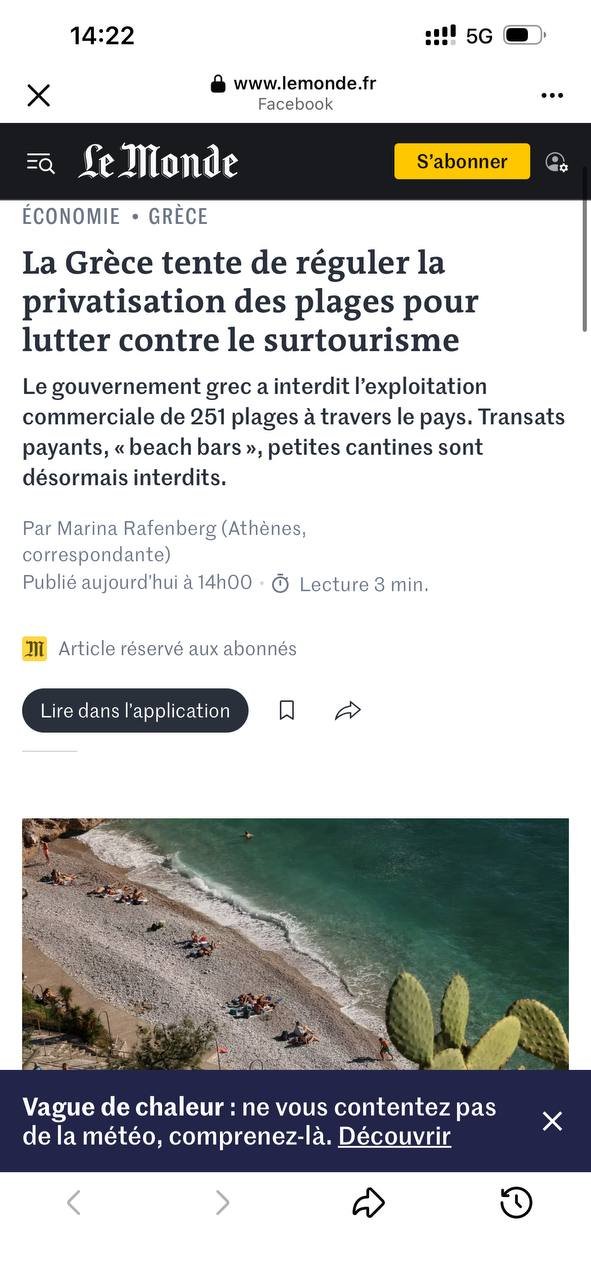
Greece Bans Commercial Beach Exploitation
Greece Bans Commercial Beach ExploitationGreece's government has implemented a nationwide ban on the commercial exploitation of 251 beaches to combat overtourism and protect coastal ecosystems. The re

Greek press, translated in 4 languages every 3 hours
Greece Bans Commercial Beach ExploitationGreece's government has implemented a nationwide ban on the commercial exploitation of 251 beaches to combat overtourism and protect coastal ecosystems. The re

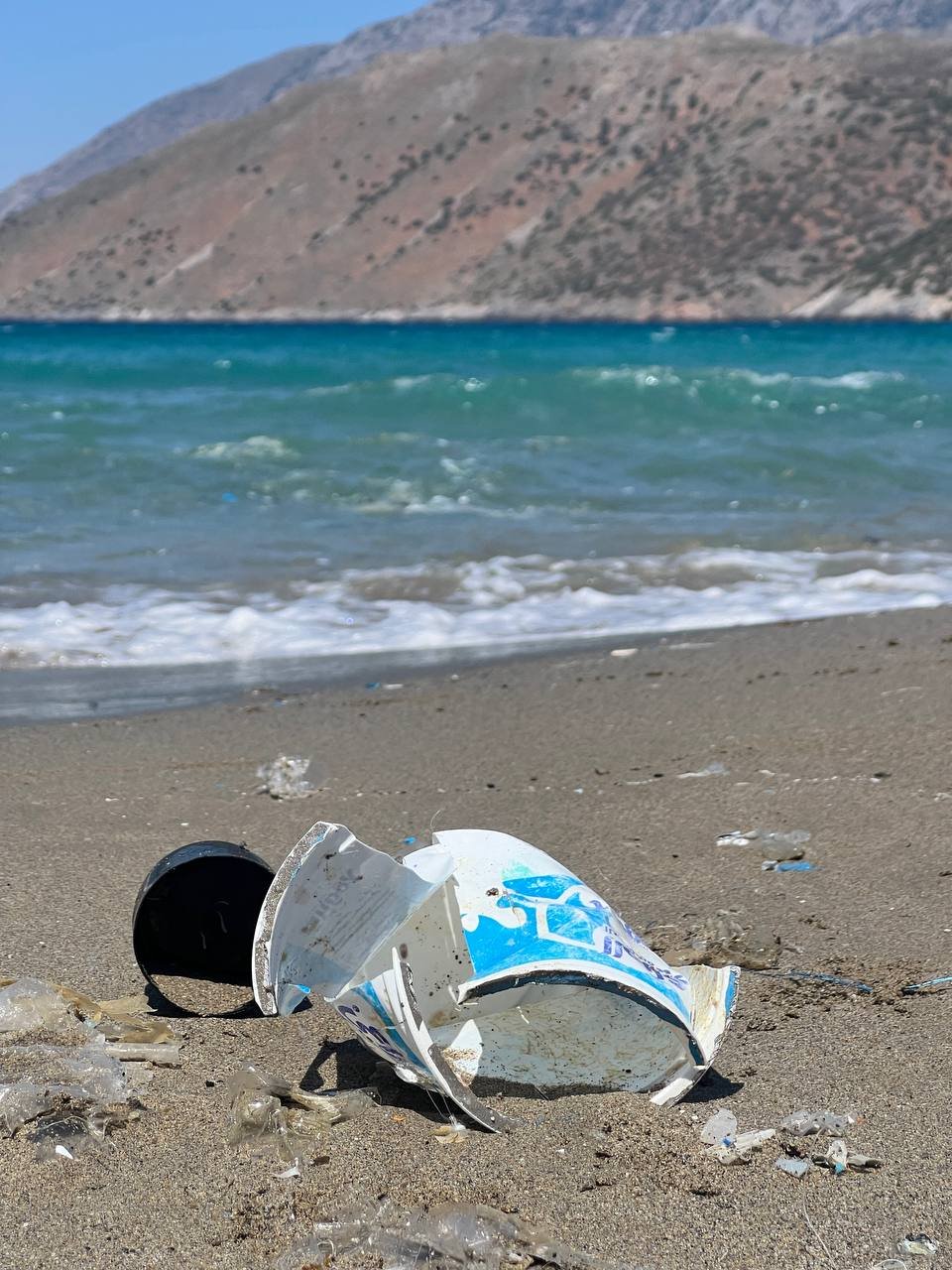
Pachia Amos beach on Crete's south coast continues to face environmental challenges as plastic waste and abandoned materials wash ashore. Recent images document significant accumulation of debris, inc

Greek authorities are moving forward with plans to build a migrant detention center in Crete, despite objections related to zoning regulations at the proposed site. The facility is intended to hold migrants and asylum seekers who arrive on the island, as Crete continues to receive arrivals crossing the Mediterranean and Aegean seas. Local authorities or landowners raised concerns about whether the location complies with existing land-use rules, but the project is proceeding regardless. For tourists visiting Crete, this development has no direct practical impact on travel, sightseeing, or safety. The island remains a welcoming and safe destination. The situation reflects broader Greek and European Union efforts to manage migration flows, a policy issue present across many Greek islands and coastal regions.
A three-vehicle road accident in Crete caused traffic disruptions, leading to significant congestion on the affected route. Details on the exact location and timing are limited, but incidents of this nature typically affect traffic flow for several hours while emergency services respond and the scene is cleared. Tourists driving in Crete should be aware that road accidents can cause unexpected delays, particularly on main roads and highways. If you encounter stopped or slow-moving traffic, allow extra travel time and follow directions from local police or road signs. It is advisable to check local traffic conditions before long drives, especially during peak summer months when roads are busier. Always carry your rental agreement, insurance documents, and emergency contact numbers when travelling by car in Crete.
Concerns have been raised about understaffing in Crete's fire services, with local authorities arguing that official Ministry figures do not reflect the true situation on the ground. A regional representative stated that the number of firefighters available across Crete falls short of what is needed, particularly heading into the high-risk summer fire season. While no immediate incidents have been reported, the issue highlights ongoing pressure on emergency response capacity across the island. Tourists visiting Crete during the summer months should remain cautious in dry, forested, or rural areas, follow any fire restriction signs, and avoid lighting fires or barbecues outside designated areas. In case of emergency, the Greek fire service can be reached by dialing 199.
A construction project in Heraklion, Crete is set to move forward following the completion of required regulatory approvals, according to Kathimerini. The project had been pending the resolution of administrative or permit-related procedures, commonly referred to in Greece as "taktopoiiseis," a process used to bring structures into legal compliance. No specific timeline or location within Heraklion has been confirmed from available details. Tourists visiting the area should be aware that active construction near Heraklion city may cause localized disruptions such as noise or restricted access around the affected site. For up-to-date information on which areas are impacted, visitors are advised to check with local accommodation providers or the Heraklion municipal website before planning activities in the city center.
The Regional Council of Crete has unanimously rejected a proposed national spatial planning framework governing the development of renewable energy installations across the island. The council argued the plan fails to adequately protect Crete's natural landscape, local economy, and the island's overall carrying capacity. Officials are calling for a revised approach that balances Greece's clean energy goals with the preservation of the rural and coastal environments that define Crete as a destination. The decision does not directly affect tourist access or travel, but reflects ongoing tension between large-scale infrastructure development and the protection of the scenic areas visitors come to experience, including mountain villages, agricultural land, and undeveloped coastlines across the island.
Crete's Regional Council has voted unanimously against the Greek government's proposed new special spatial planning framework for renewable energy sources (RES). The council formally adopted a negative position on the framework, which would govern where wind farms, solar parks, and other renewable energy installations can be developed across the island. Regional authorities raised concerns about the potential impact on Crete's landscapes, agricultural land, and local communities. This unanimous rejection signals strong local opposition to the national plan and may prompt revisions before any implementation. The decision has no immediate practical impact on visitors to Crete, but reflects ongoing debates across Greek islands about balancing renewable energy expansion with the preservation of natural and scenic environments that attract millions of tourists each year.
Volunteers and worshippers joined Father Athanasios to clean the summit of Mount Psiloritis, Crete's highest peak at 2,456 metres, before attending a Divine Liturgy at the small Chapel of the Holy Cross located at the top. The cleanup effort removed litter and debris left by hikers, helping to preserve the sacred and natural character of the site. Psiloritis, also known as Mount Ida, sits in the Rethymno regional unit and is a popular hiking destination accessible via several marked trails. The chapel at the summit is one of the most iconic spots on the mountain and hosts occasional religious services. Tourists interested in hiking Psiloritis should be aware that the summit trail requires good physical fitness and appropriate footwear. The mountain holds deep significance in Cretan culture and mythology as the birthplace of Zeus.
A one-day historical and genealogical exhibition will take place on Tuesday, July 7, at the Chania Sailing Club, located in the historic Venetian harbor area of Chania. Organized by local researcher Sifis Manousakas-Vlanta, the exhibition presents family trees and archival records tracing the lineage of the Manousakas-Vlanta family, offering a window into Cretan heritage and genealogical history. The venue sits within the atmospheric old harbor district, making it easy to combine a visit with a walk along the waterfront. The exhibition runs for one day only, so visitors in Chania on July 7 should plan accordingly. Admission details and exact opening hours have not been confirmed; checking directly with the Chania Sailing Club before visiting is recommended. The event is free to attend based on available information.
Cretan regional official Manolis Hnaris stated that any new refugee and migrant reception facility in Crete must meet two conditions before moving forward: proper spatial and land-use documentation, and a concrete protection plan covering both local residents and refugees. His comments reflect ongoing discussions at the regional level about how to responsibly site and manage such structures on the island. The statement signals that local authorities are taking a cautious, planning-first approach rather than fast-tracking new facilities. This development has no direct impact on tourist travel or access to Cretan destinations, but it reflects the broader European migration situation that continues to shape policy across Greek islands in 2026.
The President of the Heraklion Chamber of Commerce, Vangelis Karkanakis, spoke on CRETAONE 102.3 radio about Crete's potential to become a major trade and transport hub in the Eastern Mediterranean. Business leaders are calling on policymakers to adopt a new strategy that would strengthen Crete's commercial infrastructure and logistics capacity, taking advantage of the island's geographic position at the crossroads of Europe, Africa, and the Middle East. The business community is pushing for specific interventions, including improvements to port facilities and freight networks. For visitors, this signals ongoing investment in Crete's connectivity and infrastructure. Enhanced transport links could mean better flight routes, improved ferry services, and smoother travel logistics across the island in the coming years, particularly as the new Kastelli International Airport near Heraklion is projected to open around 2028.
German discount retailer LIDL is offering an 8-day summer holiday package to Crete priced at 799 euros per person. The deal, marketed through LIDL Travel, represents a budget-friendly option for travelers looking to visit the island during the summer season. Package holidays of this type typically include flights and accommodation, making them an accessible entry point for first-time visitors to Crete. Travelers considering this offer should compare inclusions carefully, such as board basis, departure airport, and transfer arrangements, before booking. Budget package deals tend to sell out quickly, particularly for peak summer dates in July and August. Visitors arriving through such packages most commonly land at Heraklion International Airport (HER) or Chania International Airport (CHQ), both of which offer good connections to the island's main tourist areas.
German discount retailer LIDL is offering an 8-day Crete holiday package priced at 799 euros, marketed as a budget summer travel deal. The package appears to target cost-conscious travelers looking for an affordable Mediterranean getaway during the summer season. While full package details such as departure dates, included flights, accommodation location, and board type are not specified in the available content, LIDL Travel regularly bundles flights and hotel stays at competitive rates through its online travel platform. Travelers interested in this deal should check LIDL Travel's website directly for availability, departure airports, and terms. Package holidays of this type typically include return flights and hotel accommodation, though transfers and meals may vary. Booking early is advisable as limited-availability deals at this price point tend to sell out quickly.
The Regional Council of Crete has unanimously rejected a new national spatial planning framework for renewable energy installations. The council expressed serious objections to the proposed siting of wind and solar projects across the island, citing concerns about environmental impact and landscape preservation. Crete's regional authorities opposed the Strategic Environmental Assessment underpinning the plan, signaling that large-scale renewable energy development on the island may face significant delays or rerouting. For visitors, this decision reflects Crete's ongoing commitment to protecting its natural scenery and rural landscapes, which remain largely unspoiled. The outcome does not affect current travel plans or access to any sites, but it suggests that Crete's countryside and hilltops are unlikely to see major new wind or solar infrastructure approved in the near term.
Chania Airport (CHQ) is recording a significant increase in international arrivals compared to previous years. The western Crete gateway, which serves the Chania region including popular destinations like Rethymno and the Samaria Gorge, is seeing stronger direct flight connections from across Europe. This growth reflects rising demand for Crete as a tourist destination and means more flight options and potentially more competitive fares for travelers planning a visit. Tourists flying into Chania benefit from proximity to the Old Venetian Harbour, the beaches of Elafonisi and Balos, and the White Mountains. If you are planning a trip, booking flights into Chania rather than Heraklion can save driving time for those heading to the western part of the island.
Planned power outages are scheduled across several municipalities in Crete on Wednesday, July 1. The cuts affect areas within the regional units of Crete and will occur at specific times throughout the day. These outages are typically carried out by the Hellenic Electricity Distribution Network Operator (HEDNO) for maintenance work on the grid. Tourists staying in affected areas should expect temporary loss of electricity, which may impact air conditioning, charging devices, and some hotel services. It is advisable to check with your accommodation for the specific hours affecting your area, charge devices in advance, and carry cash as ATMs and card terminals may be unavailable during outages. Most cuts are resolved within a few hours. For the full list of affected localities and scheduled times, contact your hotel front desk or check the HEDNO website.
A Cretan official named Baritakis has called for new initiatives to reduce violence and criminal behavior in the region, describing it as a civic duty. While no specific incidents were detailed in the announcement, the statement signals that local authorities are actively addressing public safety concerns. Crete remains one of Greece's safest destinations for tourists, and this type of political commitment to maintaining order reflects the region's ongoing efforts to protect both residents and visitors. Travelers should follow standard precautions common to any European destination: keep valuables secure, stay aware of surroundings in busy tourist areas, and contact local police (dial 100) or tourist police (dial 171) if assistance is needed.
DEDDIE, the Greek electricity distribution network operator, has announced planned power outages affecting several areas of Crete on Wednesday, July 1. These scheduled interruptions are typically carried out for maintenance or infrastructure work on the electrical grid. Tourists staying in affected areas may experience temporary loss of electricity, which could impact air conditioning, device charging, and hotel services. If you are traveling in Crete on July 1, it is advisable to check with your accommodation about whether your area is affected, charge devices in advance, and carry cash in case card payment terminals are temporarily offline. Specific affected zones were not detailed in the announcement; contact your hotel or local authorities for precise information about your area.
Prime Minister Kyriakos Mitsotakis has announced that the first section of the new BOAK highway, connecting Neapoli to Agios Nikolaos in eastern Crete, will open to traffic by the end of July 2026. The BOAK is a major east-west motorway currently under construction across the island. This new stretch will significantly reduce travel time between the Mirabello Bay area and the rest of eastern Crete. For tourists, the opening means faster and safer road access to Agios Nikolaos, a popular destination known for its lakeside setting and waterfront tavernas. Travelers driving from Heraklion toward Lasithi should expect improved journey times and less congestion on the old national road once the section is operational.
June 30 marks the hottest day of the month in Crete, with temperatures reaching peak levels across the island as summer intensifies. Meteorologists are forecasting that July will bring continued high heat, with conditions typical of a Cretan midsummer: strong sunshine, minimal rainfall, and temperatures regularly exceeding 35 degrees Celsius, particularly in inland areas and the south coast. Tourists should plan outdoor activities for early morning or late evening to avoid the midday heat. Stay hydrated, apply high-SPF sunscreen, and seek shade between noon and 4 PM. Coastal areas and higher-altitude villages such as those in the Lasithi Plateau or the White Mountains will offer some relief. July is peak tourist season, so popular beaches and sites will be crowded. Book restaurants, excursions, and parking in advance.
An art exhibition is commemorating the 85th anniversary of the Battle of Crete and the broader Greek campaign of World War II, honouring veterans who served in the region during 1941. The Battle of Crete, fought in May 1941, was one of the most significant airborne invasions in military history and remains deeply meaningful to Cretans, Australians, New Zealanders, and British visitors whose ancestors fought there. For tourists, Crete offers several permanent sites related to this history, including the Battle of Crete and National Resistance Museum in Heraklion, the Commonwealth War Cemetery in Souda Bay near Chania, and the German War Cemetery at Maleme. The Souda Bay cemetery is open to visitors year-round and is a moving tribute to Allied soldiers. Check local listings in Chania and Heraklion for details on this specific exhibition's dates and venue.
After a period of intense heat in Crete, forecasters are signaling a notable shift in weather conditions in the coming days. The latest meteorological data suggests temperatures will drop and atmospheric instability may bring wind, cloud cover, or localized rainfall to parts of the island, offering some relief from the summer heat. Tourists currently in Crete should be aware that conditions could change quickly. If you are planning beach days or outdoor excursions, check local forecasts each morning before heading out. Mountain activities and boat trips may be affected if winds strengthen. Light layers and a compact rain jacket are advisable to carry, particularly in the evenings or during inland travel. Conditions are expected to stabilize again after the transition period. Visitors arriving later in the week may find more moderate and comfortable temperatures for sightseeing.
Work is progressing on a new air traffic control radar system at Daskalogiannis Airport in Chania, western Crete, according to General Director Giorgos Vilos. The radar installation is advancing but remains an ongoing project with further development planned for the future. Daskalogiannis is Crete's second international airport, handling flights primarily to and from western Crete including the Chania region. Tourists flying into Chania should not expect any disruption to current flight operations, as the upgrade is being implemented gradually. Once fully operational, the improved radar infrastructure is expected to enhance air traffic management capacity at the airport, which could support increased flight volumes as tourism to the region continues to grow.
Road works on the Northern Road Axis of Crete (BOAK) are causing temporary traffic restrictions in the villages of Kalyves and Nopigeia, in the Chania regional unit, until September. The measures were announced by the Chania Police Directorate and are in place to allow construction work to proceed safely along this major east-west highway. Travelers driving between Chania and eastern Crete should expect possible detours, lane closures, or delays in this section. If you are renting a car or planning road trips along the northern coast, allow extra travel time when passing through the Kalyves and Nopigeia area. Check local traffic updates before departing, as conditions may change throughout the summer season.
The Greek reggae-rock band LOCOMONDO is performing live tonight at the EOT beach in Agios Nikolaos, a coastal town on the eastern side of Crete. The EOT beach is a centrally located, publicly accessible seafront area managed by the Greek National Tourism Organisation, making it an easily reachable venue for visitors staying in or around Agios Nikolaos. LOCOMONDO is one of Greece's most popular live acts, known for blending reggae, ska, and Greek lyrics into high-energy performances that draw large crowds. The open-air beach setting offers a relaxed atmosphere with views of the waterfront. Tourists in the Lasithi region tonight should expect increased foot traffic and noise near the beach area. No ticket details were included in the original report, so checking locally on arrival is recommended.
A summer heat wave across Romania has driven a sharp rise in outbound travel, with vacation bookings up 34% compared to the same period last year, according to travel agency Funky Travel. Crete remains a top destination for Romanian travelers seeking Mediterranean sun and beaches. For visitors already planning a trip, this surge in demand means popular accommodations and flights may fill quickly, so booking in advance is advisable. Tourists arriving during peak summer should expect higher occupancy at resorts, particularly along the north coast. Staying hydrated, avoiding outdoor activity between noon and 4 pm, and seeking shade during peak heat hours are recommended precautions given current temperatures across the island.
A severe heatwave is affecting Greece along with France, Spain, and other southern European countries during peak summer travel season. Authorities have issued wildfire alerts and health warnings across the region, with water shortages reported at several tourist destinations. In Greece, the extreme heat is disrupting travel, contributing to flight delays and rail disruptions across the continent. Tourists visiting Crete should take precautions during the hottest hours, typically between 12:00 and 17:00. Carry water at all times, avoid prolonged sun exposure, and seek air-conditioned spaces during midday. Check with airlines and local transport operators for potential schedule changes before traveling. Stay informed through official Greek meteorological service (EMY) updates. Wildfire risk is elevated across the island, so avoid open flames and report any signs of fire immediately to local authorities (tel. 199).
Starting tomorrow, the BOAK highway near Chania will have lane restrictions in place for approximately two months. Traffic will continue flowing in both directions, but lanes will be narrowed along the affected section. Drivers should expect slower speeds and potential congestion, particularly during peak summer travel hours. If you are renting a car and planning to travel between Chania and destinations further east along the northern coastal route, allow extra time for your journey and follow road signs carefully. The BOAK is a major east-west artery connecting Crete's main cities, so this work will affect a significant volume of tourist traffic. Consider traveling early in the morning or later in the evening to avoid the busiest periods.
Chania airport "Ioannis Daskalogiannis" is on track for a record number of passengers in 2026, despite Ryanair reducing its flight schedule to the destination. Authorities and airport operators remain optimistic, as the shortfall in Ryanair capacity is expected to be offset by other carriers increasing their routes to Chania. A key development is the incoming activation of the Radar flight management system, which is designed to improve airspace coordination and enable more flights to operate efficiently in and out of the airport. For tourists, this means connectivity to Chania should remain strong throughout the 2026 season, with no significant disruption expected to summer travel plans. Visitors flying into western Crete are advised to check their airline directly for any schedule updates, particularly if they had bookings with Ryanair on affected routes.
Crete has inaugurated a new Innovation Center, officially opened by Greek Minister Sofia Zacharaki. The center is designed to support startups, entrepreneurs, and technology-driven businesses operating across the island. Located in Crete, it aims to position the region as a growing hub for innovation within Greece and the broader Mediterranean. The facility will provide resources, mentorship, and networking opportunities for local and international entrepreneurs looking to establish or scale ventures in Crete. For visitors with a business or tech background, the center represents a point of contact for understanding Crete's evolving economic landscape beyond tourism. While the center is primarily aimed at professionals and entrepreneurs rather than leisure tourists, its establishment signals Crete's broader ambitions to diversify its economy and attract international talent and investment alongside its well-established tourism sector.
A coastal restoration and enhancement project for the Old Electric Power Station area, located along Dermatas Bay in central Heraklion, has been submitted for public funding. The project aims to protect the historic Venetian Walls that run along this stretch of coastline while simultaneously developing a new urban beach accessible directly from the city center. Heraklion's mayor described it as a vital intervention for the preservation of the walls. If funded and completed, the site would offer visitors a convenient seaside spot within walking distance of Heraklion's main attractions, including the Archaeological Museum and the old port. No opening date has been confirmed yet, as the project is still at the funding application stage. Tourists currently exploring the area can view the Venetian Walls along the waterfront from the existing coastal road.
Greek Prime Minister Kyriakos Mitsotakis announced at a Cabinet meeting that the first section of the BOAK highway, Crete's major east-west motorway, will be handed over for use in the coming weeks. The BOAK is a long-awaited infrastructure project designed to connect the eastern and western parts of the island, significantly cutting travel times across Crete. Once this initial section opens, drivers can expect faster, safer journeys between key destinations. The full motorway, when completed, will transform road travel on the island. Tourists renting cars during their visit should watch for updates on which section opens and adjust their route planning accordingly, as the new road may offer a quicker alternative to existing routes along the northern coastal highway.
Crete is hosting a national gathering of 50 Chambers of Commerce from across Greece, bringing together business leaders and regional representatives to discuss balanced economic development and entrepreneurship across the country. The meeting signals Crete's growing role as a hub for national economic dialogue, reflecting the island's expanding commercial and tourism infrastructure. For visitors, this kind of business investment in the region translates into improved services, more local business activity, and ongoing development of facilities across eastern and western Crete. The conference highlights the broader push to distribute economic growth more evenly across Greek regions rather than concentrating it in Athens, a trend that benefits popular destinations like Heraklion, Chania, and Rethymno by supporting local enterprises that cater to both residents and international travelers.
A 5.7 million euro coastal protection and enhancement project for Dermatas Bay in Heraklion has been submitted for funding approval. The project aims to protect and improve this bay area on the northern coast of Crete near the city of Heraklion. If approved and funded, the works will focus on preserving the natural environment while making the area more accessible and visually appealing. Dermatas Bay sits close to Heraklion's port and city center, making it a convenient stop for visitors already exploring the capital. Construction timelines will depend on funding decisions, so tourists planning visits to the area in the near future are unlikely to see significant disruption. Once completed, the upgraded waterfront could become an additional point of interest for those spending time in or around Heraklion.
The Mixed Choir of Evangelistria Halepa is performing a free open-air concert this Tuesday, June 30, at 9:00 PM in the courtyard of the Chania Cultural Center (Pneumatiko Kentro). The choir will be accompanied on keys by Makis Georgogianakis, who also serves as musical director. Halepa is a historic neighborhood in eastern Chania, known for its neoclassical architecture and the birthplace of Eleftherios Venizelos. This event offers visitors a genuine taste of local choral tradition in a charming outdoor setting. The Chania Cultural Center is centrally located and easily reachable on foot from the old town. Admission is expected to be free, as is standard for such municipal cultural events.
Greek singer Maria Papageorgiou will perform at the Bastion San Salvatore in Heraklion on Saturday, July 4. The concert features songs from her personal catalog alongside selections from "Allilorafia" (Correspondence), a celebrated song cycle by legendary Greek composer Mikis Theodorakis. The San Salvatore Bastion is a historic Venetian fortification in Heraklion's old town, offering an atmospheric open-air setting for live music. This is a strong opportunity for visitors to experience authentic Greek musical culture in a landmark venue. Attendees should check local listings or the venue directly for ticket availability, start time, and any entrance fees. The old town is easily walkable from most central Heraklion accommodation.
The Balletto di Milano, one of Italy's leading state ballet companies, will perform "Carmen" at the Theatre of the Eastern Moat (Theatro Anatolikis Tafrou) on July 16 at 21:30. Based on Bizet's iconic opera, "Carmen" is a dramatic and passionate production that showcases the full repertoire of classical and contemporary ballet. The Balletto di Milano has an international reputation for high-production performances and tours regularly across Europe. This is a rare opportunity to experience world-class Italian ballet in an outdoor or historic Cretan venue during the summer season. Tourists visiting Crete around mid-July should consider booking tickets in advance, as summer cultural events in Crete tend to attract large audiences. Check local listings or the venue directly for ticket availability and pricing.
The Traditional Strata festival returns to Chania for its fifth consecutive year, animating the narrow lanes of the Old Town and the Venetian Harbor. This Tuesday evening at 20:00, the Chania traditional association Viglatores will perform in the historic district, bringing live Cretan music, dance, and folk culture to one of the island's most scenic settings. The event is free and open to the public. Visitors staying in or near Chania's Old Town can simply walk to the Venetian Harbor area to join the festivities. The narrow streets may see heavier foot traffic than usual around showtime, so plan accordingly if you are moving through the district by vehicle. This is a genuine local cultural tradition rather than a tourist production, offering an authentic glimpse into Cretan heritage in a historic setting.
The annual student art exhibition by painter Christina Em. Kanitsakis is running until Saturday, June 4th, showcasing works by young and adult students from her painting workshop. The exhibition is open each evening from 7:00 to 9:30 PM. This is a free cultural event offering visitors a glimpse into local creative life and Cretan artistic talent. No ticket or reservation appears to be required, making it an easy addition to an evening out. The location was not specified in the source article, so visitors interested in attending should check locally for the exact venue address.
The Friends of the Kydonia Theatre Association is hosting a public discussion titled "The Rape of Europa? The Future of the European Idea" on Wednesday, July 1st at 9:00 PM. The event takes place in the outdoor Atrium Space of the Kydonia Theatre in Chania. The discussion explores the concept of Europe through its mythological origins, with Europa being a figure from Greek mythology famously associated with Crete, and connects it to questions about the future of the European Union. The open-air setting makes for a pleasant summer evening outing. The event is free to attend and open to the public. Visitors interested in Greek culture, history, or current European affairs will find this a worthwhile experience. The Kydonia Theatre is centrally located in Chania and easy to reach on foot from the old town.
The Municipality of Chania has announced temporary traffic restrictions at three locations within the city due to tree pruning works. Drivers and pedestrians in the Chania urban area should expect short-term road disruptions while municipal crews carry out scheduled maintenance. The exact streets affected were not specified in the available content, but visitors staying in or traveling through Chania should allow extra time when navigating the city center during this period. Those on foot should follow posted signage and avoid restricted zones near active work crews. The pruning is routine municipal upkeep aimed at maintaining safe public spaces. Tourists renting vehicles or using taxis in Chania are advised to check with local accommodation staff for the most current information on which roads may be temporarily closed or have reduced lanes.
The Greek government has allocated 1.5 million euros in public funding for Crete and the South Aegean to address the pufferfish (lagokephalos) problem. Pufferfish are an invasive, highly toxic species that has spread across Greek coastal waters in recent years. The fish is dangerous if consumed, as its organs contain a powerful poison with no antidote. Tourists swimming or fishing along Cretan beaches may encounter pufferfish in shallow coastal areas. Visitors are strongly advised not to touch, handle, or attempt to eat any pufferfish found on beaches or caught while fishing. The funding is expected to support monitoring programs, fishermen compensation schemes, and public awareness campaigns across affected coastal regions.
Greece sits on one of Europe's most seismically active zones, and a seismologist has compiled a list of the 15 most powerful earthquakes ever recorded in the country, spanning locations from Crete to Rhodes. Crete features prominently due to its position above the Hellenic Subduction Zone, where the African tectonic plate slides beneath the Eurasian plate. Historically significant quakes have struck the island over centuries, some causing tsunamis and widespread destruction. For visitors, Crete remains safe to travel to: modern buildings follow strict seismic codes, and minor tremors, while occasionally felt, are routine and rarely disruptive. In the unlikely event of a strong quake, standard advice applies: stay calm, move away from the coast, and follow local emergency guidance.
A murder trial has begun in Greece, 17 years after a Scottish woman was killed on a Greek island. The case, which has taken nearly two decades to reach court, involves the death of a mother from Scotland. Details in the available reporting are limited, but the long delay between the crime and trial reflects the pace of the Greek judicial system for serious criminal cases. For tourists visiting Crete or other Greek islands, this case serves as a reminder to stay aware of your surroundings, particularly in isolated areas at night. Greek authorities do investigate serious crimes thoroughly, though proceedings can span many years. If you witness or experience any incident, report it immediately to local police (dial 100) or the tourist police, who can assist English-speaking visitors.
The Heraklion Municipal Police have launched an intensive enforcement campaign targeting illegal parking and pedestrian zone violations across the city. In recent weeks, officers have issued over 1,300 citations to drivers who park on sidewalks, block pedestrian pathways, or ignore designated pedestrian-only zones. For tourists visiting Heraklion, this means stricter enforcement in the city center and along popular walking areas. Rental car drivers should pay close attention to parking signs and avoid leaving vehicles on pavements or in pedestrian zones, as fines are being actively issued. Pedestrian streets near the old harbor and central market areas are particularly monitored. The campaign reflects the municipality's commitment to making Heraklion's streets safer and more accessible for pedestrians, including visitors exploring the city on foot. Allow extra time when driving in the city center and use designated parking areas.
The Heraklion branch of PASOK, a major Greek political party, has raised concerns about government policies they say are restricting building rights in rural Cretan villages. The party argues that thousands of property owners in the countryside are being denied construction permits, which they claim is leading to economic decline in village communities across Crete. While this is primarily a domestic political and planning dispute, it may be relevant to visitors considering property investment or long-term stays in rural Crete. Travelers exploring the island's interior villages should be aware that some rural areas are facing development restrictions and economic challenges. The dispute centers on land-use legislation currently under review in Athens. No immediate impact on tourism infrastructure or access to Cretan villages is expected.
Three German scientists recently traveled to the Messara Plain in central Crete to visit the Famelia Asterousion, a local olive oil producer based in the Asterousia mountain region. Their trip was motivated by a strong interest in high-quality Cretan olive oil and a desire to see production firsthand. The Messara Plain is one of the largest agricultural plains in Crete and a key area for olive cultivation on the island. For visitors interested in agritourism, the Asterousia area south of Heraklion offers opportunities to explore traditional olive oil production and learn about Cretan agricultural heritage. The region is accessible by car from Heraklion in under an hour. Visits to local producers often include tastings and can be arranged directly or through regional tourism offices in Heraklion.
Crete is experiencing near-full hotel occupancy for July 2026, according to the President of the Cretan Hoteliers Association. Bookings across the island are at peak levels, reflecting strong demand from travelers seeking calm and stability following years of pandemic disruptions and global conflicts. The association notes that tranquility has become the primary draw for visitors choosing Crete over other destinations. For tourists planning a July trip, this means accommodations are extremely limited and last-minute bookings will be difficult to secure. Travelers without confirmed reservations should act immediately or consider adjusting their travel dates to June or September, when availability tends to be higher. Those already booked can expect a busy but well-functioning tourism season, with hotels operating at full capacity across the island's main resort areas.
Greek authorities have extended the deadline for property owners in Crete to regularize buildings located on plots outside official urban planning zones. Owners now have until June 30, 2027, an additional 12 months, to complete the necessary legal steps to protect their properties under this exemption scheme. The extension applies across Greece, including Crete, and targets land parcels built upon outside designated development plans, a common situation given decades of construction preceding modern zoning regulations. For tourists, this administrative process has no direct impact on travel or visits. However, those considering purchasing property in Crete should be aware that many rural and coastal plots may carry unresolved legal status, and this deadline represents a final opportunity for sellers to clear title issues. Buyers are advised to conduct thorough due diligence before any real estate transaction on the island.
Crete's property market has been experiencing sustained growth in recent years, driven by increasing demand from international buyers. Buyers from Northern Europe, the UK, and beyond are purchasing homes across the island, drawn by the combination of Mediterranean climate, relatively accessible prices compared to other European destinations, and the quality of life Crete offers. Popular areas include Chania, Heraklion, and the eastern coast near Elounda and Agios Nikolaos. For visitors, this trend has practical implications: the growing foreign resident community means more year-round services, English-speaking professionals, and international amenities across the island. It also reflects rising property values, which may affect long-term rental availability and pricing. Tourists considering extended stays or property investment will find a well-established expat network and legal infrastructure already in place to support the process.
The village of Thrapsano, located in the Heraklion regional unit of central Crete, is working toward registering its traditional ceramics as a Protected Geographical Indication (PGI) under European Union rules. Thrapsano has been a center of Cretan pottery for centuries, producing handmade clay vessels using techniques passed down through generations. A PGI designation would officially recognize and protect the origin and authenticity of these products. For visitors, Thrapsano offers a genuine look at living craft traditions, with local workshops and family-run studios open to the public. The village is roughly 25 kilometers southeast of Heraklion and makes for an easy half-day trip. Purchasing ceramics directly from Thrapsano potters supports local artisans and ensures authenticity, something that will carry even more weight once the PGI status is formally granted.