
Agiofarago Beach
Type
pebble
Wind exposure
Moderate
Parking
Yes
Kids
Not ideal
Conditions right now
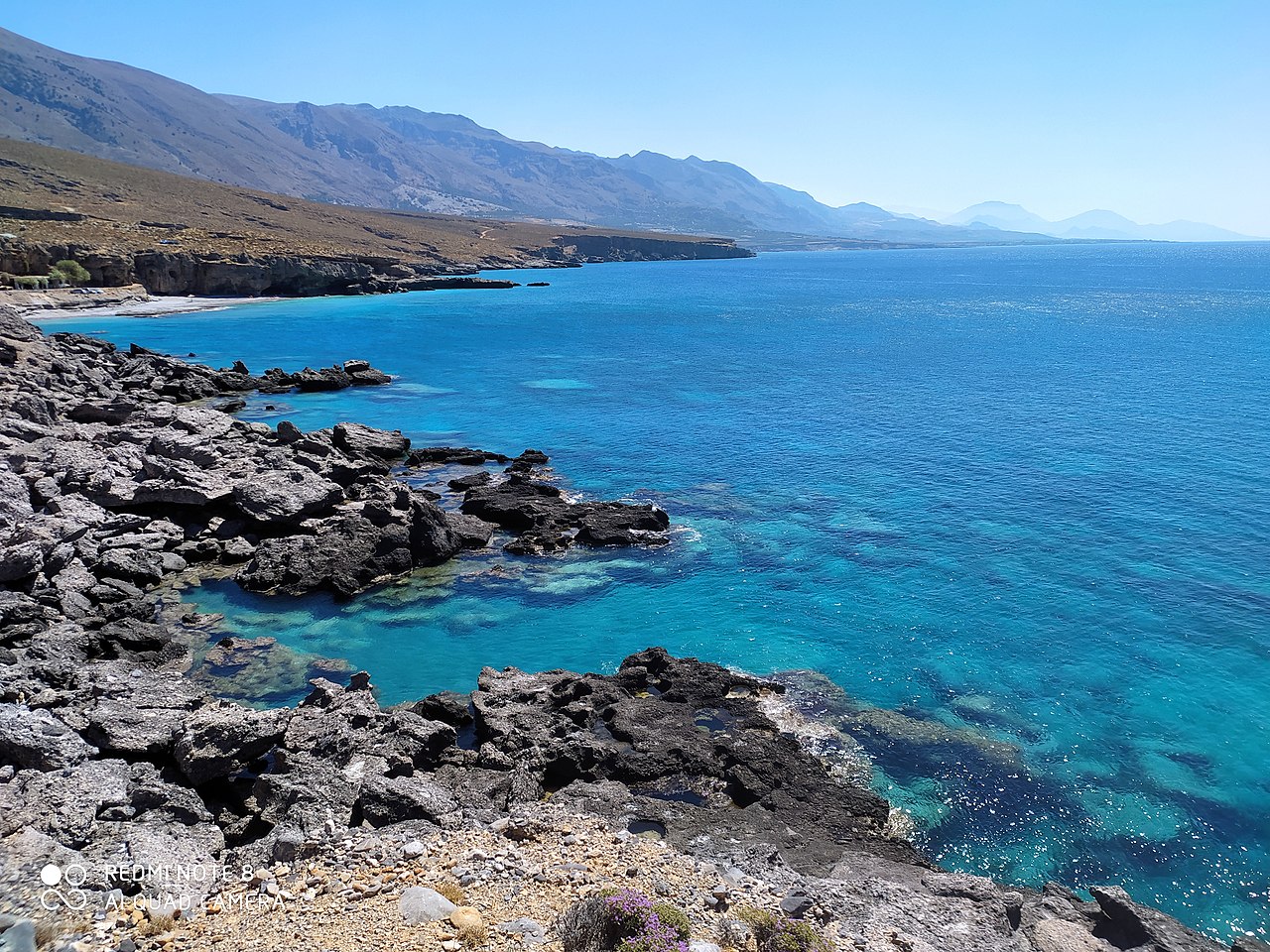
Updated every 30 minAgiofarago is one of the few genuinely wild beaches left on the Cretan coast. Tucked at the mouth of a gorge carved through the Asterousia Mountains along the Libyan Sea, it sits at the end of a short canyon walk, sealed off from the road by limestone cliffs and accessible only on foot, by the gorge path, or by boat. The result is a beach that feels truly remote: a crescent of grey and white pebbles framed by towering rock walls, with no sunbeds, no beach bars, and no nearby taverna. The water here is exceptionally clear, ranging from pale turquoise at the shoreline to deep blue further out, and the silence is broken only by waves and the occasional boat engine. A small Byzantine chapel, dedicated to Saint Anthony, stands at the gorge exit near the beach, carved partly into the rock face, and adds a distinctive character that few other beaches on the island can match.
Getting There
The most common approach is by car to the village of Lendas or to the smaller trailhead parking area at the end of the road near Agiofarago Gorge, roughly 75 kilometers south of Heraklion. From the parking area, a clearly marked trail leads through the gorge for approximately 2 kilometers, taking around 25 to 35 minutes on foot over a mostly flat, rocky path. The gorge itself is narrow in places and the footing is uneven, so proper footwear is essential. Sandals will cause problems. The trail is not suitable for pushchairs or wheelchairs.
Alternatively, boat taxis operate seasonally from Matala, about 12 kilometers to the west, and from Lendas. These are an easier option if you want to avoid the walk entirely, and the coastal approach gives a clear view of the gorge entrance and cliff formations. Confirm schedules locally as service is informal and weather-dependent.
There is no public transport serving the area.
Activities and Water Conditions
The water at Agiofarago is calm by southern Crete standards, protected somewhat by the gorge walls and the natural curve of the bay. Visibility is excellent, regularly exceeding 15 meters, making it one of the better snorkeling sites on this stretch of coast. The underwater topography near the rock walls on either side of the beach is worth exploring, with crevices and small caves that attract fish. Bring your own equipment as nothing is available for rent on the beach.
Swimming is straightforward for confident swimmers. The pebble entry requires care as the stones can be slippery when wet. The beach drops away relatively quickly, so it is not a good spot for young children or non-swimmers.
Practical Tips
The gorge provides shade in the morning, but by midday the beach is fully exposed to the southern sun and temperatures on the pebbles can be intense. Arriving early, before 10am, gives you the best light for snorkeling and cooler conditions for the walk. Carry more water than you think you need: there is none available at the beach or along the trail.
Agiofarago faces south toward Libya and is exposed to the meltemi only indirectly, but summer afternoons can bring a strong breeze off the sea. This keeps temperatures bearable but can make the water choppy after midday. Morning visits are consistently calmer.
In July and August the beach draws a regular crowd of hikers and day-trippers, though it never reaches the density of more accessible beaches. In spring and autumn it is often nearly empty. Winter access is possible but the gorge path can be wet and requires more caution.
Best Months to Visit
May, June, September, and October offer the best combination of warm water, manageable temperatures, and low crowds. The sea reaches a comfortable swimming temperature by late May and stays warm through October. July and August are viable but expect direct sun with no shade relief on the beach itself and a longer drive on crowded roads.
Who It Is For
Agiofarago suits independent travelers who are comfortable with basic hiking and do not need facilities on the beach. It is a strong choice for snorkelers, photographers, and anyone looking for a quiet, dramatic coastal setting without infrastructure. It is not suitable for families with young children, elderly visitors with limited mobility, or anyone needing shade, food, or equipment rental on site. Couples and solo adventurers willing to carry everything they need will find it one of the most rewarding beaches in central Crete.
Getting there by bus
- Nearest bus stop: Matala (6.3 km)
- Bus Heraklion – Matala: timetables and prices →
Distances as the crow flies.
FAQ
Is Agiofarago Beach a sandy beach?
Agiofarago Beach is a pebbles beach with deep blue water, in the central region of Crete.
Is the sea calm at Agiofarago Beach?
The sea at Agiofarago Beach is usually calm. For today's live wind and wave conditions, see our "where to swim today" page.
Is Agiofarago Beach suitable for children?
The water at Agiofarago Beach is of normal depth.
Is Agiofarago Beach crowded?
Agiofarago Beach is usually quiet.
Is there parking at Agiofarago Beach?
Yes, Agiofarago Beach has parking available. Access: by boat.
Nearby beaches
Discover Crete


Stay informed.
Get the weekly Crete briefing · news, weather, events. No spam.
Photo: © Nikolaos Alexopoulos / CC BY-SA 4.0 / Wikimedia Commons