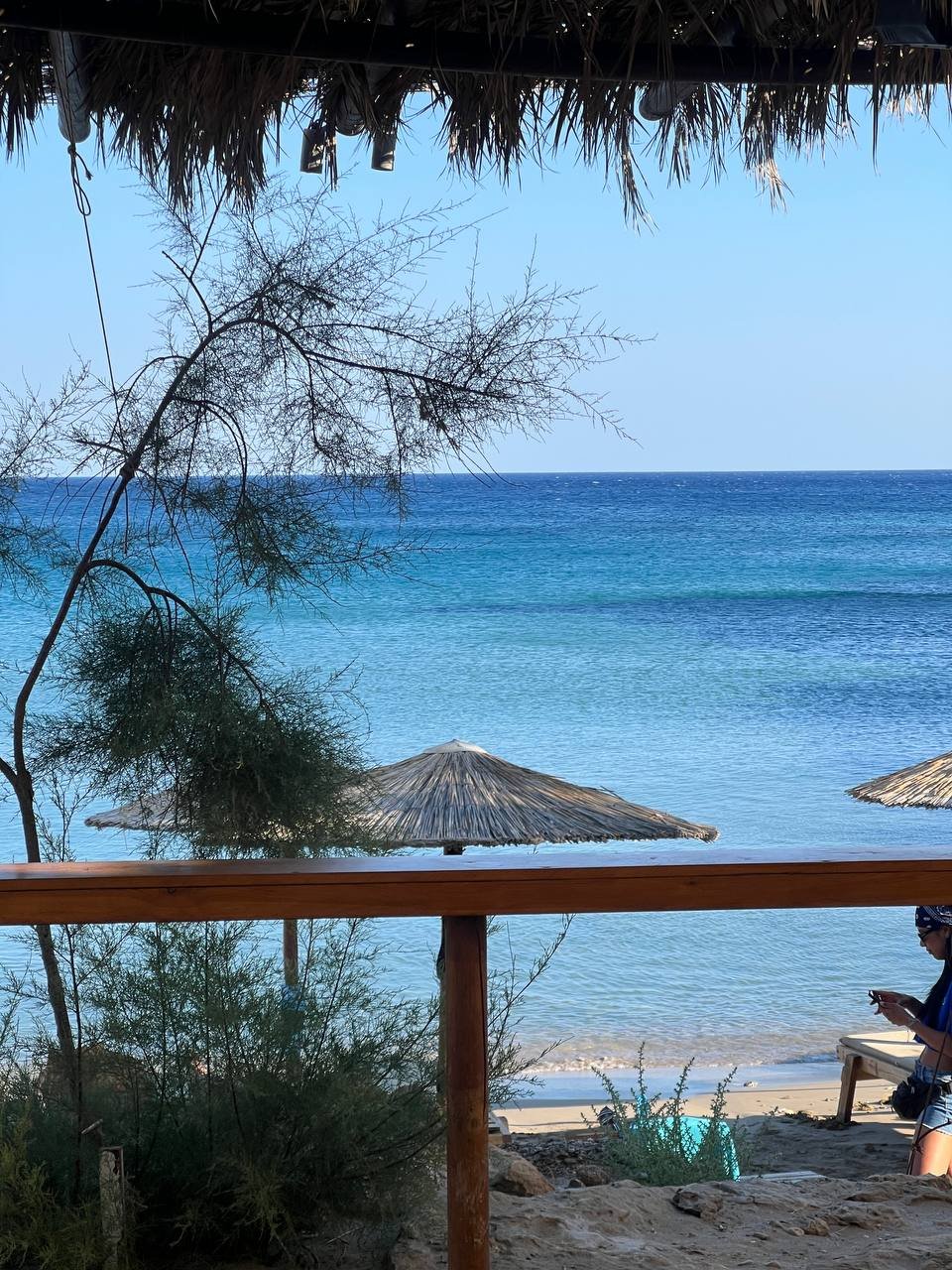
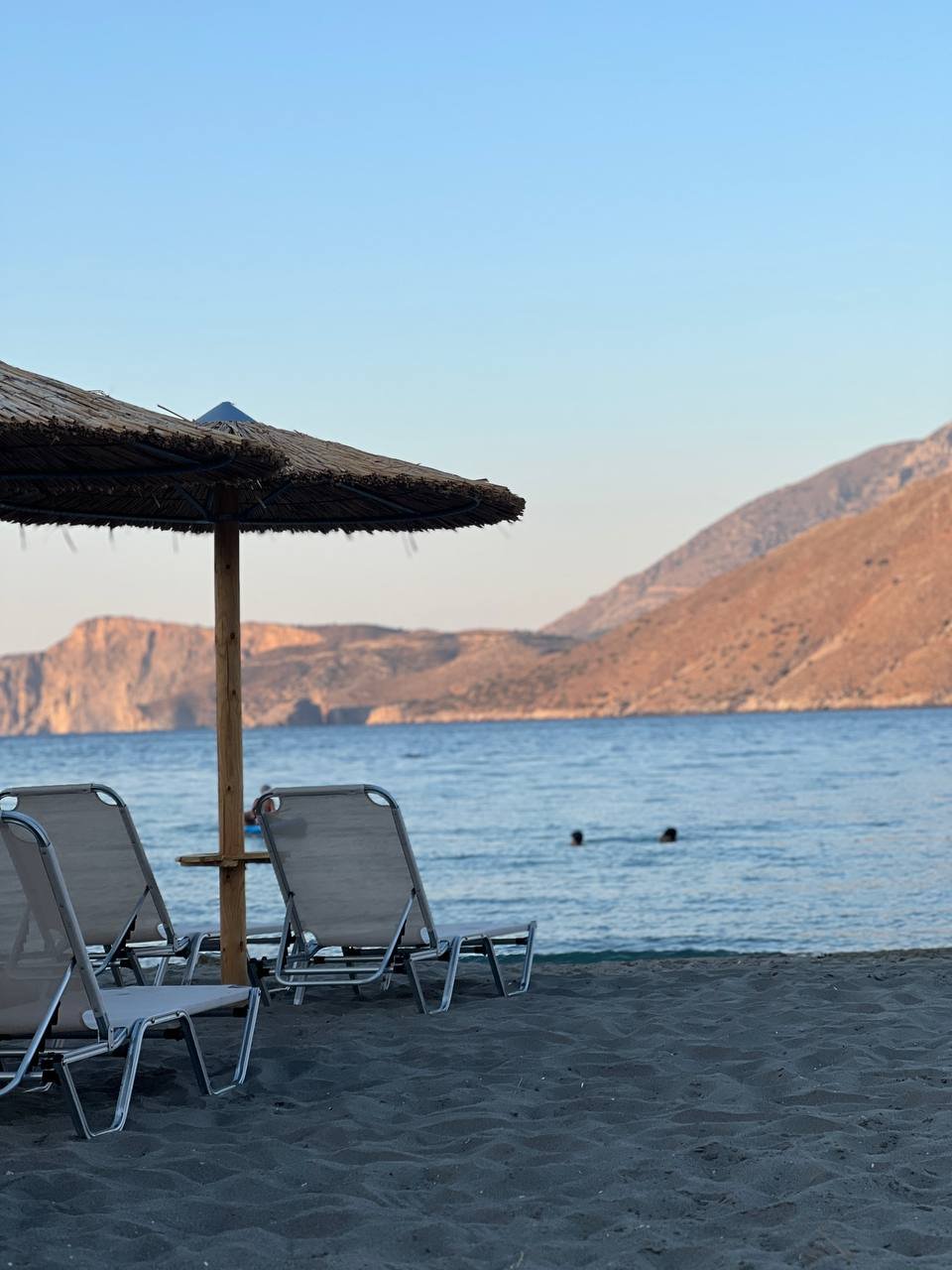
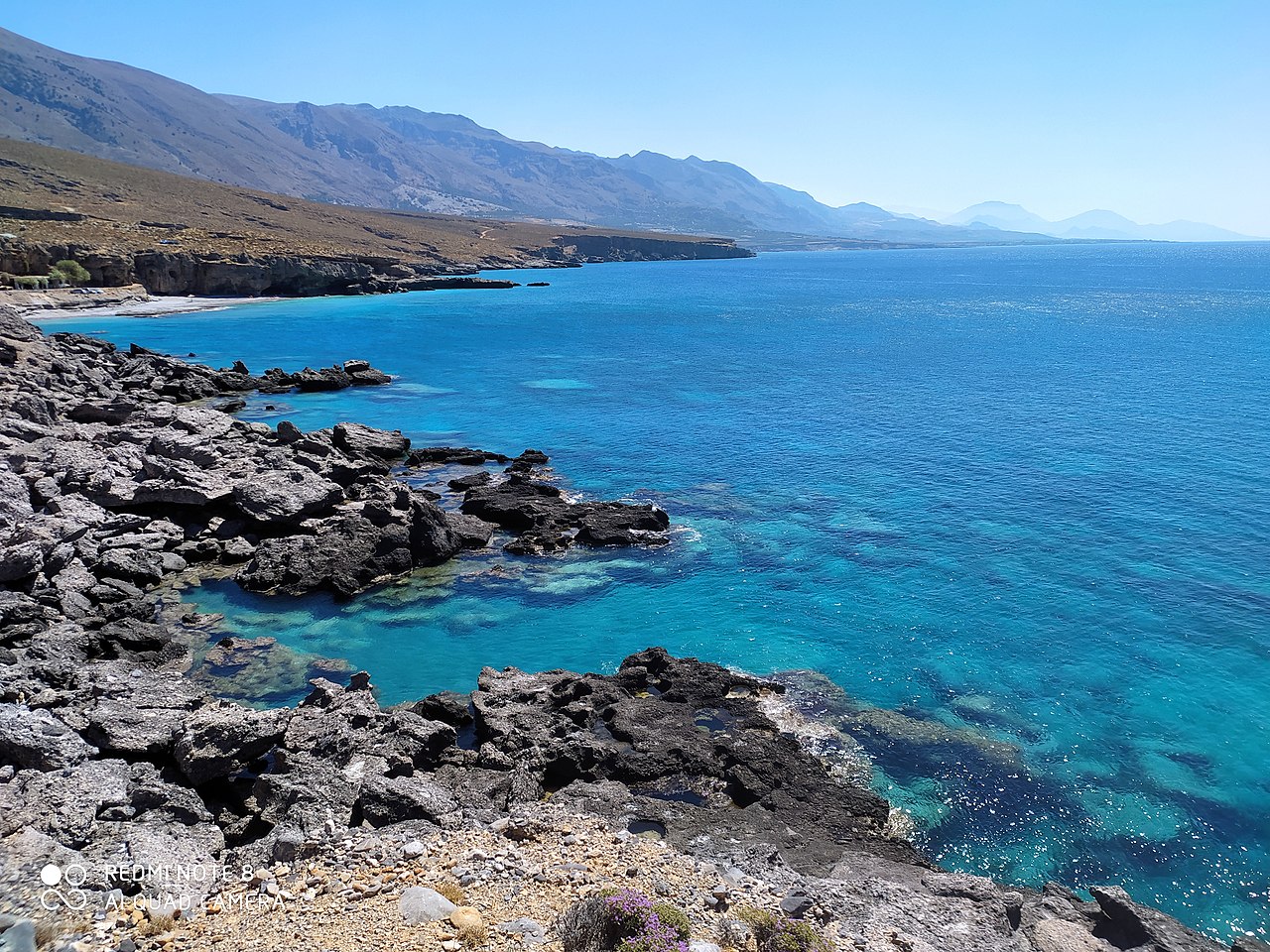
Every travel blog puts Elafonisi at the top of the list. The photos show blush-pink sand, a shallow turquoise lagoon, and almost nobody around. After five years living on this island and visiting this beach across every season, here is what those posts do not say: Elafonisi is the single most consistently disappointing beach experience in western Crete for the average summer visitor.
The pink sand exists. The shallow water exists. But so do 3,000 to 5,000 visitors per day in July and August, a wall of rental umbrellas covering every usable metre of shore, and a 95-kilometre drive from Chania that takes 1.5 hours on the way there and stretches past 2.5 hours on the return. The water is murky by noon. The famous pink tint is nearly invisible under direct midday sun. This is not about skipping the beach entirely. It is about knowing exactly what you are walking into, and knowing that better options exist within the same drive time.
- The Pink Sand: Instagram vs. Reality
- The Crowd Problem Is Structural, Not Seasonal
- The Drive Nobody Talks About
- A Protected Area Under Pressure
- The Sunbed Economy
- When Elafonisi Is Actually Worth It
- Better Alternatives on the West Coast
- The Honest Verdict
The Pink Sand: Instagram vs. Reality
The pink colour is real, but conditional. The sand gets its hue from crushed marine shell and coral fragments mixed into the white base. Under the right conditions, at dawn, at dusk, or after rainfall, the effect is genuine and worth seeing. The problem is that most visitors arrive between 10am and 2pm, exactly when direct overhead sun bleaches out the contrast and the sand reads as off-white at best.
The photographs circulating on social media are almost always taken at golden hour or have been heavily colour-graded in post-processing. Neither fact appears in the caption. A visitor who builds their entire trip around the famous pink beach and arrives at 11am in August will walk away wondering if they came to the wrong place.
There is also a spatial dimension to consider. The strongest pink concentration sits in a narrow strip near the dune edge, not spread uniformly across the beach. By midsummer, that strip is buried under umbrellas and foot traffic. The sand that was distinctive in April is churned, grey, and indistinguishable from any other beach by the first week of July.
- Peak pink visibility: dawn and dusk, late September to early June
- Worst time for colour: 10am to 3pm in July and August
- Best location on the beach: the northern dune edge, not the main swimming area
The Crowd Problem Is Structural, Not Seasonal
Elafonisi is not just busy during peak weeks. The crowd problem is built into the geography. The beach sits at the end of a single access road. The only car park fills completely by 9am in July. Shuttle buses from Chania deposit several hundred passengers at a time, staggered through the morning. By 11am on any day between mid-June and mid-September, the beach holds more people per square metre than a public swimming pool.
Official estimates from the Chania municipality cite 3,000 to 5,000 daily visitors during peak summer weeks. The usable beach covers roughly 1.5 kilometres of shoreline. The arithmetic is straightforward before you even leave the hotel.
This is not a problem you can solve by arriving early. Early arrival means a quieter beach but a long wait in traffic on the return. Arriving late means less congestion but a beach that has been at full capacity for hours. There is no optimal window in high season. The structural bottleneck is the road itself, and no amount of timing adjustment changes that fact.
- Car park capacity: approximately 600 vehicles, full by 9am in July
- Daily visitor estimates (peak): 3,000 to 5,000
- Usable shoreline: approximately 1.5km
The Drive Nobody Talks About
From Chania, Elafonisi is 95 kilometres away. On empty roads, that is a 1.5-hour drive along winding mountain roads through the Cretan interior. The road is narrow, often single-lane on the final approach, and involves a sustained mountain section that many drivers find stressful, particularly on a day when every other tourist has had the same idea on the same morning.
The return journey is the real deterrent. Between 2pm and 6pm, every visitor who arrived in the morning is trying to leave simultaneously. Queues at the car park exit, combined with oncoming traffic on the mountain road, routinely push the return to Chania past 2.5 hours. Bus passengers face the same congestion without the flexibility of choosing when to leave.
Factor in both legs of the drive and you have a day trip that consumes most of a full day, requires a very early departure to secure parking, and leaves no room for anything else in that part of the island. The west coast has other beaches reachable in under an hour from Chania, with far less congestion on the approach.
- Distance from Chania: approximately 95km
- Drive time (low season): 1.5 hours
- Return drive time (peak afternoon): 2 to 2.5 hours
- Road type: narrow mountain road, single-lane near the beach
A Protected Area Under Pressure
Elafonisi sits within a Natura 2000 protected area. The lagoon, the dunes, and the surrounding scrubland are designated under European Union habitat directives. Loggerhead sea turtles (Caretta caretta) historically used the beach as nesting habitat, and the dune ecosystem supports plant species that are sensitive to compaction and trampling.
The contradiction is that none of this protection has meaningfully limited the volume of visitors. Sunbed operators work the beach through the summer season, anchoring their rows directly into the dune transition zone. Foot traffic through the protected dune area is constant and largely unmanaged. Environmental monitoring notes measurable degradation of dune plant communities over the past decade, attributed directly to visitor pressure.
For a visitor who considers ecological impact, there is a genuine question here. A legally protected site absorbing thousands of visitors per day with minimal enforcement of buffer zones is a clear indicator of the gap between designation and implementation. Visiting outside peak season significantly reduces this impact, though it does not eliminate it.
- Protection status: Natura 2000, site GR4340004
- Sensitive species: Caretta caretta nesting habitat, endemic dune flora
- Documented impact: dune degradation, reduced turtle nesting activity
The Sunbed Economy
A sunbed and umbrella at Elafonisi costs between 10 and 15 euros per unit in high season, with a two-unit minimum per couple. That puts the basic entry cost for two visitors at 20 to 30 euros before food, drinks, or parking fees. This is standard for organised Cretan beaches, but it jars noticeably against a beach marketed as a wild, unspoiled natural experience.
The sunbed rows cover the most accessible and most scenic stretches of the beach. The free zones, where you can place a towel without paying, are either in the ecologically sensitive dune transition area or on the far ends where the ground is uneven and rocky. In practical terms, Elafonisi in July is an organised beach operation with pink sand in the background.
This model is not unique to Elafonisi. Most popular Cretan beaches operate the same way. The point is that the gap between expectation and reality is sharper here than anywhere else, because the marketing consistently presents the beach as an unspoiled natural wonder. It is neither unspoiled nor particularly wild during the months when most people visit.
When Elafonisi Is Actually Worth It
This verdict is not absolute. Elafonisi is a genuinely excellent beach under specific conditions. Visiting in late September, October, or May, outside school holiday windows, changes the experience completely. Crowds drop to a fraction of summer levels, the car park is never full, and the water stays warm enough to swim comfortably through October.
The autumn morning light is when the pink sand actually performs as advertised. The dunes are visible in their natural form. The lagoon is clear. The drive back takes 90 minutes. This is the version of Elafonisi that the photographs show, and it is a real place. It is just not the place most visitors encounter when they book a week in July and add the beach to the itinerary.
If your travel window is fixed in peak summer and you are determined to visit, go on a weekday, arrive before 8am, and leave before 1pm. Accept that you will not see the pink sand at its best. Accept an organised, busy beach. Go with those expectations and the visit becomes manageable. Arrive expecting the photographs and you will leave disappointed.
- Best months: May, late September, October
- Worst months: July, first two weeks of August
- Best strategy in peak season: weekday arrival before 8:30am, leave by noon
Better Alternatives on the West Coast
Within the same general area, several beaches deliver a comparable natural experience with a fraction of the crowd. Kendrodasos beach sits within walking distance of Elafonisi, accessible via a 20-minute trail through juniper scrubland. It has no organised facilities, no sunbed rows, and no shuttle bus drops. The sand is coarser but the isolation is genuine. Most visitors at Elafonisi never know it exists.
Sougia Beach on the south coast is under an hour from the Elafonisi access road. It is a long beach at the mouth of a gorge, backed by a small village with tavernas and a genuinely relaxed atmosphere even in July. The drive is manageable and the beach never approaches Elafonisi-level saturation.
Further north, Golden Beach on the west coast offers a long dune-backed stretch of sand with consistent conditions and better road access. Trachilos Beach, near the northwest tip of the island, is a quieter option for those willing to navigate a rougher access track. Both are reachable without the mountain-road ordeal of the Elafonisi approach.
- Kendrodasos: 20-minute walk from Elafonisi, no facilities, genuinely wild
- Sougia Beach: under 1 hour east, village atmosphere, south coast
- Golden Beach: west coast, dune-backed, accessible road
- Trachilos Beach: northwest tip, quiet, rougher access track
The Honest Verdict
Elafonisi is worth visiting once, outside of July and August, at dawn or dusk, without a rigid expectation of vivid pink sand. In those conditions, it earns its reputation. In peak summer, it is a textbook example of a natural asset overwhelmed by the tourism model built around it. The experience does not match the marketing, the drive does not justify the result for most day-trippers, and better alternatives are accessible within the same region.
If you have one beach day on the west coast, spend it on a beach that still looks the way Elafonisi did a decade ago.