Every year, several thousand Northern Europeans arrive in Crete with a relocation plan sketched on optimism and holiday memory. Sunshine, olive oil, a slower pace. They have watched the YouTube channels, scrolled the Facebook groups, and convinced themselves the hard part is choosing which village to settle in. Within eighteen months, a significant share of them are back home.
This is not a guide designed to sell you the island. It is an account of what the move actually involves, written after five years of watching relocations succeed and collapse in roughly equal measure. The logistics are harder than any relocation blog admits. The administration is slower than anything you have experienced in Northern Europe. The isolation arrives earlier than anyone warns you about, and it stays longer than anyone expects.
- The Fantasy Relocation Script, and Why It Fails
- Greek Bureaucracy: Your First Real Obstacle
- Cost of Living: Not the Bargain You Were Promised
- Finding Housing: The Market Nobody Explains
- Healthcare: Functional but Fragmented
- Social Integration: The Isolation Nobody Advertises
- Internet, Banking, and Infrastructure Gaps
- Income and the Seasonal Economy Reality
- Who Actually Thrives in Crete, and Who Does Not
The Fantasy Relocation Script, and Why It Fails
The template is predictable. Burned-out professional, early retiree, or remote worker decides that Greece is the answer. Crete attracts this demographic because it is large enough to have real infrastructure, warm enough for 300 days of sun, and just exotic enough to feel like a genuine life change. The Facebook groups are full of people who made it work and want to share the story.
What those groups underrepresent are the people who left quietly. The ones who could not open a Greek bank account for four months. The ones who discovered their EU pension was taxed differently than expected. The ones whose children struggled in Greek-language schools and whose partner found no viable work. The aesthetic of whitewashed walls and afternoon coffee exists, but it sits on top of a logistical foundation that most relocation content deliberately skips.
The failure pattern is consistent. People move fast, seduced by a holiday memory. They secure accommodation first, assume paperwork will sort itself out, and start spending savings before income is established. By month six, the romance has worn off and the practical problems are very much present.
- Common mistake: arriving without the AFM tax number process already started
- Common mistake: underestimating winter isolation after a summer arrival
- Common mistake: treating holiday budgets as relocation budgets
Greek Bureaucracy: Your First Real Obstacle
The AFM, the Greek tax identification number, is your entry point to almost everything: opening a bank account, signing a rental contract, registering a vehicle, accessing public healthcare. Getting one is theoretically straightforward. In practice it requires a visit to a tax office, and the offices in urban areas like Chania or Agios Nikolaos operate on appointment systems that run weeks out during peak months.
The AMKA, the social security number, follows the AFM. Then comes the bank account, which many Greek banks now require proof of address to open. Proof of address that you cannot easily obtain without the bank account already active. This circular dependency is not a myth. It is a documented feature of the system that catches most new arrivals unprepared, and it has defeated people who approached the move with genuine organisational rigour.
EU citizens have the legal right to reside in Greece, but that right must be formally registered with the local municipality after three months. Non-EU citizens face an entirely different process involving the central immigration service, which operates on its own timeline regardless of how urgently a resolution is needed.
Budget a minimum of three months for the administrative foundation alone. Build that into your financial runway before you leave your home country. People who arrive expecting a clean two-week administrative sprint get hurt.
- AFM (tax number): required for everything, expect 2 to 6 weeks to obtain
- AMKA (social security): needed for healthcare access, requires AFM first
- Bank account: requires in-person visit, AFM, and proof of address
- Municipality registration: mandatory after 3 months for EU citizens
Cost of Living: Not the Bargain You Were Promised
Crete is cheaper than London, Amsterdam, or Stockholm. That part is true. But the comparison point matters enormously. Against cities in central or eastern Europe, Crete is not especially inexpensive, and in certain categories it is actively more costly than you would expect from a southern Mediterranean island.
Imported goods carry a consistent premium. Electronics, quality furniture, specialty foods, and anything that arrives by ship, which is most things, costs more than on mainland Europe. Utilities are the consistent surprise. Electricity is expensive because the island grid relies heavily on diesel generation. Air conditioning, which is not optional in July and August, pushes electricity bills to 200 to 300 EUR per month for a standard apartment. Some rural properties depend on water tanker deliveries, adding further recurring cost.
Rent in desirable areas, particularly around Chania and the north coast, has risen sharply since 2021, driven by short-term rental demand and an influx of remote workers. A two-bedroom apartment in a good location in Chania currently runs 700 to 900 EUR per month, roughly comparable to secondary cities in France or Spain. The cheap Mediterranean retirement is a narrative that no longer matches current market conditions.
- Groceries: 15 to 20% cheaper than Western Europe on local produce, comparable on imports
- Electricity: 80 to 150 EUR per month in winter, 200 to 300 EUR per month in summer
- Rent in Chania: 700 to 900 EUR for a 2-bedroom, up approximately 35% since 2021
- Eating out at a local taverna: 12 to 18 EUR per person
Finding Housing: The Market Nobody Explains
The Cretan rental market operates on informal networks that most foreigners are not plugged into. The best apartments, the ones that are properly maintained and fairly priced, rarely appear on international listing platforms. They circulate by word of mouth, posted in Greek-language Facebook groups, or offered directly to people the landlord already has a personal connection with.
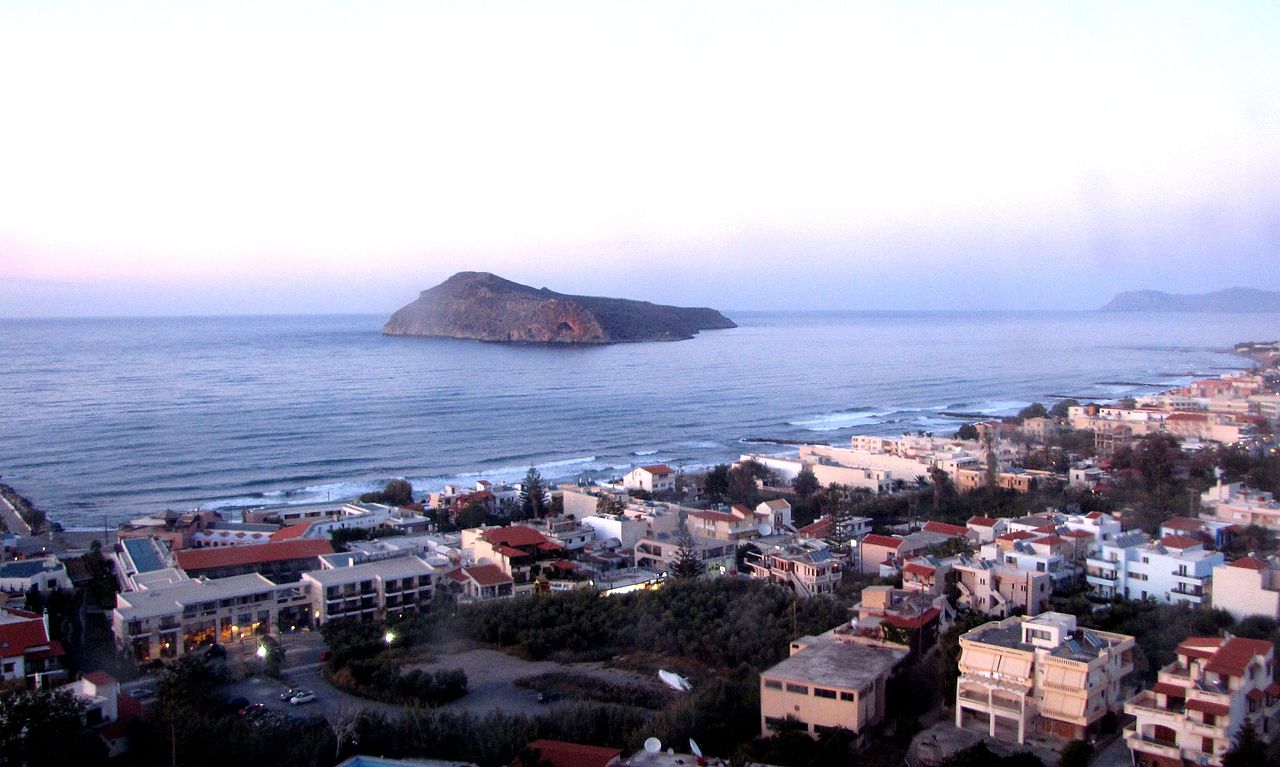
What you find on English-language platforms is the inventory that local renters have passed on, sometimes for good reason. Damp in winter is a real problem in older stone buildings not designed for year-round habitation. In tourist-heavy areas like Platanias, noise is a genuine quality-of-life issue during peak summer, and then a different kind of problem in the off-season when everything closes and the streets empty entirely.
The south coast, including the area around Plakias Beach and the surrounding coastline, offers better value and more authentic daily life. The tradeoff is distance from services and healthcare infrastructure, and winter road conditions over mountain passes that can be genuinely difficult on days that count.
Furnished apartments aimed at expats tend to be overpriced and under-maintained. If you plan to stay longer than a year, negotiating an unfurnished long-term contract with a local landlord through a local contact consistently produces the better outcome, on price and on maintenance responsiveness.
Healthcare: Functional but Fragmented
Public healthcare in Crete exists and is accessible to AMKA holders. The reality is a system under chronic resource pressure. Wait times at public hospitals and polyclinics are long. The main referral hospital on the island handles everything from routine appointments to complex surgery for a dispersed island population, plus significant seasonal tourist volume layered on top during the months when the weather is finest.
Most expats who stay long-term develop a hybrid approach: public healthcare for serious conditions and emergencies, private clinics for routine appointments. Private GP consultations run 50 to 80 EUR without insurance. Specialist appointments are 80 to 150 EUR. These costs are manageable with established income and painful if you arrived on savings alone without a clear income timeline.
Dental care is a specific gap. Public dental services are minimal. Private dental work is available at prices lower than Northern Europe, but quality varies and requires local referrals to navigate effectively. Mental health services are limited in both public and private sectors. Therapists working in English are few, concentrated in larger urban areas, and often operate waiting lists. This matters because the psychological difficulty of relocation is consistently underestimated, and the support infrastructure for it is thin.
- AMKA required for all public healthcare access
- Private GP consultation: 50 to 80 EUR
- Private specialist: 80 to 150 EUR per visit
- English-speaking therapists: scarce outside Chania and Agios Nikolaos
Social Integration: The Isolation Nobody Advertises
Crete has an expat community. It has Facebook groups, regular meetups in Chania, and WhatsApp chains for newcomers. What it does not have is a natural social infrastructure for adults who are not on holiday. Building genuine connections takes years, not weeks, and it requires either Greek fluency or a tolerance for socialising through significant language friction.
The expat community itself is highly seasonal. Between October and April, the population of foreign residents contracts sharply. Cafes that were full of international faces in August are down to a handful of regulars by November. If you are an extrovert who needs regular social stimulation, winter will test you harder than any weather forecast suggests, in ways that are difficult to anticipate from the outside.
Cretan social life is family-centred in ways that are difficult for outsiders to enter. Local hospitality is genuine and often generous, but it operates within established social structures. The foreign resident who learns Greek, participates in local life, and is patient over multiple years does eventually integrate. The one who arrives expecting to plug into a ready-made international community is regularly disappointed, because that community is real but thin and seasonal.
Children integrate faster than adults, consistently. If you are moving with school-age children, the Greek school system operates entirely in Greek, and the adjustment period is real and should be budgeted into the plan.
Internet, Banking, and Infrastructure Gaps
Fibre broadband exists in Chania and in larger towns along the north coast. In rural areas, in villages in the interior, and across parts of the south coast, you are looking at ADSL connections with speeds that frustrate any remote worker accustomed to Northern European infrastructure. Satellite internet is increasingly viable but adds monthly cost and requires landlord approval for equipment installation.
Mobile coverage is adequate in populated areas and unreliable in valleys, gorges, and remote coastal locations. If your work depends on stable video calls and your preferred house sits in a scenic location, test the actual connection before signing a lease. This is not a precaution. It is a necessary step that many people skip and regret.
Banking remains a friction point long after accounts are open. Greek banks have limited English-language service. International transfers are slower and more cumbersome than in Northern Europe. Fintech workarounds are widely used by the expat community, but they do not solve everything. Some landlords and Greek institutions specifically require a local Greek bank account, not an international card.
Power cuts are infrequent in urban areas and more common in rural locations, particularly during winter storms. A UPS for critical work equipment is standard practice among remote workers who have spent more than one season here.
Income and the Seasonal Economy Reality
If you are not bringing remote income or a pension with you, the Cretan job market is a hard reality. The local economy is heavily seasonal and weighted toward hospitality and tourism. Wages in these sectors run 800 to 1,000 EUR per month gross, which is below what most Northern European expats need to maintain their cost of living on the island without drawing down savings.
Year-round professional opportunities exist but are concentrated and competitive. Greek fluency is required for most local employment. Remote work as a Greek tax resident triggers obligations that require proper professional advice to structure correctly, and the default assumptions most people carry from their home countries do not transfer cleanly to the Greek tax regime.
The short-term rental income route has become significantly more complex. Greek rental tax law (law 5246/2025) introduced a layered structure: 15% on the first 12,000 EUR of annual rental income, 25% on 12,000 to 24,000 EUR, 35% on 24,000 to 35,000 EUR, and 45% above that threshold. Add the annual ENFIA property tax at approximately 0.28% of assessed property value. Any income projection that does not account for this structure is not a realistic projection.
- Hospitality wages: 800 to 1,000 EUR per month gross
- Rental income tax: 15 to 45% depending on bracket (law 5246/2025)
- ENFIA property tax: approximately 0.28% annual on assessed value
- Greek accountant: a necessary cost from day one, not an optional one
Who Actually Thrives in Crete, and Who Does Not
After five years of observation, the pattern is consistent enough to state directly. The people who thrive share a specific profile. They have stable, location-independent income established before they move, not income they plan to figure out once they arrive. They have budgeted for twelve months of lower-than-expected productivity while the administrative layer settles. They learn Greek, or commit to learning it seriously. They are comfortable with extended quiet and do not rely on external stimulation to feel grounded.
They also move slowly. They rent for a full year before considering buying. They build local relationships before making significant financial commitments. They accept that life here is not a permanent holiday but a different kind of ordinary, with its own specific friction and its own specific rewards, and they find the exchange worthwhile.
The people who struggle arrive fast, spend fast, and expect the island to meet them halfway on convenience and infrastructure. They underestimate the bureaucratic delays, overestimate their tolerance for isolation, and make housing decisions based on summer emotion rather than winter reality.
Crete rewards patience and punishes haste. That is the single most consistent pattern from five years of watching this play out, and it is the one thing worth holding onto if you are serious about making this work.