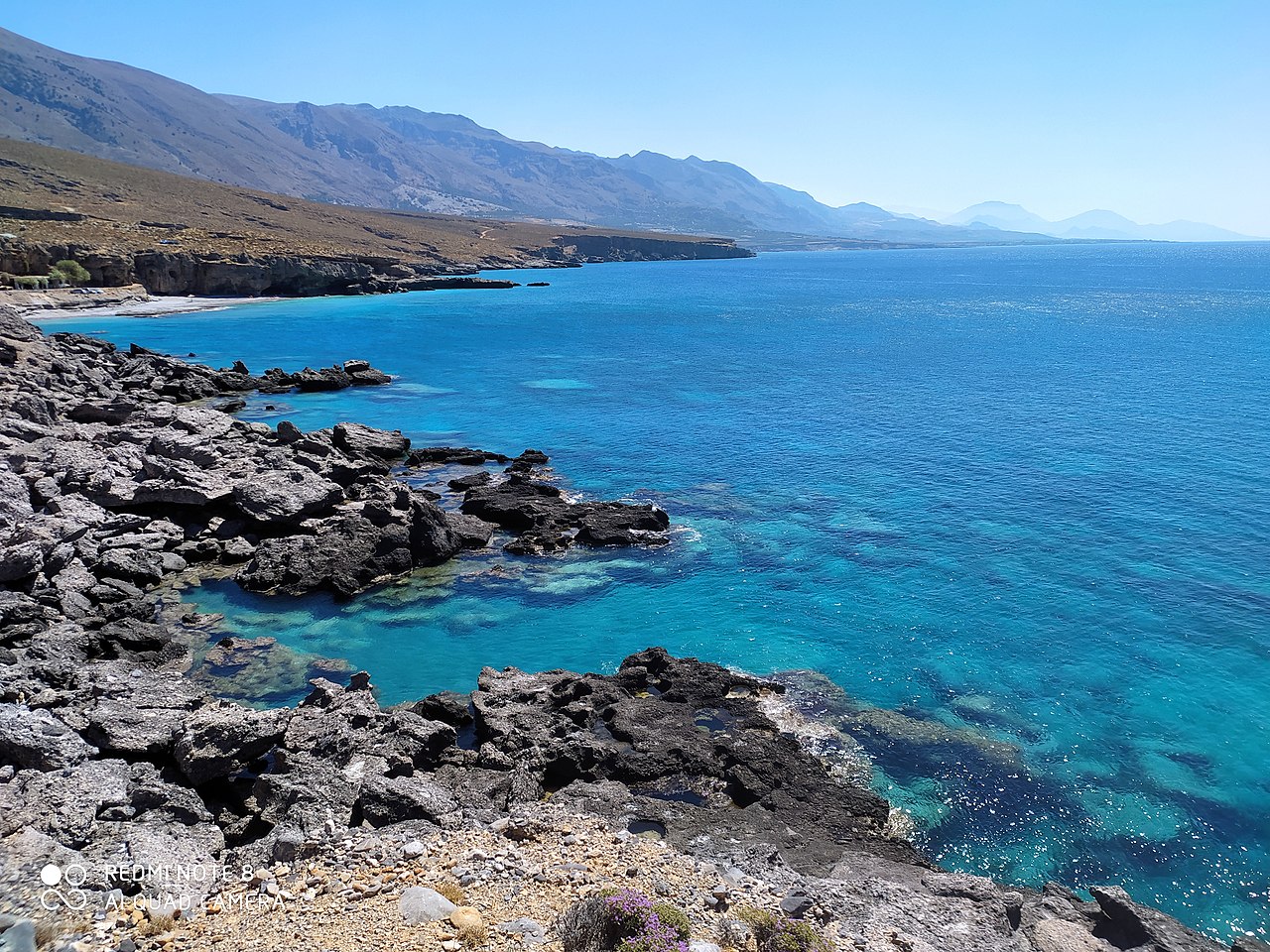
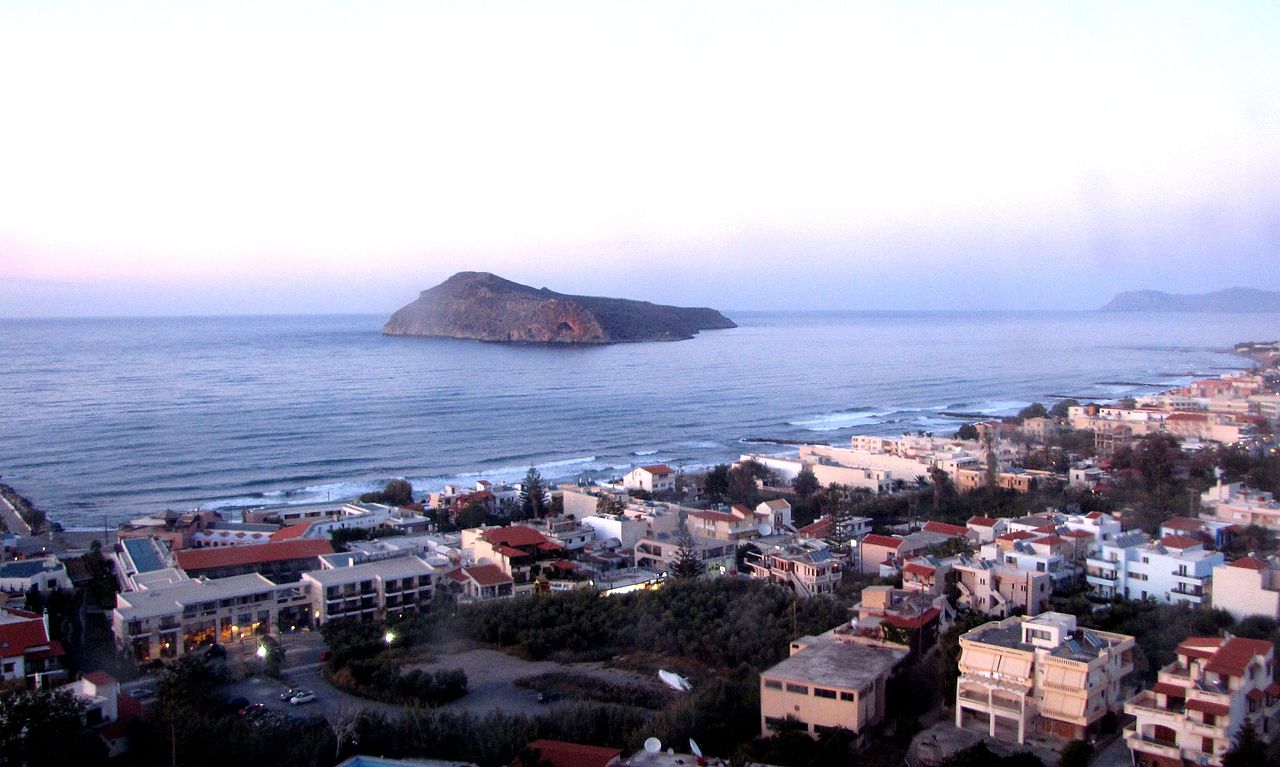
Crete welcomed 5.6 million international air arrivals in 2025, a 5.5% increase over 2024. Heraklion airport crossed 10 million total passengers for the first time in history. Yet tourism revenues for the island fell by roughly 5%, while neighboring Santorini collapsed 13.6% after the January seismic crisis. We pulled the numbers from INSETE, the Hellenic Civil Aviation Authority, the Bank of Greece and MedCruise. The picture is more interesting than the headlines suggest.
The headline numbers
If you only remember five figures from 2025, these are the ones:
- 5.6 million international air arrivals to Crete (+5.5% YoY), making it the leading Greek island destination.
- >10 million total passengers through Heraklion airport, an all-time record. Heraklion is now the busiest regional airport in Greece outside Athens.
- +10.2% growth in German visitors, who alone exceeded 1 million arrivals and represent roughly 29% of the Crete market.
- 767 EUR spent per visit in 2024 (latest published figure), the highest of any Greek region and well above the national average of 523 EUR.
- -5% in tourism receipts despite the arrival growth, a paradox the island has not yet solved.
Greek islands compared
Crete pulled ahead of every other Greek island region in 2025. Here is how the destinations stack up on international air arrivals:
The Santorini collapse is the most dramatic story of the year. The January 2025 seismic swarm triggered evacuations, mass cancellations and one of the worst summers on record for the island. Travelers redirected toward larger and geologically calmer destinations, and Crete absorbed a meaningful share of that demand.
If you are weighing two destinations, our full Crete vs Santorini comparison breaks down beaches, food, budget and accessibility with a clear verdict.
Heraklion: the new Mediterranean hub
Heraklion airport (HER) is the engine of Crete tourism. In 2025 it handled 4,039,249 international arrivals, up 6.1% (+233,515 passengers). Total traffic, including domestic and transit, crossed 10 million for the first time. The peak month was July 2025 with 1,693,791 passengers (+4.7%).
The most surprising data point sits at the other end of the calendar. In December 2025, Heraklion recorded 11,294 international arrivals against 3,659 in December 2024, a 208% jump. The base is small but the shift is structural: new winter routes from Munich, Frankfurt, Amsterdam and Larnaca opened during the off-season. Crete is no longer purely a summer destination.
Cruise traffic added another layer. Heraklion port recorded 536,543 cruise passengers across 281 calls in 2025 (+3.46% passengers, +5.64% calls), keeping it the leading Greek cruise port by passenger volume. The top source markets for cruise visitors were Germany (26.88%), the United States (23.92%) and the United Kingdom (13%).
Planning a trip in the shoulder season? Our guide to visiting Crete in October and guide to visiting Crete in May show why those months are now the sweet spot.
Where the growth comes from
Germany remains the dominant market. German visitors exceeded 1 million in Crete in 2025, growing 10.2% year on year. The top three nationalities (Germany, the United Kingdom and France in some order) together account for roughly 57% of arrivals. Poland is the fastest growing market across Greece, with national arrivals up to 1.2 million, and a similar trend is visible on the island.
The data tells a different story than the headlines. Mediterranean tourism is becoming more concentrated, not more spread out. Bigger islands with multiple airports and diversified attractions are pulling ahead. Smaller destinations dependent on one viewpoint or one bucket-list image are exposed.
The revenue paradox
Here is the part no one in the Greek tourism press wants to underline. Greece as a whole recorded 22.6 billion EUR in tourism receipts in 2025, up 9.8% (Bank of Greece data). Crete moved the other way. Revenues for the island fell roughly 5% on top of a 12% drop the year before. The Bank of Greece dataset places Cretan receipts around 4.34 billion EUR for the year.
Three forces explain the gap. Average length of stay fell to 7.8 nights. Per-night spending plateaued around 98 EUR. And a higher share of value capture went to all-inclusive packages that funnel money to international tour operators rather than local businesses. The arrivals headline is real, but the cash that lands on the island is shrinking.
If you are an owner thinking about short-term rental strategy, this is the structural backdrop. Our property management page explains how we approach yield in this environment.
Kastelli 2027: the game changer
The new Kastelli international airport opens on February 6, 2027. TERNA construction was over 65% complete at the end of October 2025. The first phase will handle around 11 million passengers per year, with planned expansion to between 15 and 18 million. The 3,200 meter runway is rated ICAO 4E, which means it can accept wide-body intercontinental aircraft. Heraklion's existing airport will be decommissioned and converted.
For east Crete this is the biggest infrastructure event in a generation. Sitia, Ierapetra and Agios Nikolaos move from being remote drives to being aligned with the new entry point. Property markets are already pricing in the shift, and short-haul carriers are reportedly negotiating slots for the opening summer 2027 schedule.
What 2025 means for travelers and investors
For travelers, the practical takeaways are clear. The shoulder season is real and growing. May, June, September and October now offer the best ratio of weather, price and breathing room. Our September guide and Sitia activities page are tuned for exactly this window.
For investors and owners, the signal is mixed. Volume is up, but yield per visitor is under pressure. The winners in 2025 were properties that targeted longer stays, captured shoulder season, and avoided the all-inclusive race to the bottom. The losers were rigid summer-only inventory in saturated coastal strips.
For the press and policy makers reading this far, the message is simpler. The Crete tourism story in 2025 is not about a record summer. It is about a structural rebalance: bigger volume, weaker value, expanding shoulder season, and a Mediterranean reshuffle accelerated by Santorini's seismic crisis. Numbers below.
Sources
- INSETE Statistical Bulletin No. 100 (April 2025): official PDF
- INSETE Statistical Bulletin No. 103 (June 2025): official PDF
- Bank of Greece, Developments in Balance of Travel Services 2025: press release
- Hellenic Civil Aviation Authority airport traffic data via Money & Tourism: summary
- MedCruise on Heraklion port 2025: report
- GTP Headlines (syndicating INSETE and HCAA data): news.gtp.gr