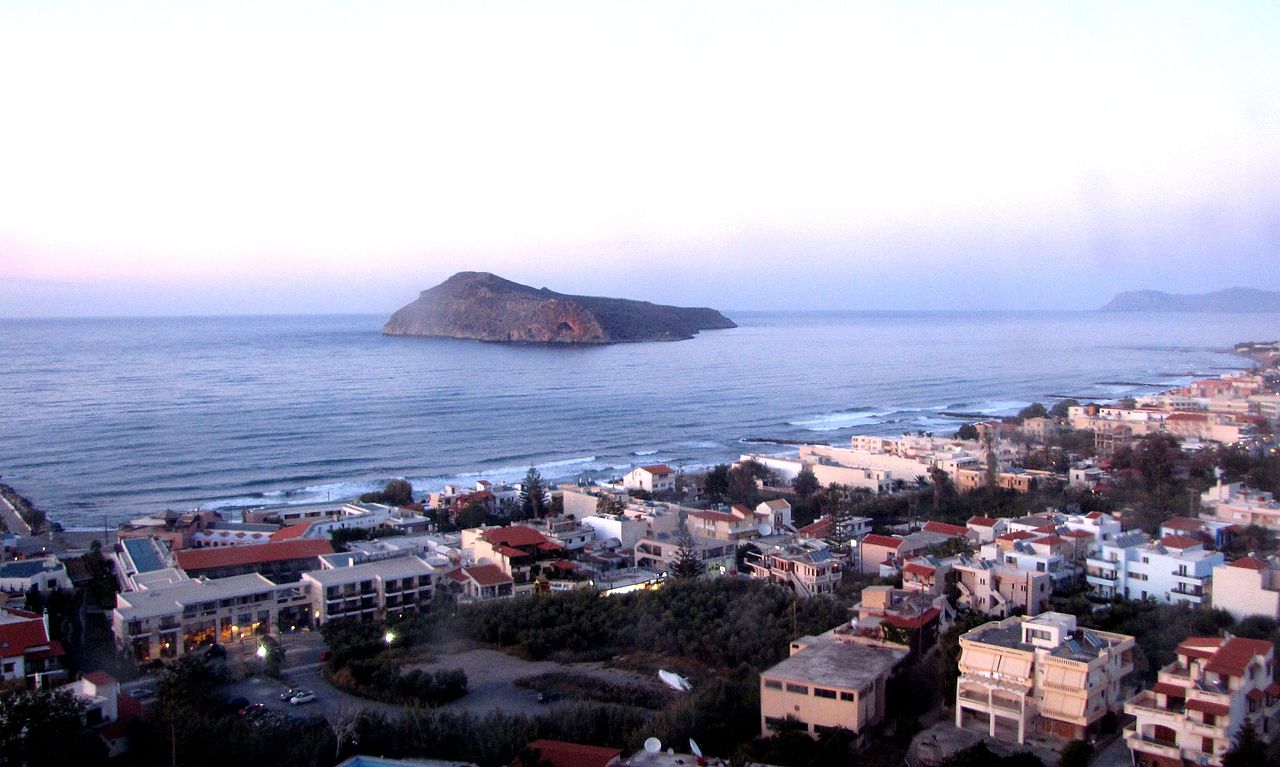
You booked a week in Crete, researched the restaurants, and you are planning to eat your weight in moussaka at a waterfront taverna. This plan is going to cost you, in money, in time, and in actual experience. After five years living here, the patterns are tediously predictable: tourists queue at the same harbour-front spots while the places locals actually eat sit half-empty two streets back.
The assumptions tourists carry about Cretan food are almost uniformly wrong. Moussaka is not a local specialty. Dinner is not the main meal. The cheapest olive oil on the table is often the best. And the menu items pushed hardest by waiters who approach you on the street are precisely the ones to avoid. This guide corrects the record, using places and dishes that actually exist, with none of the promotional fog.
- The waterfront taverna trap
- Moussaka is not a Cretan dish
- Lunch beats dinner, always
- The olive oil reality check
- Dakos: what it actually is
- Interior villages vs. coastal restaurants
- The wine situation
- How to read a Cretan menu
The Waterfront Taverna Trap
The most expensive meal you will eat in Crete will be at a restaurant with a sea view and a laminated menu with photos. This is not a coincidence. Harbour-front and beachside tavernas in tourist zones operate on simple economic logic: maximum footfall, maximum turnover, minimum kitchen ambition. The rent is higher, the margin pressure is higher, and the result is food calibrated for volume, not quality.
The markup on a seafood platter at a prime coastal spot runs 40 to 60 percent above what you would pay two or three streets inland for the same fish, often sourced from the same supplier. The fish is not fresher because it has a view of the sea. In five years of eating here, the most consistent cooking has come from rooms with no view at all.
Taverna Plateia in the west has no interest in catching tourist foot traffic, and the food reflects it. Stelios & Katina, also in the west, has built its reputation entirely on regulars rather than reviews. Neither would survive if the cooking were mediocre, because neither is propped up by location.
- Walk two streets back from any beach or harbour before choosing a table
- Look for handwritten daily specials, not laminated photo menus
- Avoid anywhere a host stands outside inviting you in from the street
- Local cars parked out front at midday are a stronger quality signal than any review platform
Moussaka Is Not a Cretan Dish
Ask any Cretan grandmother what she cooks for Sunday lunch and moussaka will rarely be the answer. It is a mainland Greek dish, popularized in Athens in the 20th century, and exported to every tourist menu on the island as shorthand for Greek food. The version served in most tourist-facing tavernas is frozen, reheated, and constructed for consistency rather than flavor.
Authentic Cretan cuisine is built on different foundations: dakos, boureki, stamnagathi greens, slow-cooked lamb with staka butter, and dishes that shift by season according to what the land produces. The island's cuisine is one of the most studied in Mediterranean food research precisely because of its specificity, not its overlap with mainland Greek cooking.
Porto Rino in the east serves regional Cretan dishes with an honesty that tourist-facing menus usually abandon. Porto Paradiso in the central region similarly anchors its menu in genuine local traditions rather than tourist expectations. These are not the restaurants with the biggest English-language presence online, which is itself a useful data point.
- Dakos: barley rusk, fresh tomato, mizithra or anthotyros cheese, olive oil
- Boureki: zucchini, potato, local fresh cheese, baked
- Stamnagathi: bitter wild greens, boiled, dressed with olive oil and lemon
- Lamb with staka: slow-cooked, with the clarified butter specific to Crete
If moussaka is the first item listed on a menu, treat it as a signal about where the kitchen's priorities lie.
Lunch Beats Dinner, Always
The tourist rhythm in Crete runs: beach until 4pm, shower, dinner at 8pm. This is the most expensive and least satisfying way to eat on the island. Cretan culinary culture operates on a different clock, and ignoring it costs you both quality and money.
The midday meal, eaten between 1pm and 3pm, is when kitchens are running at full production. The day's fish and vegetables have just been prepared. Prices are typically 20 to 30 percent lower than evening equivalents at the same establishment. Many local restaurants that cater to workers and village residents do not open for dinner at all, or offer a reduced, lower-effort evening menu.
Cafe Spili in the central part of the island is a place where the midday offering is the serious one. Taverna Vivi in Zaros, also central, follows the same pattern: the kitchen's energy is at lunch, not at dinner.
This changes the beach strategy as well. Eating a serious meal at 1pm means you are back at the beach by 3pm, when the light is better and the midday crowds are thinning. A 9pm restaurant booking means spending the best afternoon hours hungry and waiting.
- Book the serious meal at 1pm, not 8pm
- Light breakfast, swim until midday, eat a real lunch
- Evening: wine and a few mezedes, not a full production meal
- A restaurant that opens for lunch only is usually a good sign
The Olive Oil Reality Check
Crete produces roughly 30 percent of Greece's olive oil output and a significant share of Europe's total. This is not a marketing claim, it is an agricultural fact documented by the International Olive Council. The island has more olive trees per square kilometer than almost any comparable Mediterranean territory. Oil produced here, particularly from the Koroneiki variety, consistently tests among the lowest in acidity in international analyses.
Given this, paying a premium for artisan olive oil at a tourist-facing shop is one of the better ways to overspend in Crete. The oil in the unlabeled carafe on the table at a village lunch is frequently from a family grove and is of equivalent or superior quality to branded bottles sold at 15 euros in the old town market.
What tourists often miss: the quantity consumed matters as much as the quality. Cretan cooking uses olive oil at volumes that most northern European and North American diets do not approach. A kitchen skimping on oil to cater to perceived tourist health preferences is not cooking Cretan food, it is approximating it.
- Oil in unlabeled carafes at local tables: a good sign, not a warning
- Dark glass bottles purchased directly from producers: better value than tourist shops
- PDO Sitia designation: verifiable eastern Crete origin
- Taste before buying: genuinely fresh oil should be slightly peppery at the back of the throat
Dakos: What It Actually Is
Dakos is the dish that most clearly separates a kitchen cooking Cretan food from one approximating it. In its correct form: a twice-baked barley rusk (paximadi), soaked briefly in water or tomato juice until it softens slightly but retains structure, topped with grated fresh tomato, good olive oil, and mizithra or anthotyros cheese. Salt, possibly dried oregano, nothing else.
What tourist-facing restaurants frequently serve: a wheat cracker or soft bread round, canned or out-of-season tomato, feta (a mainland cheese, not traditional here), and oil from an anonymous source. The difference in taste is substantial. The difference in cost to the kitchen explains why the substitutions happen.
The dish is highly seasonal. Summer tomatoes in Crete, particularly from inland growing areas, have a sugar and acidity balance that greenhouse or imported tomatoes cannot replicate. A dakos served in July from a kitchen sourcing local tomatoes is a genuinely different dish from the same plate in November.
Maria's Restaurant in the west serves the version worth ordering. Kalinorisma, also in the west, takes its cooking seriously enough that the dakos reflects it.
- Is the rusk barley (darker, denser) or wheat (lighter, pale)? Barley is correct.
- Is the tomato fresh and in season? Pale pink in the wrong season means skip it.
- Is the cheese mizithra or feta? Ask if the menu does not specify.
- Is the rusk still slightly crunchy in the center? It should not be completely soggy.
Interior Villages vs. Coastal Restaurants
The assumption that the best food in Crete is at the coast because the fish is fresh is backwards. Fish quality depends on supplier relationships and delivery logistics, not on a restaurant's proximity to water. A village taverna in the interior, with a trusted supplier, serves fish of identical or better provenance than a beachside spot paying tourist-zone rents.
What interior villages offer that coastal restaurants almost never match: locally grown vegetables from a garden behind the building, meat from animals raised within a short distance, and no economic incentive to dilute quality for tourist turnover. The margins are tighter, the regulars are local, and the cooking has to be worth returning for.
Plaka, on the northern coast, earns its reputation for seafood through consistency built on supplier relationships, not geography. The same principle extends across the island: the area around Zaros, the Amari valley, and villages in the interior reliably produce serious food that most coastal visitors never reach. The drive from a northern coast base is rarely more than 45 minutes.
- Local license plates in the parking lot at midday: the strongest available quality indicator
- Menu that changes daily or weekly: the kitchen is cooking to what is available
- No English menu version, or a rough one: not written for people who do not live here
- Owner also cooking: accountability goes up considerably
The Wine Situation
Retsina is not a Cretan wine. It is a mainland Greek wine made with pine resin, and if a restaurant is pushing it as the local wine option, that communicates something useful about how seriously the kitchen takes authenticity. Crete has its own PDO wine regions, its own indigenous grape varieties, and a wine culture with a documented history going back several thousand years.
The varieties worth knowing: Vidiano (white, aromatic, gaining international recognition), Kotsifali (red, soft tannins, characteristic of the central and eastern island), Liatiko (red, lighter body, historically significant in the east), and Thrapsathiri (white, lean and mineral). These are not available at every tourist-facing establishment, because stocking them requires a buyer who knows what they are.
The practical problem: many tourist-area restaurants keep a house wine that is bulk-produced, imported from the mainland, and served by the carafe at prices that assume the customer does not know the difference. Asking specifically for a Cretan PDO wine forces a useful clarification about what the restaurant actually stocks.
- Ask directly: "Do you have Cretan PDO wine?" The response tells you something.
- Vidiano by name for a white
- Kotsifali by name for a red
- Avoid "house wine" without asking where it comes from
- Retsina on the table by default: proceed with caution
How to Read a Cretan Menu
There is a reliable hierarchy on most tourist-facing menus in Crete. At the top: dishes with the highest margin and broadest international appeal, moussaka, souvlaki, the seafood platter. In the middle: dishes approximating local cooking but with substitutions. At the bottom, often in smaller print or absent entirely: the daily specials, the things the kitchen actually cooked that morning.
The daily specials are the signal. They exist because a kitchen bought something fresh and seasonal that the cook decided to prepare. They do not appear in the laminated photo section. They are sometimes handwritten on a board, sometimes mentioned verbally, sometimes only available if you ask directly. Asking what was cooked today is a more reliable guide to kitchen quality than reading the printed menu.
Route 76 in the east resists the standard tourist menu formula. Jeana's DeliBar in the west is another example of a place that does not operate on the assumption that visitors want international approximations of local food.
- Daily specials present and specific: good sign
- Laminated photo menu only: lower your expectations accordingly
- A simple salad priced above 10 euros: the margin logic has taken over
- Menu only in English: not written for people who live here
- Ask "what's good today?" before ordering: a kitchen confident in its food will answer directly
The Verdict
Five years of eating in Crete produces one consistent conclusion: the assumptions tourists import from standard travel guides are the most reliable guide to eating badly. Waterfront tavernas, moussaka ordered first, retsina as the wine, dinner as the main event, these are tourist constructs, not Cretan ones. The food that makes this island worth eating in is at lunch, two streets back from the water, in kitchens with no reason to perform for passing visitors. The places in this guide exist because they fit that logic, not because they advertise. Eat where locals eat, at the hours they eat, and the island stops disappointing.