Fortress Fortezza in Rethymnon
- Note
- 4.4
- siècle
- MDLXXIII
- km · Rethymno
- 0.8
- à pied
- 20'
large pentagonal design
20 à proximitéChurch of Saint Catherine in Fortezza, The Sultan Ibrahim Khan mosque in Rethymnon, Museum of Contemporary Art of Crete
Lire l'histoire
Fortezza fort dominates the hill Palekastro beside the old town of Rethymnon and is one of the biggest fortresses of the Venetian Era. It has been built on the site of the citadel of ancient Rithimna and the Temple of Artemis Rokkea.
The grand pentagonal fort was built in the 1573 and has perimeter 1300m long. Along the walls you will find four bastions (St.
Luke, St. Elijah, St.
Paul, St. Nicholas).
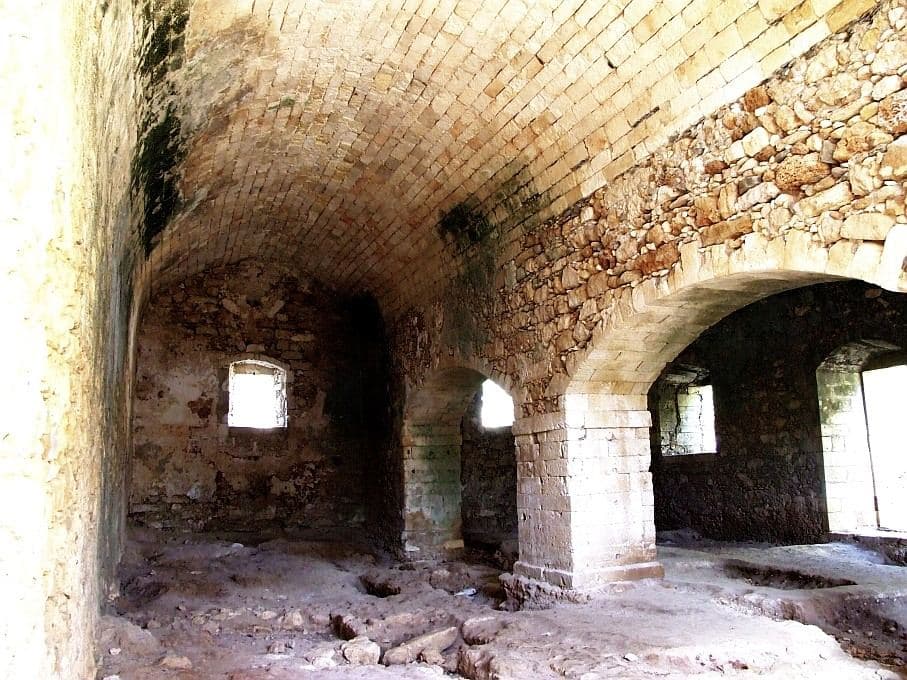
The fort is so large that it could host and protect the entire population of the town. Inside the fort there are several barracks, a church, a hospital and some storage rooms.
The Main Gate is located between the bastions of St. Nicholas and St.
Nicholas, because access to the city from there was easier. The main gate is a large gallery, which allows the easy passage of wagons and weaponry.
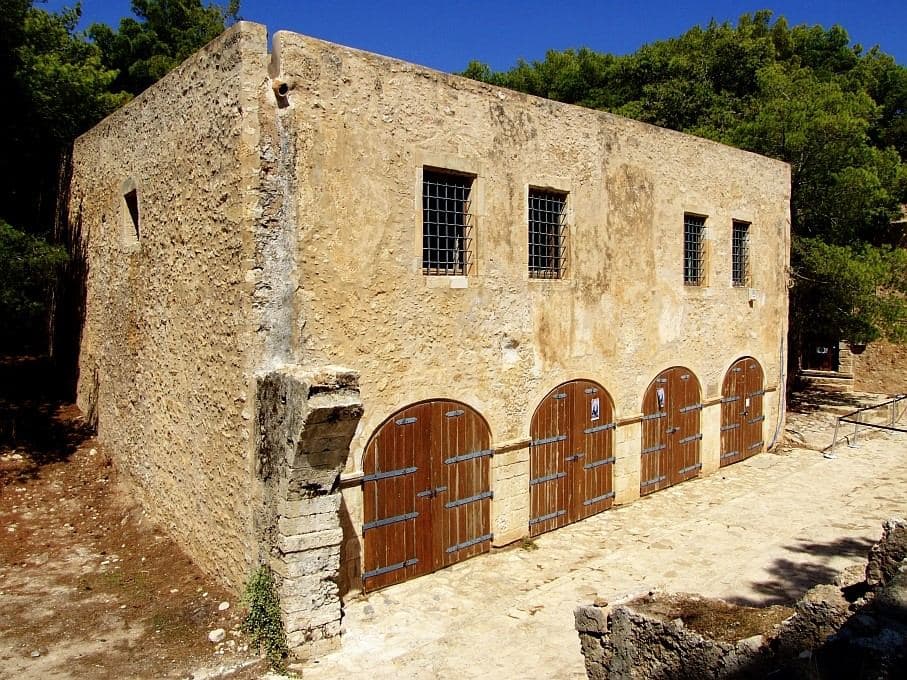
By the entrance you meet the armory, which is a large two-storey building with arches in the interior, which now hosts cultural events and exhibitions. Walking towards the bastion of St.
Elias, you will see one of the many tanks of the castle, used for collecting water from the roofs. There is also the theater “Erofili”, hosting events every summer.
Moreover, near the central square of the fort, stands the beautiful mosque of Sultan Ibrahim, which was originally Christian. Close to it, you see the modern church of St.
Catherine. Additionally, there are few remains of the governor’s house and many smaller houses.
You can even see the house of one of two consultants and the warehouses near the north walls, which are located on a very high altitute. Although it is a great defensive work, Fortezza does not appear to have played a particular role, especially when compared with other equally large fortifications, such as Candia (in Heraklion).
Indeed, the easy surrender to the Turks in 1645, has been attributed to the absence of the ditch and the outbreak of cholera in the castle. Lastly, during the German occupation, the fort was used as a prison for resisting Cretans, who were later executed.
Sois le premier à laisser un avis
Laisser un avis sur Fortress Fortezza in Rethymnon